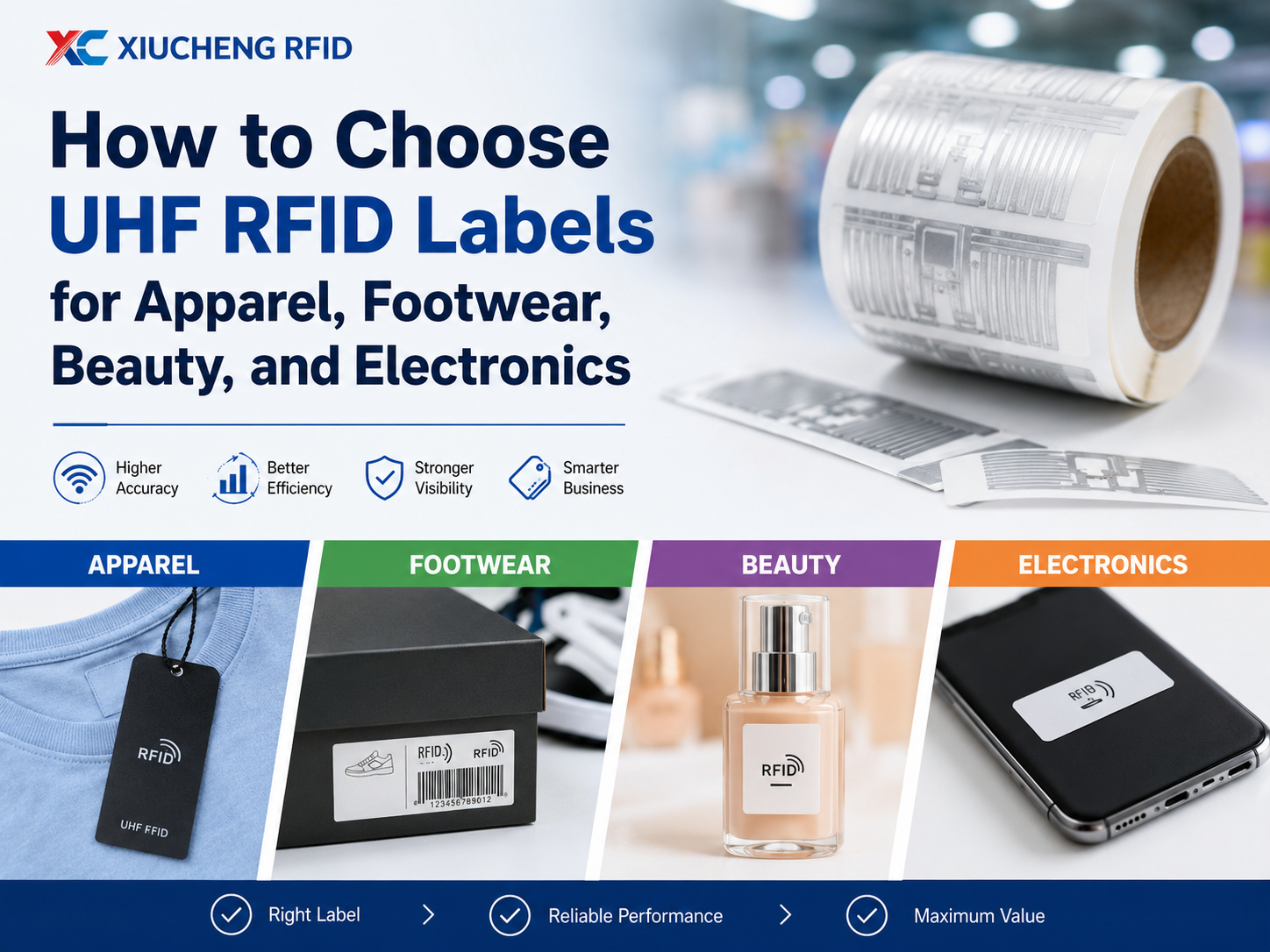
A medida que la adopción de la tecnología RFID sigue acelerándose en los sectores del comercio minorista y la cadena de suministro, cada vez son más las marcas que incorporan etiquetas RFID UHF a sus productos para mejorar la precisión del inventario, reducir los costes de mano de obra y facilitar la visibilidad en tiempo real.
Sin embargo, muchos compradores se dan cuenta rápidamente de que no existe una etiqueta RFID universal adecuada para todas las categorías de productos. Una etiqueta que funciona a la perfección en una camiseta de algodón puede fallar por completo cuando se coloca en un frasco de cosméticos o en un dispositivo electrónico.
Para los minoristas, los fabricantes y los integradores de sistemas, elegir la etiqueta RFID adecuada es una de las decisiones más importantes para que la implantación de la tecnología RFID sea un éxito.
Esta guía explica cómo elegir etiquetas RFID UHF para prendas de vestir, calzado, productos de belleza y aparatos electrónicos, evitando al mismo tiempo los errores habituales que provocan un rendimiento de lectura deficiente y un aumento de los costes del proyecto.
Por qué es importante la elección de las etiquetas RFID
La fiabilidad de un sistema RFID depende en gran medida de la fiabilidad de las etiquetas adheridas a los productos.
Incluso cuando se utilizan lectores y antenas RFID de alta calidad, una mala elección de las etiquetas puede dar lugar a:
- Bajas tasas de lectura
- Falta inventario
- Retrasos en los procesos de recepción
- Sistemas de autopago que no funcionan
- Insatisfacción de los clientes
- Mayores costes operativos
Los distintos materiales de los productos interactúan de forma diferente con las ondas de radio UHF. Factores como la presencia de metal, la presencia de líquido, el diseño del envase y el tamaño del producto influyen de manera significativa en el rendimiento de la tecnología RFID.
Por lo tanto, es fundamental seleccionar las etiquetas en función de las características del producto, y no solo del precio.
Factores clave a tener en cuenta antes de elegir etiquetas RFID
Antes de encargar etiquetas RFID, los compradores deben tener en cuenta cinco factores fundamentales.
Material del producto
El material que rodea la etiqueta RFID es el que más influye en su rendimiento.
Algunos ejemplos son:
- Tejidos y productos textiles
- Cuero
- Plástico
- Vidrio
- Envases llenos de líquido
- Superficies metálicas
Las señales RFID de UHF atraviesan fácilmente algunos materiales, pero otros pueden absorberlas o reflejarlas.
Por ejemplo:
Las prendas de algodón suelen ofrecer un excelente rendimiento RFID, mientras que los dispositivos electrónicos metálicos pueden reducir drásticamente el alcance de lectura.
Requisitos de alcance de lectura
Las distintas aplicaciones requieren distintas distancias de lectura.
Ejemplos típicos:
| Solicitud | Rango de lectura requerido |
|---|---|
| Caja de una tienda | 1–3 metros |
| Recuento de existencias | 3–8 metros |
| Portales de almacenes | 5–10 metros |
| Centros de distribución | 6–12 metros |
La elección de una etiqueta con un alcance de lectura insuficiente suele provocar cuellos de botella operativos.
Tamaño de la etiqueta
Las antenas más grandes suelen ofrecer un mejor rendimiento de lectura.
Sin embargo, el embalaje del producto puede limitar el espacio disponible.
Los compradores deben sopesar:
- Rendimiento de las etiquetas
- Aspecto del producto
- Restricciones de embalaje
- Requisitos de la marca
Requisitos de memoria
La mayoría de las aplicaciones para el comercio minorista solo requieren memoria EPC.
Es posible que se necesite memoria adicional para:
- Autenticación de productos
- Datos de fabricación
- Información sobre la garantía
- Seguimiento por número de serie
Para muchos proyectos, la codificación EPC estándar es suficiente.
Normas del sector
Los proveedores del sector minorista exigen cada vez más el cumplimiento de:
El uso de etiquetas RFID estandarizadas garantiza la compatibilidad con los sistemas minoristas de todo el mundo.
Cómo elegir etiquetas RFID para prendas de vestir
El sector textil es actualmente el mayor usuario de RFID a nivel mundial.
Las principales cadenas minoristas utilizan la tecnología RFID para:
- Visibilidad del inventario
- Cumplimiento omnicanal
- Autofacturación
- Prevención de pérdidas
- Recuento automático de existencias
Características recomendadas para las etiquetas RFID
Para aplicaciones en el sector de la confección, busca:
- Incrustaciones RFID flexibles
- Etiquetas RFID de papel
- Integración de etiquetas colgantes
- Largo alcance de lectura
- Lectura masiva rápida
Tipos de etiquetas ideales
Entre las etiquetas RFID más habituales para prendas de vestir se encuentran:
- Etiquetas colgantes RFID
- Etiquetas tejidas con tecnología RFID
- Etiquetas de cuidado con RFID
- Etiquetas adhesivas RFID
Consideraciones sobre el rendimiento
Los textiles suelen crear un entorno ideal para la tecnología RFID UHF.
Dado que las prendas contienen muy poco metal o líquido, es posible alcanzar índices de lectura superiores a 99% cuando las etiquetas están colocadas correctamente.
Las mejores opciones de patatas fritas
Entre los chips RFID más habituales en el sector minorista se encuentran:
- Serie UCODE de NXP
- Serie M700 de Impinj
- Serie M800 de Impinj
Estos chips ofrecen una sensibilidad excelente y permiten su implantación a gran escala en el sector minorista.
Elección de etiquetas RFID para calzado
El calzado plantea retos específicos en materia de RFID, ya que los zapatos suelen contener:
- Caucho
- Espuma
- Cuero
- Ojales metálicos
- Embalaje compacto
La ubicación de la etiqueta RFID influye considerablemente en el rendimiento.
Nivel recomendado
Las colocaciones más habituales son:
- Etiquetas para cajas de zapatos
- Etiquetas colgantes
- Etiquetas en el interior de la lengüeta
- Etiquetas para embalajes
Muchas marcas de calzado prefieren colocar la etiqueta en la caja del zapato en lugar de en el propio zapato.
Características recomendadas de la tecnología RFID
Busca:
- Antenas de tamaño mediano
- Gran tolerancia a la orientación
- Rendimiento fiable en la lectura masiva
Ventajas de la cadena de suministro del calzado
RFID permite:
- Recepción más rápida
- Auditorías automatizadas de inventario
- Mejora del reabastecimiento
- Menor número de discrepancias en las existencias
Las grandes marcas de calzado suelen alcanzar una precisión en el inventario superior al 95%.
Cómo elegir etiquetas RFID para productos de belleza
Los productos de belleza y cosméticos suelen ser más difíciles de etiquetar, ya que muchos contienen líquidos.
Algunos ejemplos son:
- Perfume
- Champú
- Loción
- Fundación
- Productos para el cuidado de la piel
Los líquidos absorben las señales de radio UHF, lo que puede reducir el alcance de lectura.
Etiquetas RFID recomendadas
En cuanto a los productos de belleza, ten en cuenta lo siguiente:
- Etiquetas RFID especializadas resistentes a los líquidos
- Etiquetas RFID con soporte de espuma
- Inlays RFID optimizados para el sector minorista
El embalaje es importante
El rendimiento de la tecnología RFID varía en función de si los productos están envasados en:
- Botellas de plástico
- Envases de vidrio
- Tubos de aluminio
- Envases compuestos
Se recomienda encarecidamente probar muestras reales del producto antes de su implementación.
Casos de uso habituales de la tecnología RFID
Las marcas de belleza utilizan la tecnología RFID para:
- Seguimiento de existencias
- Protección contra la falsificación
- Reposición de existencias en tienda
- Estanterías inteligentes
- Cumplimiento omnicanal
Las empresas de cosméticos de lujo combinan cada vez más la tecnología RFID con estrategias de autenticación NFC.
Cómo elegir etiquetas RFID para productos electrónicos
La electrónica es una de las aplicaciones de RFID más complejas.
Los productos suelen contener:
- Componentes metálicos
- Pilas
- Placas de circuito impreso
- Materiales de blindaje
Todos ellos pueden interferir en las señales RFID.
Productos electrónicos habituales
Algunos ejemplos son:
- Teléfonos inteligentes
- Tabletas
- Ordenadores portátiles
- Auriculares
- Cargadores portátiles
- Dispositivos inteligentes
Soluciones RFID recomendadas
En cuanto a los productos electrónicos, los compradores deberían tener en cuenta lo siguiente:
- Etiquetas RFID para metal
- Etiquetas RFID con separador de espuma
- Etiquetas RFID especializadas para metales
Las etiquetas RFID de papel estándar suelen ofrecer un rendimiento inferior cuando se colocan directamente sobre superficies metálicas.
Pruebas de rendimiento de lectura
Realiza siempre las pruebas en:
- Unidades reales del producto
- Embalaje final
- Configuraciones de exposición en tiendas
Unos pequeños cambios en la colocación pueden mejorar considerablemente la fiabilidad de la lectura.
Ventajas en materia de seguridad
Las etiquetas RFID también pueden admitir:
- Gestión de activos
- Seguimiento de la garantía
- Autenticación de productos
- Prevención de robos
Muchos comercios minoristas de electrónica de consumo recurren a la tecnología RFID para reducir las pérdidas y mejorar la visibilidad de las existencias.
Comparación de los requisitos de las etiquetas RFID por sector
| Sector | Reto principal | Etiqueta RFID recomendada |
|---|---|---|
| Ropa | Existencias de gran volumen | Etiquetas colgantes RFID |
| Calzado | Variaciones en el embalaje | Etiquetas RFID para cajas |
| Belleza | Interferencia de líquidos | Etiquetas resistentes a los líquidos |
| Electrónica | Interferencias metálicas | Etiquetas RFID para metal |
Esta comparación pone de manifiesto por qué seleccionar etiquetas en función de las características del producto resulta más eficaz que utilizar un único tipo de etiqueta para todas las categorías.
Errores habituales en la selección de etiquetas RFID
Muchos compradores que adquieren tecnología RFID por primera vez cometen los siguientes errores.
Elegir basándose únicamente en el precio
La marca más barata rara vez es la opción más rentable.
Un rendimiento deficiente puede dar lugar a:
- Retrasos operativos
- Costes laborales adicionales
- Reasignación de gastos
No tener en cuenta las pruebas de los productos
Las especificaciones de laboratorio no siempre reflejan el rendimiento en condiciones reales.
Es fundamental probar los productos reales.
Visión general del embalaje
El rendimiento de la tecnología RFID depende de:
- Embalaje del producto
- Cajas de envío
- Expositores de estantería
Las pruebas deben incluir la configuración completa del embalaje.
Elegir el chip equivocado
Las distintas fichas ofrecen diferentes:
- Niveles de sensibilidad
- Capacidades de memoria
- Consultar las características de rendimiento
La elección del chip debe ajustarse a los requisitos del proyecto.
¿Por qué trabajar con un fabricante de etiquetas RFID con experiencia?
Un fabricante con experiencia en RFID puede ayudar a los compradores a:
- Selecciona la incrustación óptima
- Comprobar la compatibilidad del producto
- Personalizar las dimensiones de las etiquetas
- Proporcionar la codificación EPC
- Garantizar el cumplimiento normativo en el sector minorista
En lugar de adquirir etiquetas RFID genéricas, muchas marcas obtienen mejores resultados gracias a soluciones RFID personalizadas, adaptadas a sus productos y flujos de trabajo.
En XIUCHENG RFID, ayudamos a las empresas de ropa, calzado, belleza y electrónica a evaluar las características de sus productos y a seleccionar etiquetas RFID que ofrezcan un rendimiento fiable a lo largo de toda la cadena de suministro.
Reflexiones finales
Elegir la etiqueta RFID UHF adecuada no consiste simplemente en seleccionar un chip o una antena. Requiere comprender cómo influyen en el rendimiento de la tecnología RFID los materiales del producto, el embalaje, los requisitos de alcance de lectura y las condiciones ambientales.
En el caso de la ropa, las etiquetas RFID estándar para venta al por menor suelen ofrecer excelentes resultados. En el caso del calzado, la ubicación de la etiqueta resulta fundamental. En el caso de los productos de belleza, normalmente se requieren diseños resistentes a los líquidos. En el caso de los productos electrónicos, las etiquetas RFID para metal suelen ser la única solución fiable.
Al realizar las pruebas adecuadas y colaborar con un fabricante de etiquetas RFID con experiencia, las empresas pueden lograr una mayor precisión de lectura, operaciones más rápidas y una mayor rentabilidad de su inversión en RFID.