Cattle traceability is no longer just a regulatory requirement—it has become a core capability for modern livestock operations. From disease prevention and breeding optimization to food safety and international trade compliance, traceability determines how efficiently cattle can be identified, monitored, and managed throughout their entire lifecycle.
tag RFID play a central role in making cattle traceability accurate, scalable, and reliable.
What Is Cattle Traceability?
Cattle traceability refers to the ability to uniquely identify each animal and continuously track its history and movements from birth to slaughter. A complete traceability system typically records:
- Individual animal ID
- Farm of origin and ownership changes
- Vaccination and veterinary treatments
- Feeding and breeding records
- Transport and quarantine events
- Slaughter and supply chain handover
Without digital identification, this information is fragmented, manual, and error-prone. RFID technology provides the infrastructure needed to link physical animals to structured data systems.
Why Traditional Identification Methods Fall Short
Visual ear tags, branding, or manual logbooks have been used for decades, but they introduce several structural limitations:
- Human error during data entry or visual reading
- No automation, making large herds difficult to manage
- Limited data capacity, often just a printed number
- Poor integration with digital livestock management systems
As herd sizes grow and compliance standards tighten, these methods fail to support real-time, auditable traceability.
How RFID Tags Enable End-to-End Cattle Traceability
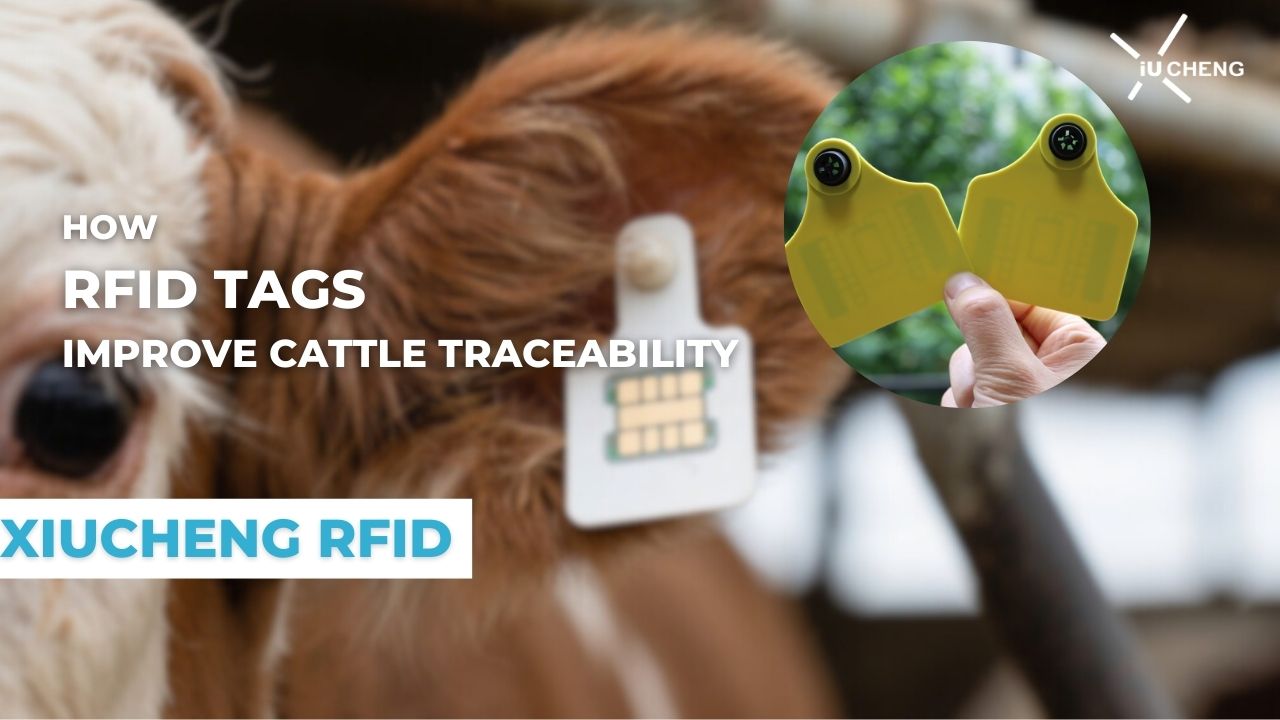
RFID tags for cattle embed a unique electronic identifier directly into an animal ear tag. This ID becomes the digital “anchor” for all traceability data.
1. Unique and Tamper-Resistant Identification
Each RFID animal ear tag carries a globally unique ID that cannot be duplicated or altered. Once assigned, this ID remains with the animal for its entire life, forming the foundation of reliable traceability.
This is especially critical for government-mandated animal identification programs and export-oriented cattle operations.
2. Fast and Contactless Data Capture
Unlike visual tags, RFID tags can be read without direct line-of-sight. Handheld or fixed readers can scan cattle quickly during:
- Feeding
- Weighing
- Vaccination
- Loading and unloading
- Veterinary inspections
This reduces stress on animals and labor costs for farms, while improving data accuracy.
3. Real-Time Integration with Livestock Management Systems
RFID cattle tags are designed to integrate with:
- Farm management software
- Veterinary databases
- Government traceability platforms
- Slaughterhouse and logistics systems
Each scan automatically updates the animal’s digital record, creating a continuous, verifiable traceability chain.
4. Support for Multiple RFID Standards
Modern cattle traceability systems are not limited to a single RFID technology. Depending on regional regulations and operational needs, RFID animal ear tags may use:
- FDX / HDX (ISO 11784/11785) for traditional animal identification
- HF (13,56 MHz) for close-range data interaction
- UHF (ISO 18000-6C) for long-range and bulk reading
Multi-standard RFID tags ensure compatibility with existing infrastructure while allowing future system upgrades.
RFID Tags and Disease Control in Cattle
One of the most critical benefits of RFID-based traceability is rapid disease response.
When an outbreak occurs, RFID systems allow authorities and farms to:
- Instantly identify affected animals
- Trace contact history within the herd
- Isolate high-risk groups
- Minimize unnecessary culling
This level of precision is impossible with manual identification methods and is increasingly required by national animal health programs.
Improving Food Safety and Supply Chain Transparency
Consumers and regulators demand transparency in beef production. RFID tags enable cattle traceability beyond the farm:
- Linking animals to slaughter batches
- Tracking origin information for meat products
- Supporting recall management when issues arise
For beef exporters, RFID traceability is often a prerequisite for accessing high-value international markets.
Durability Matters in Long-Term Traceability
Traceability is only effective if the RFID tag survives the animal’s full lifecycle.
High-quality RFID animal ear tags are engineered with:
- Durable TPU materials
- UV and chemical resistance
- Secure male/female locking mechanisms
- Stable chip performance in harsh environments
These features ensure that the RFID ID remains readable for years, not months.
RFID Tags as the Backbone of Digital Livestock Management
RFID tags for cattle are not just identifiers—they are the data backbone of modern livestock operations. By enabling accurate, automated, and scalable traceability, RFID technology supports better decision-making, regulatory compliance, and long-term operational efficiency.
For farms, integrators, and livestock authorities, RFID-based cattle traceability is no longer optional—it is foundational.