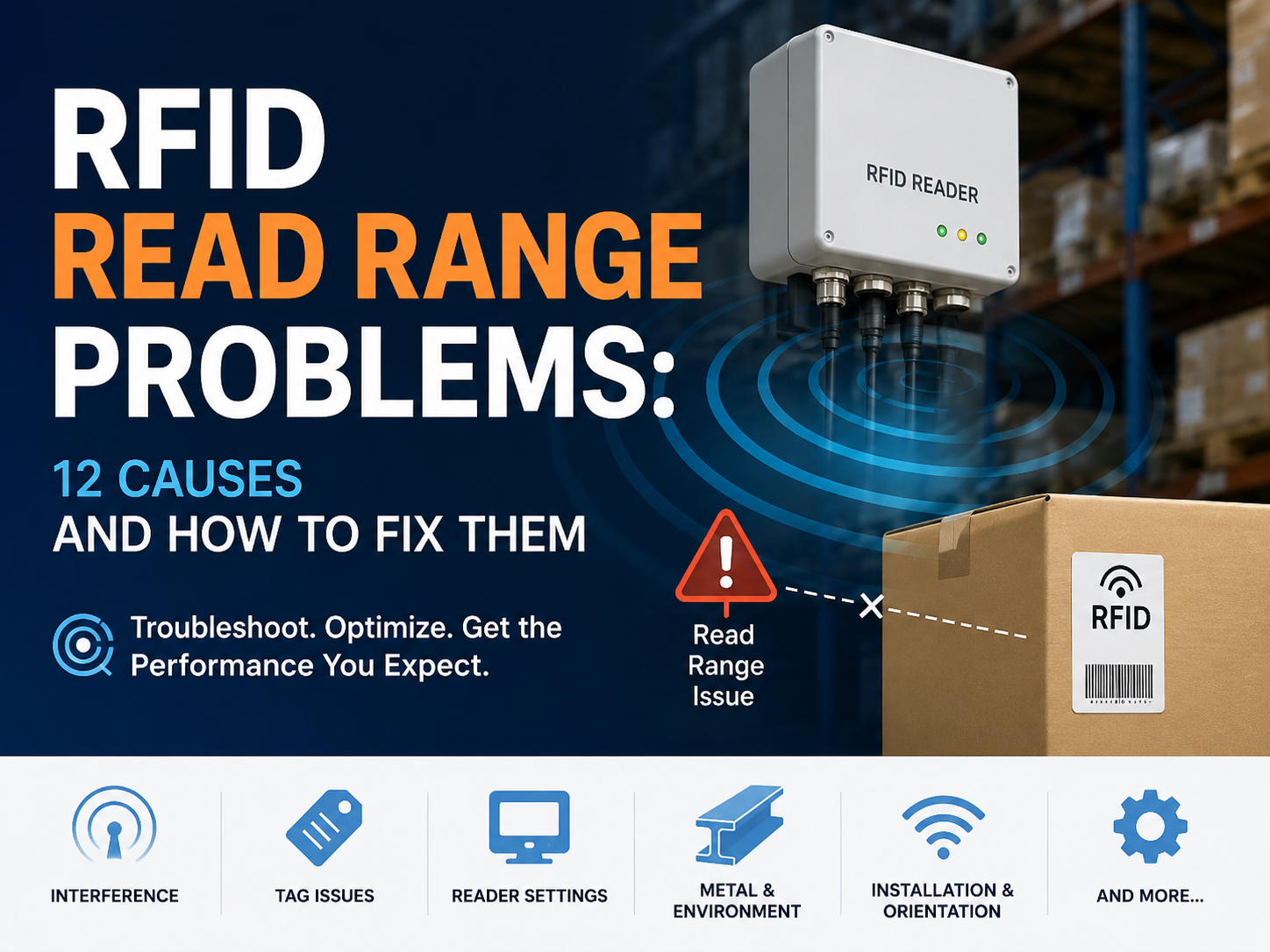
W przypadku każdego systemu RFID zasięg odczytu stanowi kluczowy wskaźnik wydajności. Jeśli tagi RFID nie są odczytywane z oczekiwanej odległości, może to mieć wpływ na zarządzanie zapasami, automatyzację magazynu oraz wydajność łańcucha dostaw. W niniejszym przewodniku omówimy 12 najczęstszych przyczyn problemów z zasięgiem odczytu RFID oraz przedstawiać praktyczne rozwiązania.
1. Niewłaściwe ustawienie anteny
Przyczyna: Orientacja anteny RFID ma znaczący wpływ na zasięg odczytu. Jeśli polaryzacja anteny nie jest odpowiednio ustawiona, tagi mogą mieć problemy z komunikacją.
Poprawka:
- Należy dopasować znacznik do polaryzacji anteny.
- W przypadku systemów UHF, anteny liniowe najlepiej sprawdzają się z płaskimi znacznikami ułożonymi równolegle, podczas gdy anteny o polaryzacji kołowej są bardziej tolerancyjne w przypadku zmiennych kątów ustawienia znaczników.
2. Tagi RFID niskiej jakości
Przyczyna: W tanich lub podrobionych tagach RFID często stosuje się układy scalone lub anteny gorszej jakości, co skutkuje zmniejszeniem zasięgu odczytu.
Poprawka:
- Należy stosować wysokiej jakości etykiety renomowanych producentów.
- Zalecane zasięgi odczytu i parametry środowiskowe można znaleźć w karcie katalogowej tagu.
3. Niewystarczająca moc czytnika
Przyczyna: Czytniki RFID emitują energię elektromagnetyczną w celu zasilania pasywnych tagów. Niska moc wyjściowa zmniejsza efektywny zasięg odczytu.
Poprawka:
- Zwiększyć moc nadawczą odbiornika w granicach określonych przepisami.
- Należy zapewnić zgodność z FCC (USA) lub ETSI (Europa) przepisy mające na celu zapobieganie zakłóceniom.
4. Zakłócenia środowiskowe
Przyczyna: Powierzchnie metalowe, ciecze oraz zakłócenia elektromagnetyczne mogą blokować lub pochłaniać sygnały radiowe.
Poprawka:
- Użycie identyfikatory montowane na metalu lub wodoodporne do trudnych nawierzchni.
- Przesuń czytnik, aby zminimalizować zakłócenia.
- W razie potrzeby zastosować ekranowanie lub izolację radiową.
5. Niewłaściwe umieszczenie znaczników
Przyczyna: Tagi umieszczone na krawędziach, w rogach lub w pobliżu przeszkód mogą nie być odczytywane prawidłowo.
Poprawka:
- Należy umieścić etykiety pośrodku przedmiotów, tak aby zapewnić swobodną widoczność dla czytnika.
- Wypróbuj różne lokalizacje, aby znaleźć optymalne miejsce.
6. Niedopasowanie anteny odbiorczej
Przyczyna: Zastosowanie niewłaściwego typu anteny lub niewłaściwego wzmocnienia może zmniejszyć zasięg odczytu.
Poprawka:
- Użycie anteny o wysokim wzmocnieniu do zastosowań dalekiego zasięgu.
- Należy dobrać typy anten odpowiednie do warunków otoczenia (anteny liniowe do sterowanej orientacji, anteny okrągłe do zróżnicowanej orientacji).
7. Nadmierna gęstość tagów
Przyczyna: Zbyt duża liczba tagów na niewielkiej powierzchni może powodować kolizje sygnałów i obniżać wydajność odczytu.
Poprawka:
- Dostosuj ustawienia systemu zapobiegania kolizjom czytnika.
- Odstępy należy odpowiednio rozmieścić, aby zminimalizować nakładanie się elementów.
8. Problemy z oprogramowaniem sprzętowym lub oprogramowaniem
Przyczyna: Nieaktualne lub nieprawidłowo skonfigurowane oprogramowanie sprzętowe lub programowe czytnika RFID może wpływać na zasięg odczytu i wykrywanie tagów.
Poprawka:
- Należy regularnie aktualizować oprogramowanie sprzętowe czytnika.
- Sprawdź ustawienia oprogramowania pod kątem prawidłowego wyboru protokołu (np., EPC Gen2 / ISO 18000-6C).
9. Straty w kablu i słabe połączenia
Przyczyna: Długie lub niskiej jakości kable koncentryczne między czytnikiem a anteną mogą powodować tłumienie sygnału. Na wydajność wpływają również luźne połączenia.
Poprawka:
- Należy stosować wysokiej jakości kable RF o odpowiedniej parametrystyce.
- Długość kabli powinna być jak najkrótsza.
- Należy prawidłowo podłączyć wszystkie anteny, aby zapobiec utracie sygnału.
10. Temperatura otoczenia
Przyczyna: Ekstremalne temperatury mogą wpływać na działanie układów scalonych tagów oraz na wydajność anteny.
Poprawka:
- Należy stosować elementy oznaczone jako przystosowane do danego zakresu temperatur roboczych.
- Należy unikać umieszczania czytników lub tagów w pobliżu źródeł ciepła.
11. Niewłaściwy typ znacznika dla aplikacji
Przyczyna: Nie wszystkie tagi RFID są takie same — niektóre są przeznaczone do pracy w bliskim zasięgu, a inne w dalekim.
Poprawka:
- Dopasuj typ znacznika do wymaganej odległości odczytu.
- Użycie tagów UHF o wysokiej czułości do śledzenia na duże odległości.
12. Ograniczenia wynikające z przepisów
Przyczyna: Regionalne przepisy dotyczące mocy RF ograniczają maksymalny zasięg odczytu.
Poprawka:
- Upewnij się, że Twój system jest zgodny z lokalnymi przepisami.
- Zoptymalizuj dobór tagów i anten w ramach dopuszczalnych poziomów mocy.
Wnioski
Problemy z zasięgiem odczytu RFID mogą wynikać z wielu czynników, w tym ze sprzętu, warunków otoczenia, oprogramowania oraz przepisów. Poprzez systematyczne rozwiązywanie problemów związanych z 12 wymienionych powyżej przyczyn, możesz zoptymalizować swój system RFID pod kątem niezawodnego działania i zmaksymalizować wydajność swoich operacji.
Dobrze zaprojektowana konfiguracja RFID zapewnia mniej błędów odczytu, szybsze procesy inwentaryzacyjne oraz lepszą widoczność w całym łańcuchu dostaw.
Porada dla kupujących od profesjonalisty
Podczas testowania tagów RFID i czytników przed wdrożeniem należy zachować kontrolowane środowisko i zmierzyć rzeczywiste odległości odczytu w typowych warunkach pracy. Połączenie wysokiej jakości tagów, odpowiednich typów anten oraz właściwego rozmieszczenia gwarantuje stałe osiąganie pożądanego zasięgu odczytu.

O XIUCHENG RFID
XIUCHENG RFID specjalizuje się w produkcji szerokiej gamy produktów RFID, w tym opasek silikonowych RFID, opasek Tyvek, opasek materiałowych, opasek elastycznych, opasek winylowych, przywieszek RFID do prania, przywieszek dla zwierząt i kart RFID. Wszystkie produkty są wytwarzane pod ścisłą kontrolą jakości i przy użyciu zaawansowanej technologii produkcji.
Dzięki 12-letniemu doświadczeniu w projektowaniu opasek na rękę, projektowaniu tagów, zarządzaniu jakością i zarządzaniu relacjami z klientami, zbudowaliśmy solidne podstawy do dostarczania niezawodnych i wydajnych rozwiązań RFID.