A Complete Technical Guide for Secure Identification and Transaction Systems
As smart card technology continues to evolve, organizations designing secure identification, access control, and transaction systems are often faced with a fundamental choice: Contact IC cards or Contactless RFID cards.
Although both belong to the broader smart card family, their communication methods, security models, reliability, and ideal use cases differ significantly. This article provides a deep technical comparison to help system integrators, engineers, and procurement teams make the right decision.
What Are Contact IC Cards?
Contact IC cards are smart cards that require direct physical contact between the card and the reader to enable data transmission.
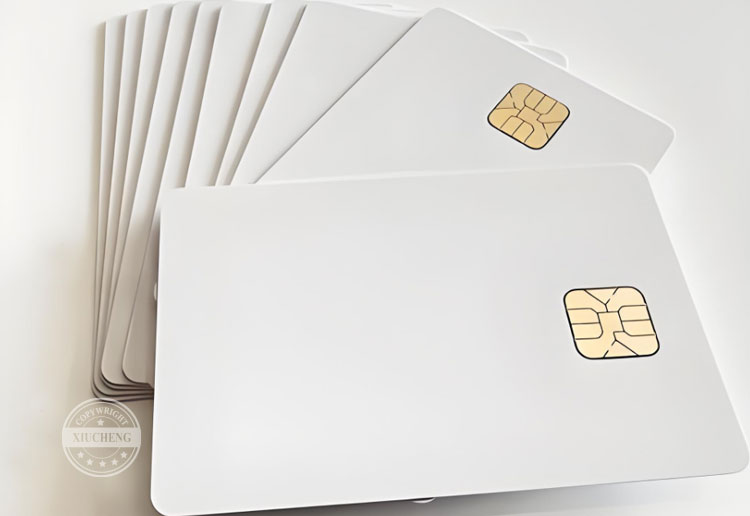
How Contact IC Cards Work
- Communication occurs through metal contact pads
- Electrical signals are exchanged according to ISO/IEC 7816
- The reader supplies power directly to the embedded IC chip
- Data processing occurs on the chip itself
Because communication is wired, contact IC cards deliver highly stable and deterministic data transmission.
Common Contact IC Chips
- FM4442
- FM4428
- FM24C02
- Other compatible EEPROM-based IC chips
These chips are widely used in banking, government ID, and high-security systems.
What Are Contactless RFID Cards?
Contactless RFID cards communicate with readers using radio frequency (RF) fields, eliminating the need for physical contact.
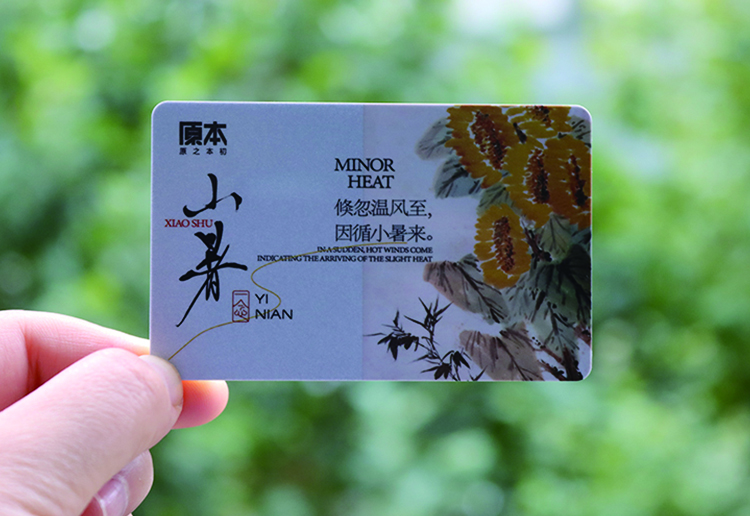
How Contactless Cards Work
- Powered by electromagnetic induction
- Data transmitted wirelessly between card antenna and reader
- Operate under international standards such as:
-
- ISO 14443 (HF / NFC)
- ISO 15693 (Vicinity)
- ISO 18000-6C (UHF)
Contactless cards are typically read by tapping or bringing the card close to a reader, offering a faster and more convenient user experience.
Communication Stability and Reliability
Contact IC Cards
- Direct electrical connection ensures consistent signal integrity
- Not affected by RF interference
- Reliable in electrically noisy environments
- Ideal for critical data transactions
Contactless RFID Cards
- Performance depends on:
- Read distance
- Antenna orientation
- RF environment
- Susceptible to electromagnetic interference
- Read reliability can vary in crowded or metal-heavy environments
Technical conclusion:
For applications where absolute communication reliability is required, contact IC cards remain superior.
Security Architecture Comparison
Security of Contact IC Cards
Contact IC cards have long been the standard for financial and regulated industries due to their robust security design:
- Encrypted read/write operations
- PIN or password-based authentication
- Controlled memory access zones
- Physical contact required for data access
- Strong resistance to skimming and relay attacks
Because attackers must establish physical contact, unauthorized access is significantly more difficult.
Security of Contactless RFID Cards
Modern contactless cards can be highly secure, but implementation quality matters:
- Cryptographic authentication (DES, 3DES, AES)
- Mutual authentication supported by chips such as:
- MIFARE DESFire
- NTAG 424 DNA
- Risk of RF-based attacks if encryption is misconfigured
Security depends heavily on:
- Chip selection
- Key management
- Reader firmware configuration
Transaction Speed and User Experience
| Feature | Contact IC Cards | Contactless RFID Cards |
|---|---|---|
| Transaction Speed | Moderate | Very fast |
| User Action | Insert card | Tap or wave |
| Throughput | Medium | High |
| Physical Wear | Higher | Minimal |
Contactless RFID cards excel in high-throughput environments such as public transportation and events.
Durability and Lifecycle Considerations
Contact IC Cards
- Contact pads wear over time
- Dirt or oxidation may degrade performance
- Readers experience mechanical wear
Contactless RFID Cards
- No physical contact points
- Longer card and reader lifespan
- Better suited for harsh or high-use environments
Typical Application Scenarios
When to Choose Contact IC Cards
Contact IC cards are best suited for:
- Banking and ATM cards
- Secure employee ID cards
- Government-issued credentials
- High-security access control
- Stored-value and transaction auditing systems
Key advantage: Maximum control, stability, and compliance.
When to Choose Contactless RFID Cards
Contactless cards are ideal for:
- Public transportation systems
- Hotel key cards
- Event access control
- NFC marketing and smart posters
- Fast identity verification
Key advantage: Speed, convenience, and reduced friction.
Cost and System Design Considerations
Contact IC Systems
- Lower chip cost
- Readers more mechanically complex
- Mature infrastructure and legacy compatibility
Contactless RFID Systems
- Higher chip cost (especially encrypted NFC chips)
- Simpler reader mechanics
- RF tuning and system design complexity
Standards and Compliance
| Card Type | International Standards |
|---|---|
| Contact IC Cards | ISO/IEC 7816 |
| HF Contactless Cards | ISO 14443 |
| Vicinity Cards | ISO 15693 |
| UHF RFID Cards | ISO 18000-6C |
Many financial and government systems still mandate contact IC cards for compliance reasons.
Hybrid and Dual-Interface Cards
To bridge legacy and modern systems, many organizations deploy dual-interface smart cards that combine:
- Contact IC interface (ISO 7816)
- Contactless RFID/NFC interface (ISO 14443)
These cards provide:
- Backward compatibility
- Future-proof scalability
- Unified credential management
Which Technology Is Better?
There is no universal “better” choice. The decision depends on security requirements, user experience goals, compliance rules, and system architecture.
- Choose Contact IC Cards for maximum security and reliability
- Choose Contactless RFID Cards for speed and convenience
- Choose Dual-Interface Cards for hybrid environments
Conclusion
Contact IC cards and contactless RFID cards are complementary technologies, each optimized for specific use cases. Understanding their technical differences, security implications, and operational trade-offs is essential for building secure and scalable smart card systems.
By aligning technology choice with real-world requirements, organizations can ensure long-term performance, compliance, and user satisfaction.