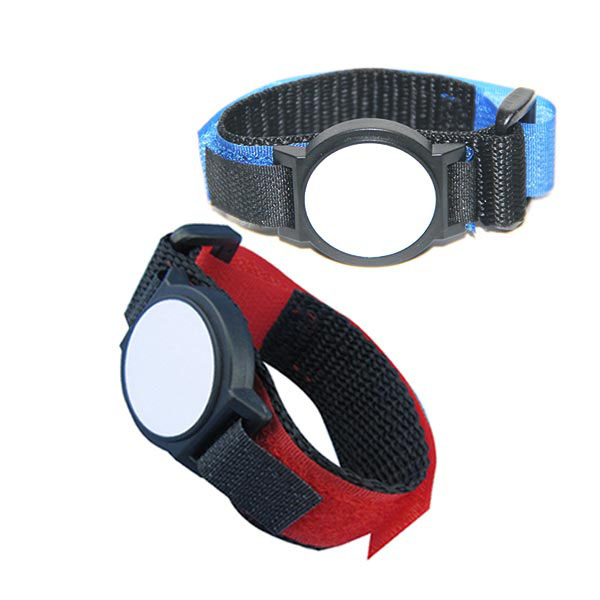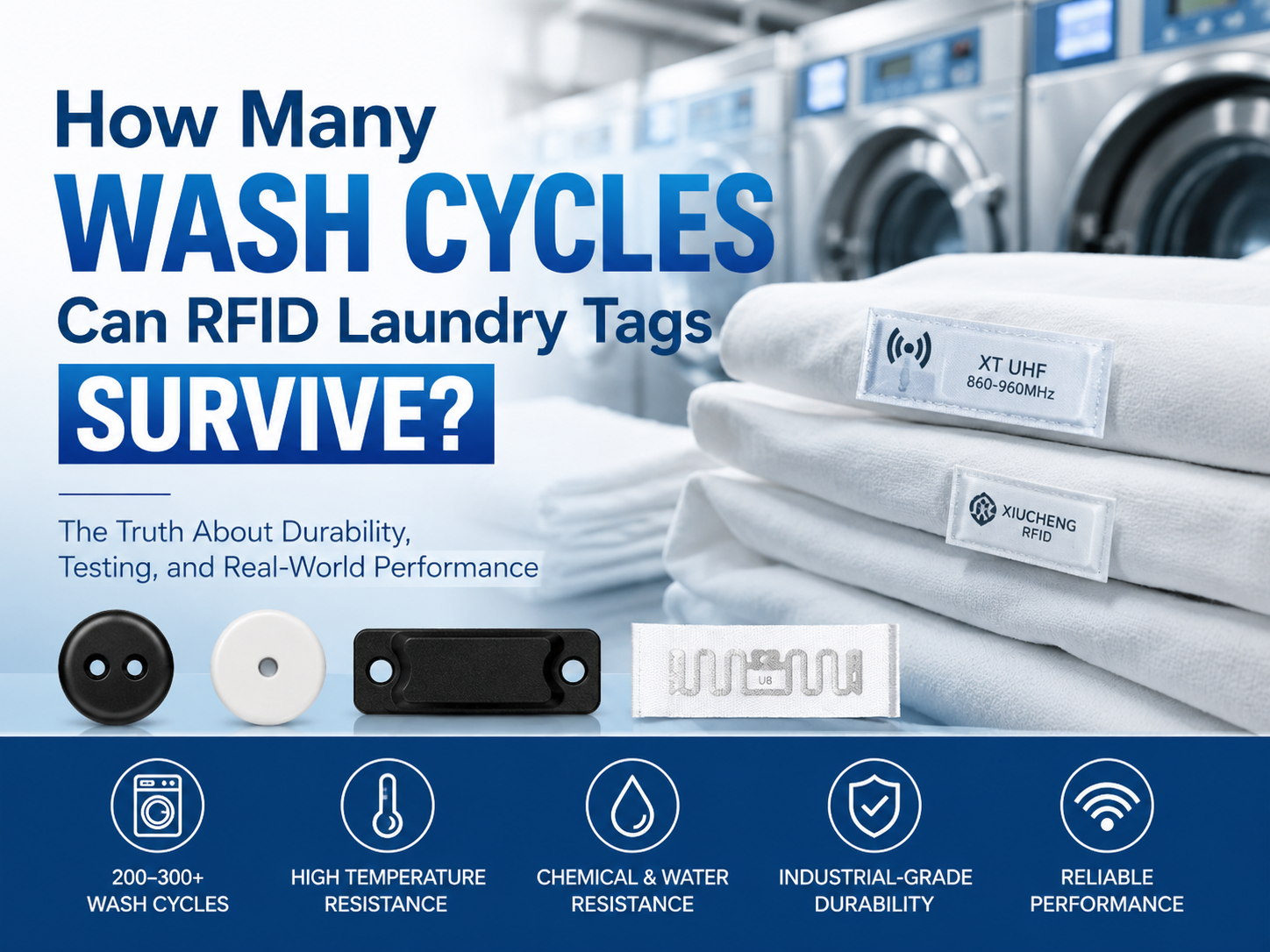
In commercial laundry environments, RFID laundry tags are exposed to some of the harshest operating conditions in the RFID industry. Industrial washing, high-temperature drying, chemical detergents, ironing, water extraction, and tunnel finishing all put constant stress on RFID tags embedded in garments and linens.
For hotels, hospitals, uniform rental companies, and industrial laundries, durability is one of the most important factors when selecting washable RFID laundry tags.
A common question buyers ask is:
How many wash cycles can RFID laundry tags actually survive?
The answer depends on several factors, including:
- Tag material
- Manufacturing quality
- Washing temperature
- Chemische Belastung
- Pressure during extraction
- Installation method
- Laundry environment
- RFID chip packaging technology
In this guide, XIUCHENG RFID explains the real-world lifespan of RFID laundry tags and what affects their durability in industrial laundry operations.
Typical Wash Cycle Lifespan of RFID Laundry Tags
Most industrial-grade RFID-Wäscheetiketten are designed to survive:
| RFID Laundry Tag Type | Typische Waschzyklen |
|---|---|
| Standard textile RFID laundry tags | 150–200 cycles |
| High-quality PPS button tags | 200–300 cycles |
| Silicone RFID laundry tags | 200+ cycles |
| Premium industrial laundry tags | Up to 300+ cycles |
High-end RFID laundry tags manufactured for hospitality and healthcare industries can often withstand:
- Repeated washing at 90°C
- Hochdruck-Wasserabsaugung
- Trocknen im Wäschetrockner
- Ironing processes
- Chemical sterilization
- Autoclave environments
Many professional RFID laundry tags are tested according to industrial laundry standards rather than household washing conditions.
What Determines RFID Laundry Tag Durability?
1. Tag Material
Different materials provide different levels of resistance.
PPS RFID Wäscherei-Etiketten
PPS (Polyphenylene Sulfide) tags are widely used because they offer:
- High heat resistance
- Chemische Beständigkeit
- Waterproof structure
- Mechanische Haltbarkeit
These tags are commonly sewn onto uniforms, workwear, and medical garments.
Silikon-RFID-Wäscheetiketten
Silicone tags provide:
- Excellent flexibility
- Soft textile compatibility
- Hochtemperaturbeständigkeit
- Strong waterproof performance
They are commonly used for hotel linens and healthcare textiles.
Textile RFID Laundry Tags
Fabric-based RFID laundry labels are lightweight and flexible, making them ideal for garments and uniforms.
However, lower-quality textile tags may fail earlier if:
- Encapsulation quality is poor
- Antenna bonding is weak
- Waterproof sealing is incomplete
Industrial Laundry Conditions Matter
RFID tags in commercial laundries experience much harsher conditions than consumer washing machines.
Common Stress Factors
High Temperature
Industrial washing temperatures can reach:
- 60°C to 90°C washing
- 180°C ironing
- Trocknen bei hoher Temperatur
Poor-quality RFID tags may crack or delaminate under repeated heat exposure.
Chemical Exposure
Commercial laundries use:
- Bleichen
- Alkali detergents
- Desinfektionsmittel
- Oxidizing chemicals
These chemicals gradually damage inferior tag materials.
Water Extraction Pressure
Laundry extraction machines generate strong centrifugal force.
Weak RFID tag encapsulation can lead to:
- Antenna breakage
- Chip detachment
- Internal cracking
Mechanical Bending
Tags attached to garments repeatedly bend during:
- Waschen
- Folding
- Wearing
- Bügeln
Flexible RFID laundry tags generally perform better in textile applications.
Realistic Lifespan Expectations
In real commercial operations, RFID laundry tags rarely fail exactly at a specific cycle count.
Instead, durability depends on:
- Installation quality
- Washing frequency
- Linen handling practices
- Laundry equipment
- Tag placement location
Beispielsweise:
A premium RFID laundry tag may survive:
- 300 cycles in hotel linen management
- Only 150 cycles in heavy industrial uniform washing
because industrial uniforms often face harsher contamination and stronger washing chemistry.
How RFID Manufacturers Test Wash Durability
Professional RFID manufacturers conduct multiple durability tests before production release.
Common Testing Standards
Industrial RFID laundry tags are often tested for:
- Washing resistance
- Hitzebeständigkeit
- Water resistance
- Pressure resistance
- Chemische Beständigkeit
- Mechanical bending
Typical Test Conditions
Beispiele hierfür sind:
- 200 industrial wash cycles
- 60 bar water extraction pressure
- 180°C ironing temperature
- Chemical soaking tests
- Repeated drying cycles
Reliable RFID suppliers should provide testing reports or durability specifications.
Signs of Low-Quality RFID Laundry Tags
Not all washable RFID tags are designed for industrial laundry use.
Low-quality tags often fail because of:
- Weak antenna welding
- Poor chip bonding
- Inadequate waterproof encapsulation
- Cheap materials
- Thin protective layers
Common failure symptoms include:
- Reduced reading distance
- Intermittent scanning
- Complete unreadability
- Cracked tag housing
- Delaminierung
For B2B buyers, choosing low-cost tags without industrial testing can increase long-term operational costs.

Über XIUCHENG RFID
XIUCHENG RFID ist auf die Herstellung einer breiten Palette von RFID-Produkten spezialisiert, darunter RFID-Silikonarmbänder, Tyvek-Armbänder, Stoffarmbänder, elastische Armbänder, Vinyl-Armbänder, RFID-Wäscheetiketten, Tieretiketten und RFID-Karten. Alle Produkte werden unter strenger Qualitätskontrolle und mit fortschrittlicher Produktionstechnologie hergestellt.
Mit 12 Jahren Erfahrung in den Bereichen Armbanddesign, Tag-Design, Qualitätsmanagement und Kundenbeziehungsmanagement haben wir eine solide Grundlage für die Bereitstellung zuverlässiger und leistungsstarker RFID-Lösungen geschaffen.
How to Extend RFID Laundry Tag Lifespan
Choose Industrial-Grade Tags
Always use RFID laundry tags specifically designed for:
- Commercial laundries
- Krankenhaus-Textilien
- Hotel linen tracking
- Uniform management
Select Proper Installation Methods
Depending on the tag type:
- Sew into hems
- Heat seal onto fabric
- Use protective pockets
Incorrect installation increases mechanical stress.
Avoid Extreme Folding Areas
Do not install tags in areas with excessive bending or stretching.
Work With Experienced RFID Manufacturers
An experienced livestock or industrial RFID manufacturer usually has:
- Stable chip sourcing
- Better encapsulation technology
- Proven industrial testing procedures
- Large-scale production quality control
XIUCHENG RFID provides washable RFID laundry tags tested for industrial laundry environments including hotels, hospitals, and uniform rental systems.
RFID Laundry Tags for Different Industries
Hotels
Hotels typically require:
- Soft textile tags
- Lange Lebenserwartung
- Bulk scanning capability
- Hohe Bestandsgenauigkeit
Hospitals
Healthcare environments need:
- Sterilization resistance
- Chemische Beständigkeit
- High-temperature durability
Uniform Rental Companies
Uniform tracking systems demand:
- High cycle durability
- Starke Leistung bei Kollisionen
- Zuverlässige Langzeit-Lesbarkeit
Industrial Laundries
Industrial laundries prioritize:
- Maximum durability
- Schnelles Massenlesen
- Reduced replacement frequency
UHF vs HF RFID Laundry Tags Durability
Both HF and UHF RFID laundry tags can be washable.
UHF Laundry Tags
Vorteile:
- Lange Lesedistanz
- Massenhaftes Scannen
- Fast inventory management
Weit verbreitet in:
- Hotels
- Linen tracking
- Uniform management
HF/NFC Laundry Tags
Vorteile:
- Short-range secure reading
- Smartphone-Kompatibilität
More common in:
- Specialized textile applications
- Authentication systems
Durability mainly depends on tag construction rather than frequency type.
Why RFID Laundry Tag Quality Matters
Replacing failed RFID tags creates hidden operational costs:
- Re-tagging labor
- Lost linen tracking
- Ungenauigkeiten bei der Inventarisierung
- System downtime
- Reduced automation efficiency
For large commercial laundries managing thousands of textiles daily, reliable RFID tags significantly improve operational stability.
A slightly higher upfront tag cost often results in lower long-term replacement expenses.
Abschluss
Most industrial RFID laundry tags can survive between 150 and 300 wash cycles depending on their material, manufacturing quality, and laundry environment.
Premium RFID laundry tags designed for commercial laundry systems offer:
- Hochtemperaturbeständigkeit
- Chemische Beständigkeit
- Waterproof durability
- Long-term RFID readability
For hotels, hospitals, and industrial laundries, selecting proven industrial-grade RFID laundry tags is essential for maintaining reliable textile tracking and reducing replacement costs.
XIUCHENG RFID is an experienced RFID manufacturer providing washable RFID laundry tags for linen tracking, garment management, hotel laundry systems, and industrial textile applications worldwide.
FAQ
Can RFID laundry tags survive boiling water?
Many industrial RFID laundry tags can withstand high-temperature washing up to 90°C and some sterilization processes, depending on material and encapsulation quality.
How long do RFID laundry tags last in hotels?
In hotel linen management systems, high-quality RFID laundry tags commonly last 200–300 wash cycles.
Do RFID laundry tags stop working after washing?
Proper industrial RFID laundry tags are specifically designed for repeated washing. Failures usually result from low-quality manufacturing or improper installation.
Are silicone RFID laundry tags better than PPS tags?
Both have advantages. Silicone tags offer flexibility, while PPS tags provide excellent heat and chemical resistance.
What is the best RFID tag for industrial laundry?
UHF washable RFID laundry tags are commonly preferred for industrial laundry management because they support long-range and bulk reading.