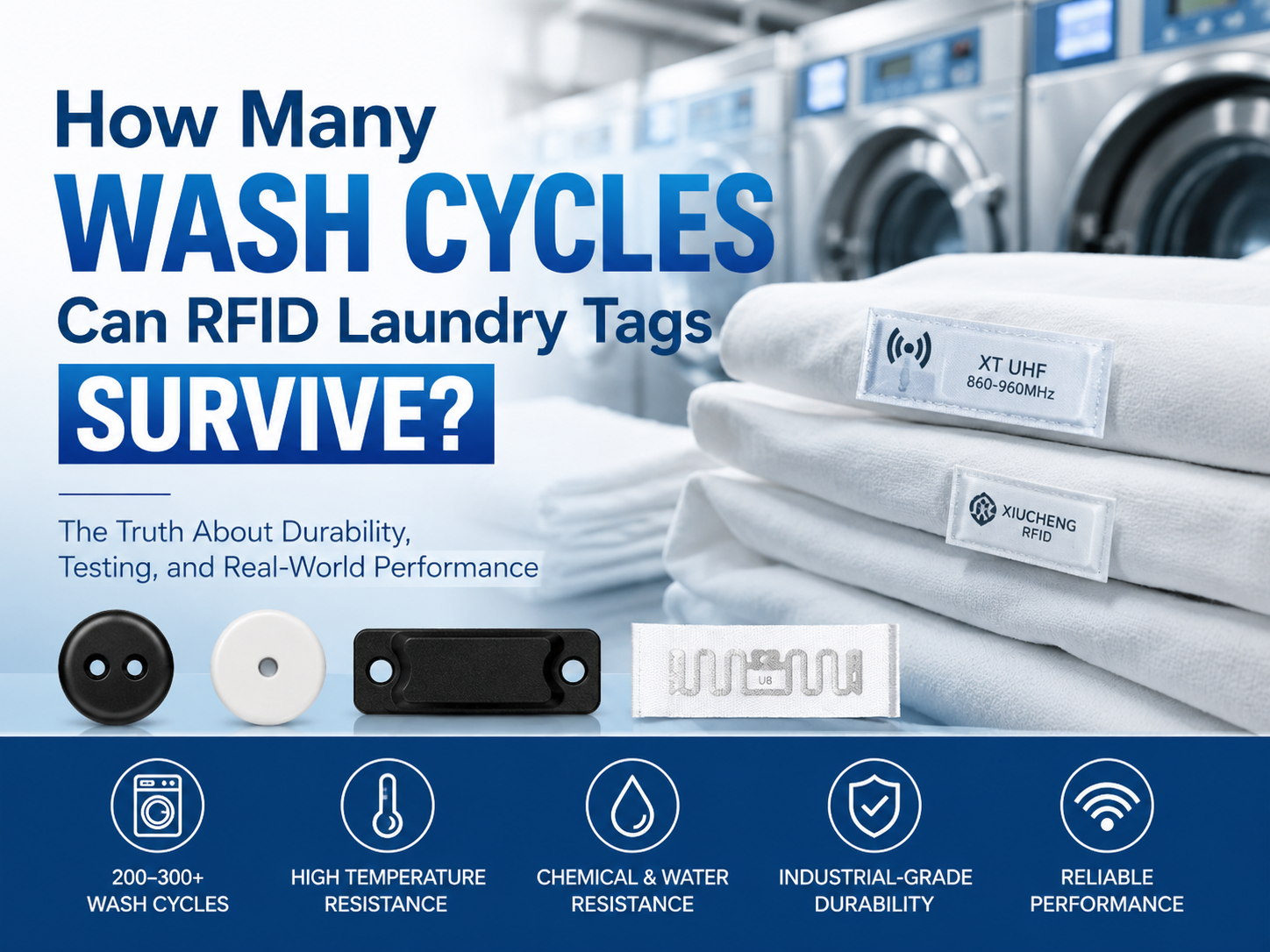
In gewerblichen Wäschereien sind RFID-Wäscheetiketten einigen der härtesten Betriebsbedingungen in der gesamten RFID-Branche ausgesetzt. Industrielles Waschen, Trocknen bei hohen Temperaturen, chemische Waschmittel, Bügeln, Wasserentzug und die Endbearbeitung im Tunnel belasten die in Kleidungsstücken und Wäsche eingebetteten RFID-Etiketten ständig.
Für Hotels, Krankenhäuser, Uniformverleihunternehmen und Industriewäschereien ist die Langlebigkeit einer der wichtigsten Faktoren bei der Auswahl waschbarer RFID-Wäscheetiketten.
Eine häufig gestellte Frage von Käufern lautet:
Wie viele Waschgänge überstehen RFID-Wäscheetiketten tatsächlich?
Die Antwort hängt von mehreren Faktoren ab, darunter:
- Material für Etiketten
- Fertigungsqualität
- Waschtemperatur
- Chemische Belastung
- Druck während der Extraktion
- Verlegungsmethode
- Umgebung in der Wäscherei
- Verpackungstechnologie für RFID-Chips
In diesem Leitfaden erläutert XIUCHENG RFID die tatsächliche Lebensdauer von RFID-Wäscheetiketten und welche Faktoren deren Haltbarkeit in industriellen Wäschereibetrieben beeinflussen.
Typische Lebensdauer von RFID-Wäscheetiketten im Waschgang
Die meisten Produkte in Industriequalität RFID-Wäscheetiketten sind darauf ausgelegt, zu überleben:
| RFID-Wäscheetikett – Typ | Typische Waschzyklen |
|---|---|
| Standard-RFID-Wäscheetiketten aus Textil | 150–200 Zyklen |
| Hochwertige PPS-Knopfanhänger | 200–300 Zyklen |
| RFID-Wäscheetiketten aus Silikon | Über 200 Zyklen |
| Hochwertige Wäscheetiketten für den industriellen Einsatz | Bis zu 300+ Zyklen |
Hochwertige RFID-Wäscheetiketten, die für das Gastgewerbe und das Gesundheitswesen hergestellt werden, halten häufig folgenden Belastungen stand:
- Wiederholtes Waschen bei 90 °C
- Hochdruck-Wasserabsaugung
- Trocknen im Wäschetrockner
- Bügelverfahren
- Chemische Sterilisation
- Autoklavenumgebungen
Viele professionelle RFID-Wäscheetiketten werden nach den Standards für gewerbliche Wäschereien und nicht nach den Waschbedingungen im Haushalt geprüft.
Wovon hängt die Haltbarkeit von RFID-Wäscheetiketten ab?
1. Material der Etiketten
Unterschiedliche Materialien weisen unterschiedliche Widerstandsfähigkeiten auf.
PPS RFID Wäscherei-Etiketten
PPS-Etiketten (Polyphenylensulfid) finden breite Anwendung, da sie folgende Vorteile bieten:
- Hohe Hitzebeständigkeit
- Chemische Beständigkeit
- Wasserdichte Konstruktion
- Mechanische Haltbarkeit
Diese Etiketten werden üblicherweise auf Uniformen, Arbeitskleidung und medizinische Bekleidung aufgenäht.
Silikon-RFID-Wäscheetiketten
Silikon-Anhänger bieten folgende Vorteile:
- Hervorragende Flexibilität
- Verträglichkeit mit weichen Textilien
- Hochtemperaturbeständigkeit
- Hohe Wasserdichtigkeit
Sie werden häufig für Hotelwäsche und Textilien im Gesundheitswesen verwendet.
RFID-Wäscheetiketten aus Textil
RFID-Wäscheetiketten auf Stoffbasis sind leicht und flexibel, wodurch sie sich ideal für Kleidungsstücke und Uniformen eignen.
Textiletiketten minderer Qualität können jedoch früher versagen, wenn:
- Die Qualität der Kapselung ist mangelhaft
- Die Verbindung der Antenne ist schwach
- Die wasserdichte Abdichtung ist unvollständig
Die Bedingungen in der Gewerbewäscherei spielen eine wichtige Rolle
RFID-Etiketten in gewerblichen Wäschereien sind wesentlich härteren Bedingungen ausgesetzt als in Haushaltswaschmaschinen.
Häufige Stressfaktoren
Hohe Temperaturen
Die Waschtemperaturen in der industriellen Wäscheaufbereitung können folgende Werte erreichen:
- Waschen bei 60 °C bis 90 °C
- Bügeln bei 180 °C
- Trocknen bei hoher Temperatur
RFID-Etiketten minderer Qualität können bei wiederholter Hitzeeinwirkung Risse bekommen oder sich ablösen.
Exposition gegenüber Chemikalien
Einsatz in gewerblichen Wäschereien:
- Bleichen
- Alkalische Reinigungsmittel
- Desinfektionsmittel
- Oxidierende Chemikalien
Diese Chemikalien führen zu einer allmählichen Beschädigung minderwertiger Etikettenmaterialien.
Wasserabsaugdruck
Wäschezentrifugen erzeugen eine starke Zentrifugalkraft.
Eine unzureichende Verkapselung von RFID-Tags kann zu folgenden Problemen führen:
- Antennenbruch
- Chipablösung
- Interne Rissbildung
Mechanisches Biegen
Die an Kleidungsstücken angebrachten Etiketten werden wiederholt verbogen, während:
- Waschen
- Zusammenklappen
- Tragen
- Bügeln
Flexible RFID-Wäscheetiketten weisen in der Regel eine bessere Leistung bei textilen Anwendungen auf.
Realistische Erwartungen hinsichtlich der Lebensdauer
Im tatsächlichen Betriebsalltag versagen RFID-Wäscheetiketten selten genau nach einer bestimmten Anzahl von Waschgängen.
Die Haltbarkeit hängt vielmehr von folgenden Faktoren ab:
- Verarbeitungsqualität
- Waschhäufigkeit
- Verfahren zur Wäscheabwicklung
- Wäschereiausrüstung
- Position der Kennzeichnung
Beispielsweise:
Ein hochwertiges RFID-Wäscheschild kann folgende Bedingungen überstehen:
- 300 Waschgänge in der Hotelwäscheverwaltung
- Nur 150 Waschgänge bei intensiver industrieller Arbeitskleidungswäsche
da Arbeitskleidung häufig stärkeren Verschmutzungen und aggressiveren Waschmitteln ausgesetzt ist.
Wie RFID-Hersteller die Waschbeständigkeit prüfen
Professionelle RFID-Hersteller führen vor der Freigabe zur Produktion zahlreiche Haltbarkeitstests durch.
Gängige Prüfstandards
Industrielle RFID-Wäscheetiketten werden häufig auf folgende Eigenschaften geprüft:
- Waschbeständigkeit
- Hitzebeständigkeit
- Wasserbeständigkeit
- Druckfestigkeit
- Chemische Beständigkeit
- Mechanisches Biegen
Typische Testbedingungen
Beispiele hierfür sind:
- 200 industrielle Waschgänge
- 60 bar Wasserabsaugdruck
- Bügeltemperatur von 180 °C
- Chemische Einweichversuche
- Wiederholte Trocknungszyklen
Zuverlässige RFID-Anbieter sollten Prüfberichte oder Angaben zur Lebensdauer vorlegen.
Anzeichen für minderwertige RFID-Wäscheetiketten
Nicht alle waschbaren RFID-Etiketten sind für den Einsatz in der industriellen Wäscherei ausgelegt.
Tags von geringer Qualität scheitern häufig aus folgenden Gründen:
- Mangelhafte Antennenverschweißung
- Mangelhafte Chip-Verbindung
- Unzureichende wasserdichte Kapselung
- Günstige Materialien
- Dünne Schutzschichten
Zu den typischen Anzeichen eines Defekts gehören:
- Verringerter Leseabstand
- Intermittierendes Scannen
- Völlige Unlesbarkeit
- Gebrochenes Etikettengehäuse
- Delaminierung
Für B2B-Einkäufer kann die Entscheidung für kostengünstige Tags ohne industrielle Tests zu einem Anstieg der langfristigen Betriebskosten führen.

Über XIUCHENG RFID
XIUCHENG RFID ist auf die Herstellung einer breiten Palette von RFID-Produkten spezialisiert, darunter RFID-Silikonarmbänder, Tyvek-Armbänder, Stoffarmbänder, elastische Armbänder, Vinyl-Armbänder, RFID-Wäscheetiketten, Tieretiketten und RFID-Karten. Alle Produkte werden unter strenger Qualitätskontrolle und mit fortschrittlicher Produktionstechnologie hergestellt.
Mit 12 Jahren Erfahrung in den Bereichen Armbanddesign, Tag-Design, Qualitätsmanagement und Kundenbeziehungsmanagement haben wir eine solide Grundlage für die Bereitstellung zuverlässiger und leistungsstarker RFID-Lösungen geschaffen.
So verlängern Sie die Lebensdauer von RFID-Wäscheetiketten
Wählen Sie Etiketten in Industriequalität
Verwenden Sie stets RFID-Wäscheetiketten, die speziell für folgende Zwecke entwickelt wurden:
- Gewerbliche Wäschereien
- Krankenhaus-Textilien
- Nachverfolgung von Hotelwäsche
- Einheitliches Management
Wählen Sie geeignete Installationsmethoden aus
Je nach Art des Tags:
- In die Säume einnähen
- Auf den Stoff aufbügeln
- Verwenden Sie Schutzhüllen
Eine unsachgemäße Montage führt zu einer erhöhten mechanischen Belastung.
Vermeiden Sie Bereiche mit extremen Falten
Bringen Sie die Etiketten nicht an Stellen an, an denen sie übermäßigen Biege- oder Dehnungskräften ausgesetzt sind.
Arbeiten Sie mit erfahrenen RFID-Herstellern zusammen
Ein erfahrener Hersteller von RFID-Systemen für die Tierhaltung oder die Industrie verfügt in der Regel über:
- Stabile Chip-Beschaffung
- Verbesserte Verkapselungstechnologie
- Bewährte industrielle Prüfverfahren
- Qualitätskontrolle in der Großserienfertigung
XIUCHENG RFID bietet waschbare RFID-Wäscheetiketten an, die für industrielle Wäschereibedingungen getestet wurden, darunter in Hotels, Krankenhäusern und bei Uniformverleihsystemen.
RFID-Wäscheetiketten für verschiedene Branchen
Hotels
Hotels verlangen in der Regel:
- Weiche Textiletiketten
- Lange Lebenserwartung
- Massen-Scanfunktion
- Hohe Bestandsgenauigkeit
Krankenhäuser
Im Gesundheitswesen besteht Bedarf an:
- Sterilisationsbeständigkeit
- Chemische Beständigkeit
- Hochtemperaturbeständigkeit
Uniformverleihunternehmen
Einheitliche Nachverfolgungssysteme erfordern:
- Hohe Zyklenbeständigkeit
- Starke Leistung bei Kollisionen
- Zuverlässige Langzeit-Lesbarkeit
Industriewäschereien
Industrielle Wäschereien legen Wert auf:
- Höchste Langlebigkeit
- Schnelles Massenlesen
- Geringere Austauschhäufigkeit
Haltbarkeit von UHF- und HF-RFID-Wäschemarken
Sowohl HF- als auch UHF-RFID-Wäscheetiketten können waschbar sein.
UHF-Wäscheetiketten
Vorteile:
- Lange Lesedistanz
- Massenhaftes Scannen
- Schnelle Bestandsverwaltung
Weit verbreitet in:
- Hotels
- Wäscheverfolgung
- Einheitliches Management
HF/NFC-Wäscheetiketten
Vorteile:
- Sicheres Auslesen im Nahbereich
- Smartphone-Kompatibilität
Häufiger anzutreffen in:
- Spezielle Textilanwendungen
- Authentifizierungssysteme
Die Lebensdauer hängt in erster Linie von der Bauweise des Tags ab und weniger von der Art der Frequenz.
Warum die Qualität von RFID-Wäscheetiketten entscheidend ist
Der Austausch defekter RFID-Tags verursacht versteckte Betriebskosten:
- Arbeitsaufwand für die Neuetikettierung
- Nachverfolgung von verlorenem Wäschegut
- Ungenauigkeiten bei der Inventarisierung
- Systemausfall
- Verminderte Automatisierungseffizienz
In großen gewerblichen Wäschereien, in denen täglich Tausende von Textilien verarbeitet werden, tragen zuverlässige RFID-Etiketten erheblich zur Verbesserung der Betriebsstabilität bei.
Etwas höhere Anschaffungskosten führen oft zu geringeren langfristigen Ersatzkosten.
Abschluss
Die meisten industriellen RFID-Wäscheetiketten halten je nach Material, Verarbeitungsqualität und Waschbedingungen zwischen 150 und 300 Waschgänge stand.
Hochwertige RFID-Wäscheschilder, die speziell für gewerbliche Wäschereisysteme entwickelt wurden, bieten:
- Hochtemperaturbeständigkeit
- Chemische Beständigkeit
- Wasserfestigkeit und Langlebigkeit
- Langfristige Lesbarkeit von RFID-Tags
Für Hotels, Krankenhäuser und industrielle Wäschereien ist die Auswahl bewährter RFID-Wäscheetiketten in Industriequalität von entscheidender Bedeutung, um eine zuverlässige Nachverfolgung von Textilien zu gewährleisten und Ersatzkosten zu senken.
XIUCHENG RFID ist ein erfahrener RFID-Hersteller, der weltweit waschbare RFID-Wäscheetiketten für die Wäscheverfolgung, das Bekleidungsmanagement, Hotelwäschesysteme und industrielle Textilanwendungen anbietet.
FAQ
Halten RFID-Wäscheetiketten kochendem Wasser stand?
Viele industrielle RFID-Wäscheetiketten halten je nach Material und Qualität der Ummantelung Waschvorgängen bei hohen Temperaturen von bis zu 90 °C sowie bestimmten Sterilisationsverfahren stand.
Wie lange halten RFID-Wäscheschilder in Hotels?
In Wäschemanagementsystemen für Hotels halten hochwertige RFID-Wäscheetiketten in der Regel 200 bis 300 Waschgänge.
Hören RFID-Wäscheetiketten nach dem Waschen auf zu funktionieren?
Echte industrielle RFID-Wäscheschilder sind speziell für wiederholtes Waschen ausgelegt. Ausfälle sind in der Regel auf eine minderwertige Verarbeitung oder eine unsachgemäße Anbringung zurückzuführen.
Sind RFID-Wäscheetiketten aus Silikon besser als PPS-Etiketten?
Beide weisen Vorteile auf. Silikon-Etiketten bieten Flexibilität, während PPS-Etiketten eine hervorragende Hitze- und Chemikalienbeständigkeit aufweisen.
Welches ist das beste RFID-Etikett für die industrielle Wäscherei?
Waschbare UHF-RFID-Wäscheetiketten werden im industriellen Wäschereimanagement häufig bevorzugt, da sie das Auslesen über große Entfernungen sowie das Massenauslesen ermöglichen.