Understanding the Differences in Pet Identification
Pet identification plays a critical role in animal welfare, lost pet recovery, and responsible ownership. Among the available solutions, dog microchip collar tags and implantable microchips are two widely used identification methods. Although both rely on RFID or NFC technology, they differ significantly in how they are applied, used, and maintained.
This article explains the key differences between collar-based microchip tags and implant microchips, helping pet owners, veterinarians, shelters, and animal organizations choose the most appropriate solution.
What Are Implantable Microchips?
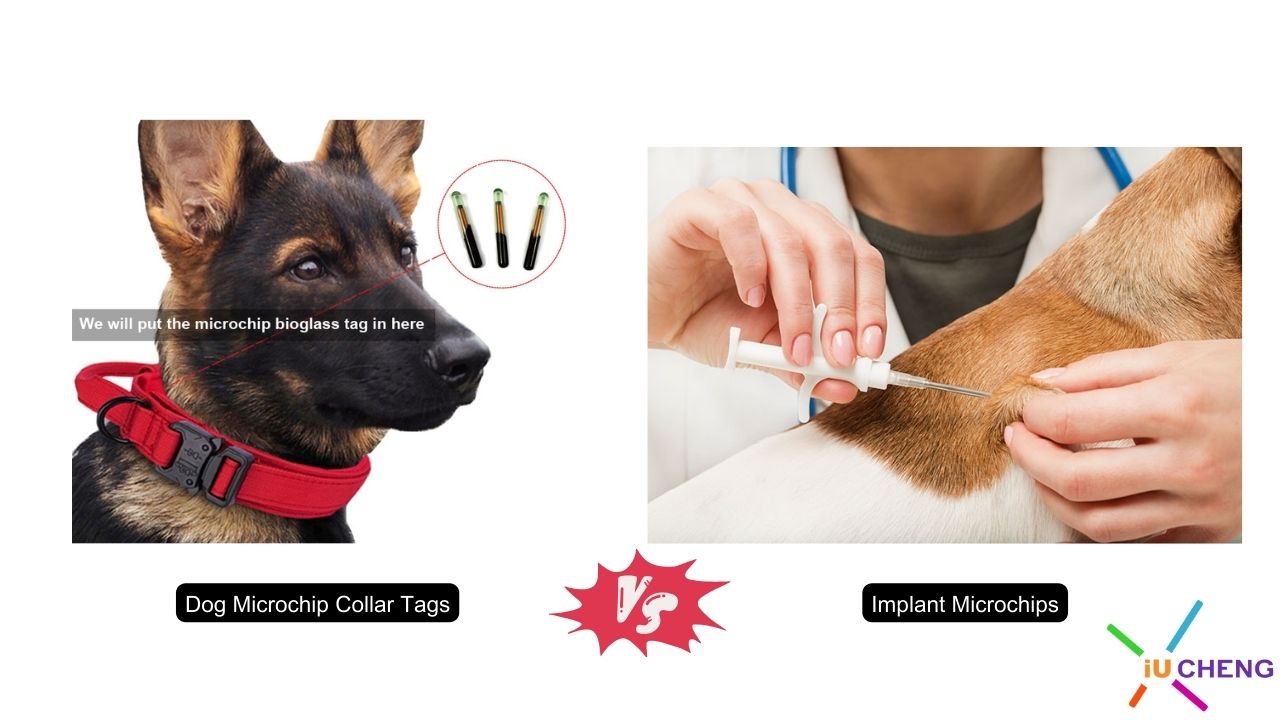
Implantable microchips are small RFID transponders, typically operating at 134.2 kHz (FDX-B), that are injected under a pet’s skin by a veterinarian. Once implanted, the microchip remains with the animal for life and can be read using a compatible scanner.
Key Characteristics of Implant Microchips
- Permanently implanted under the skin
- Require veterinary procedures
- Not visible externally
- Designed for lifetime identification
- Rely on access to compatible scanners and databases
Implant microchips are commonly used in official pet registration systems and are widely accepted by animal authorities worldwide.
What Are Dog Microchip Collar Tags?
Dog microchip collar tags integrate RFID or NFC chips into a wearable pet collar or collar-mounted tag. Unlike implant microchips, these tags are externally visible and can be easily attached, removed, or replaced.
They may include:
- RFID microchips (FDX-B) compatible with veterinary scanners
- NFC pet tags readable by smartphones
- Visual identification combined with electronic data
Dog microchip collar tags are often used as a standalone identification method or as a supplement to implanted microchips.
Comparison of Collar Tags and Implant Microchips
Installation and Accessibility
Implant microchips require professional implantation and cannot be removed without medical intervention. Collar-based microchip tags, by contrast, can be attached or replaced without specialized tools, making them more accessible for temporary identification or rapid deployment.
Visibility and Immediate Identification
Implant microchips are invisible and can only be detected with scanners. Collar tags provide immediate visual confirmation that an animal is identified, which can speed up lost pet recovery and reduce reliance on specialized equipment.
Technology and Readability
- Implant microchips usually operate at 134.2 kHz and require animal RFID scanners.
- Collar microchip tags may support RFID, NFC, or both, allowing identification via scanners or smartphones.
NFC-enabled collar tags are particularly useful in public or urban environments where smartphone access is common.
Durability and Maintenance
Implant microchips are protected inside the body and are not subject to external wear. Collar tags, while durable, depend on collar condition and proper fitting. However, collar-based systems allow damaged or outdated tags to be replaced without affecting the animal.
Data Flexibility
Implant microchips typically store a fixed ID number linked to an external database. Collar tags—especially NFC-based tags—can support dynamic data, such as updated contact information, web links, or lost-pet messages.
Which Option Is Better for Pet Identification?
There is no single solution that fits all scenarios:
- Implant microchips are ideal for permanent, official identification and regulatory compliance.
- Dog microchip collar tags are well suited for visible identification, flexible data use, and fast recovery scenarios.
In many cases, the most effective approach is using both together: an implant microchip for permanent ID and a collar microchip tag for everyday visibility and accessibility.
Typical Use Cases
Implant Microchips Are Commonly Used For:
- Government or municipal pet registration
- Veterinary records and animal control systems
- Long-term, tamper-resistant identification
Dog Microchip Collar Tags Are Commonly Used For:
- Lost and found pet programs
- Animal shelters and rescue organizations
- Pet breeders and temporary identification
- Companion animals requiring visible ID
Conclusion
Dog microchip collar tags and implant microchips serve different but complementary purposes. Implant microchips provide permanent, invisible identification, while collar-based microchip tags offer flexibility, visibility, and ease of use.
For modern pet identification systems, combining both technologies often delivers the best balance between security, accessibility, and recovery efficiency.