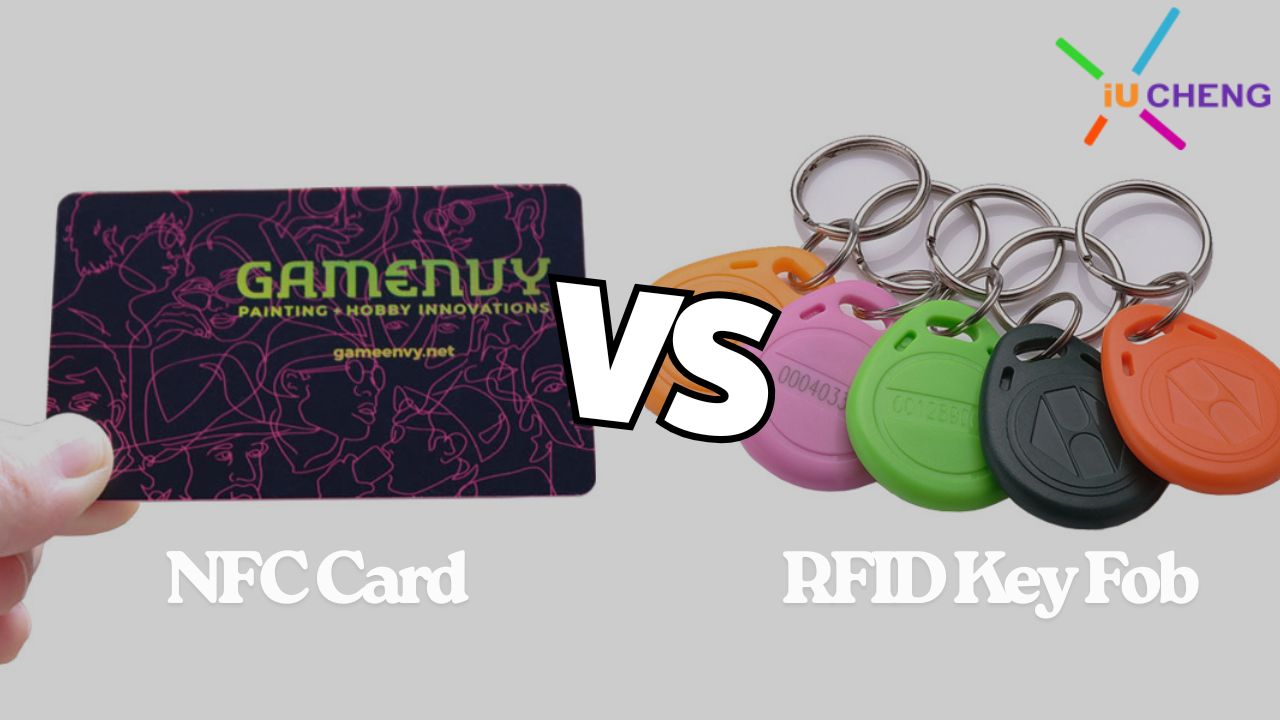
UHF RFID labels are widely used in modern identification and tracking systems due to their long read range and scalability. They are commonly applied in logistics, inventory management, asset tracking, and supply chain operations where large volumes of items must be identified quickly and accurately.
To understand why UHF RFID labels are so effective, it is important to look at how they work at a technical level.
What Is a UHF RFID Label
A UHF RFID label is a type of passive RFID tag that operates in the ultra-high frequency (UHF) band, typically between 860 and 960 MHz. Unlike active RFID tags, UHF RFID labels do not contain a battery. Instead, they rely entirely on energy transmitted from an RFID reader.
A standard UHF RFID label consists of three core elements:
- An RFID microchip
- A printed or etched antenna
- A label substrate (such as paper, PET, or thermal material)
These components are integrated into a thin, flexible format suitable for high-volume labeling applications.
Learn more: UHF RFID Labels vs HF RFID Tags
How UHF RFID Labels Are Powered
UHF RFID labels operate using a principle called electromagnetic coupling. When a UHF RFID reader emits radio waves, the antenna within the label captures a small portion of that energy.
This harvested energy powers the RFID chip momentarily, allowing it to transmit stored data—such as a unique identifier—back to the reader. Once the reader’s signal stops, the label becomes inactive again.
Because no battery is involved, UHF RFID labels offer long operational lifespans with minimal maintenance requirements.
Data Communication Between Label and Reader
Communication between a UHF RFID label and a reader follows standardized protocols, most commonly EPC Class 1 Gen2 (ISO 18000-6C).
The basic process includes:
- The reader sends a continuous RF signal
- The UHF RFID label antenna receives energy
- The chip responds by modulating the reflected signal
- The reader decodes the returned data
This process happens in milliseconds and allows multiple labels to be read simultaneously, a feature known as anti-collision.
Read Range and Performance Factors
One of the key advantages of UHF RFID labels is their extended read range, which can reach several meters depending on system configuration.
Performance is influenced by several factors:
- Antenna design and size
- Chip sensitivity
- Label orientation relative to the reader
- Environmental conditions such as metal or liquids
For applications involving metal surfaces, specialized anti-metal UHF RFID labels are often used to maintain reliable performance.
Typical Applications of UHF RFID Labels
Due to their efficiency and scalability, UHF RFID labels are widely deployed in:
- Logistics and supply chain tracking
- Warehouse and inventory management
- Asset identification
- Retail item-level tagging
- Vehicle and container management
In most large-scale deployments, UHF RFID labels are preferred over HF or LF technologies because they balance read distance, speed, and cost.
UHF RFID Labels vs Other RFID Technologies
Compared to LF and HF RFID systems, UHF RFID labels support faster bulk reading and longer read distances. While HF RFID is often used for secure transactions or short-range applications, UHF RFID labels are optimized for high-throughput environments.
This makes them especially suitable for automated identification systems where efficiency and scalability are critical.
Conclusion
UHF RFID labels work by harvesting energy from a reader’s radio signal and using standardized communication protocols to transmit identification data. Their passive design, long read range, and support for bulk reading make them a core component of modern tracking and inventory systems.
Understanding how UHF RFID labels work helps organizations design more efficient RFID solutions and select the right tag type for their operational needs.