


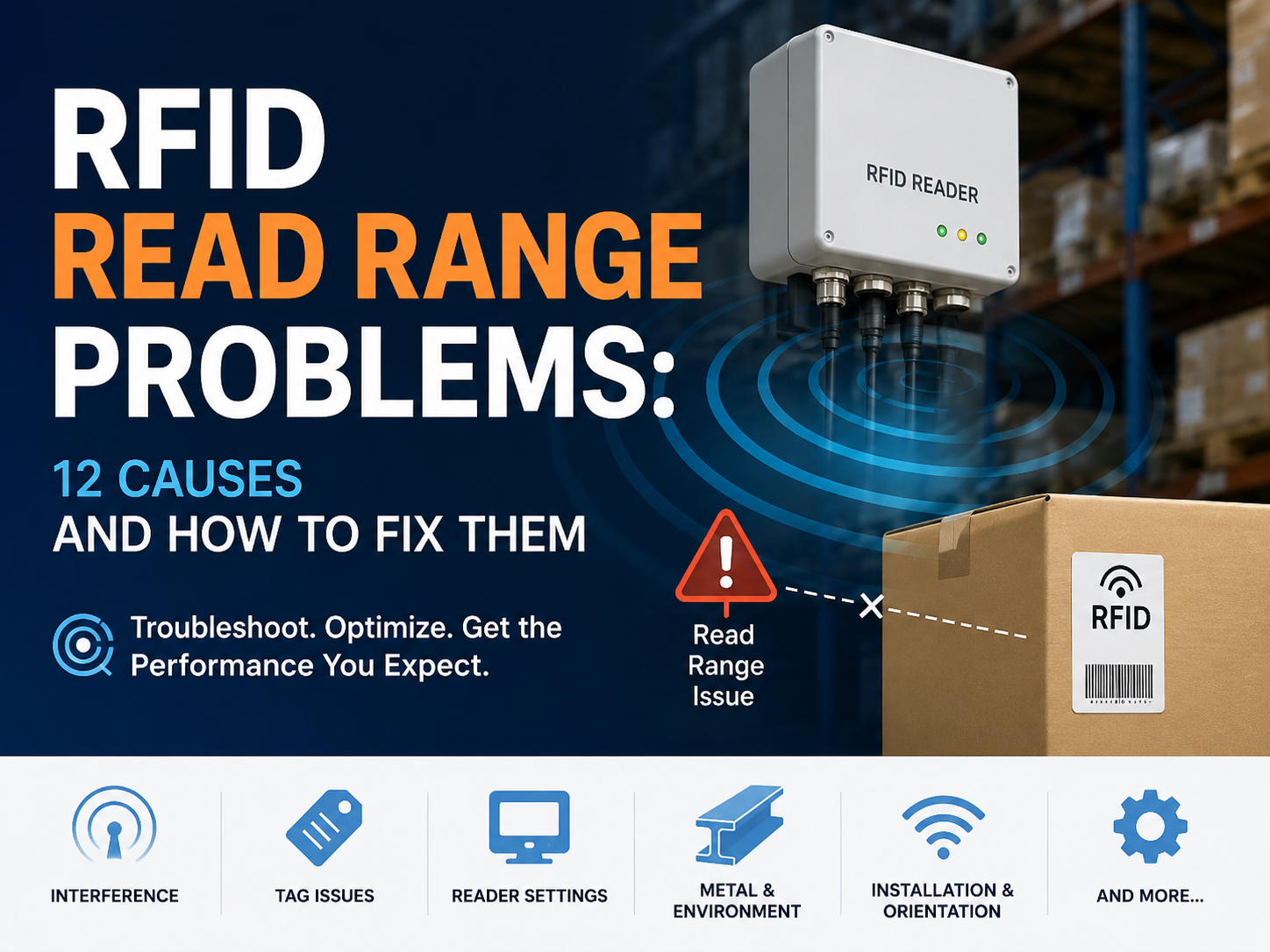
For any RFID system, read range is a critical performance metric. If your RFID tags aren’t reading at the expected distances, it can impact inventory management, warehouse automation, and supply chain efficiency. In this guide, we explore the 12 most common causes of RFID read range problems and provide actionable solutions.
1. Incorrect Antenna Orientation
원인: RFID antenna orientation significantly affects the read range. Tags may have trouble communicating if the antenna polarization doesn’t align.
수정:
- Align the tag with the antenna’s polarization.
- For UHF systems, linear antennas work best with flat tags in parallel orientation, while circularly polarized antennas are more forgiving for variable tag angles.
2. Low-Quality RFID Tags
원인: Cheap or counterfeit RFID tags often use inferior ICs or antennas, resulting in reduced read distances.
수정:
- Use high-quality tags from reputable manufacturers.
- Check the tag datasheet for recommended read ranges and environment specifications.
3. Insufficient Reader Power
원인: RFID readers emit electromagnetic energy to power passive tags. Low output power reduces the effective read range.
수정:
- Increase the reader’s transmission power within regulatory limits.
- Ensure compliance with FCC (USA) or ETSI (Europe) regulations to avoid interference.
4. Environmental Interference
원인: Metal surfaces, liquids, and electromagnetic noise can block or absorb RF signals.
수정:
- 사용 on-metal or waterproof tags for challenging surfaces.
- Relocate the reader to minimize interference.
- Add RF shielding or isolation where necessary.
5. Improper Tag Placement
원인: Tags placed at edges, corners, or near obstructions may not be read reliably.
수정:
- Position tags centrally on items with clear line-of-sight to the reader.
- Test multiple placements to find the optimal spot.
6. Reader Antenna Mismatch
원인: Using the wrong antenna type or gain can reduce read range.
수정:
- 사용 high-gain antennas for long-range applications.
- Select antenna types suitable for the environment (linear for controlled orientation, circular for varied orientation).
7. Excessive Tag Density
원인: Too many tags in a small area can cause signal collisions and reduce read performance.
수정:
- Adjust the reader’s anti-collision settings.
- Space tags appropriately to minimize overlap.
8. Firmware or Software Issues
원인: Outdated or misconfigured RFID reader firmware/software can affect read range and tag detection.
수정:
- Update reader firmware regularly.
- Check software settings for correct protocol selection (e.g., EPC Gen2 / ISO 18000-6C).
9. Cable Losses and Poor Connections
원인: Long or low-quality coaxial cables between reader and antenna can attenuate the signal. Loose connections also impact performance.
수정:
- Use high-quality, properly rated RF cables.
- Keep cable lengths as short as possible.
- Securely connect all antennas to prevent signal loss.
10. Environmental Temperature
원인: Extreme temperatures can affect tag ICs and antenna performance.
수정:
- Use tags rated for your operating temperature range.
- Avoid placing readers or tags near heat sources.
11. Wrong Tag Type for Application
원인: Not all RFID tags are created equal—some are designed for short-range, some for long-range.
수정:
- Match tag type to your required read distance.
- 사용 high-sensitivity UHF tags for long-range tracking.
12. Regulatory Limitations
원인: Regional RF power regulations limit maximum read range.
수정:
- Ensure your system complies with local regulations.
- Optimize tag and antenna selection within allowed power levels.
결론
RFID read range problems can arise from multiple factors, including hardware, environment, software, and regulations. By systematically troubleshooting the 12 causes listed above, you can optimize your RFID system for reliable performance and maximize efficiency in your operations.
A well-designed RFID setup ensures fewer read errors, faster inventory processes, and better visibility across your supply chain.
Pro Tip for Buyers
When testing RFID tags and readers before deployment, maintain a controlled environment and measure real-world read distances under typical operating conditions. Combining high-quality tags, correct antenna types, and proper placement ensures you achieve the desired read range consistently.


