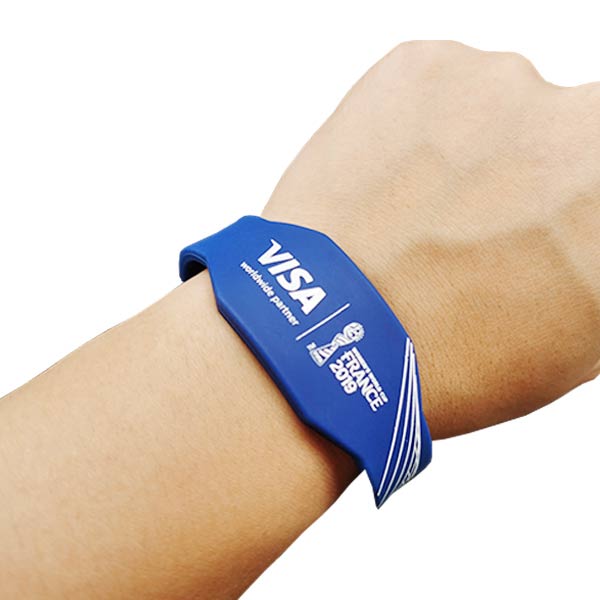
As RFID adoption in the apparel and textile industry continues to accelerate, UHF RFID has become the dominant technology for large-scale inventory visibility, retail automation, and supply-chain digitalization. Among UHF RFID implementations, UHF woven labels and RFID hang tags are the two most commonly used tag formats.
Although both operate on the same UHF standards—EPCglobal Class 1 Gen 2 and ISO/IEC 18000-6C—they differ significantly in physical structure, lifecycle integration, durability, performance stability, and long-term value. Understanding these differences is critical for brands, manufacturers, and system integrators planning scalable RFID projects.
This article provides an in-depth technical comparison of UHF woven labels vs RFID hang tags, focusing on real-world apparel applications rather than theoretical specifications.
Definition and Structural Differences
What Are UHF Woven Labels?
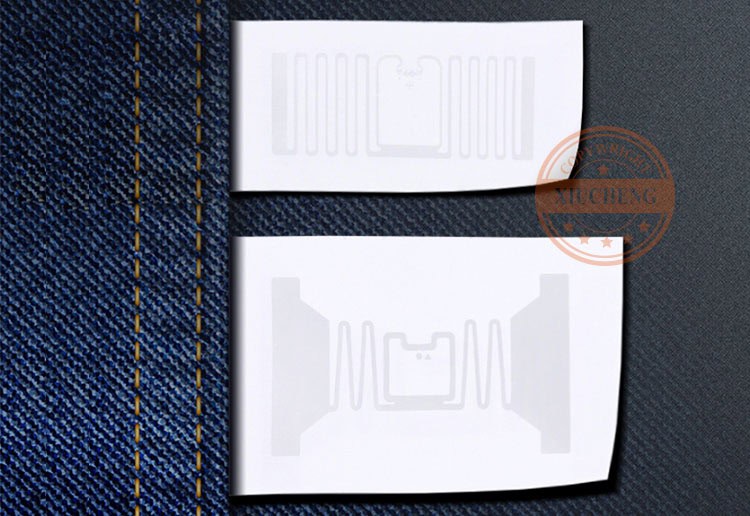
UHF woven labels are textile-based RFID labels where the RFID chip and antenna are integrated into a woven fabric structure, typically made from polyester or nylon. These labels are sewn directly into garments, functioning as both a traditional clothing label and an RFID identifier.
Key characteristics include:
- Permanent integration into garments
- High flexibility and bend resistance
- Minimal impact on comfort and aesthetics
- Lifecycle-level product identification
Because they become part of the garment itself, UHF woven labels are designed for long-term use.
What Are RFID Hang Tags?
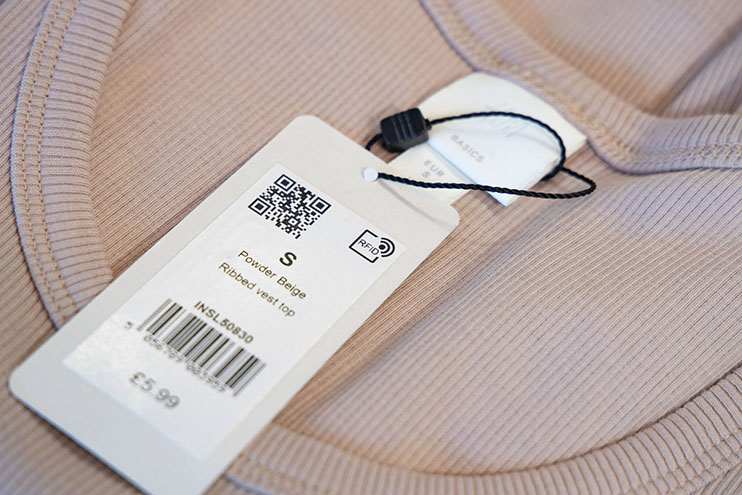
RFID hang tags are UHF RFID inlays embedded in paper or synthetic tag materials, attached to garments using strings, pins, or plastic fasteners. They are primarily used during manufacturing, warehousing, and retail operations before the product is sold.
Key characteristics include:
- Easy attachment and removal
- Larger printable area for visual information
- Short-term usage
- Ideal for fast deployment
RFID hang tags are generally removed at checkout or during final fulfillment.
Application Stage and Lifecycle Comparison
One of the most important differences lies in how long the RFID tag remains associated with the product.
| Aspect | UHF Woven Labels | RFID Hang Tags |
|---|---|---|
| Lifecycle coverage | Full garment lifecycle | Pre-sale only |
| Sewn into clothing | Yes | No |
| Remains after sale | Yes | No |
| Suitable for washing | Yes | No |
RFID hang tags are optimized for logistics and retail execution, while UHF woven labels enable long-term product traceability, including returns, repairs, resale, or rental scenarios.
RFID Performance and Read Stability
RFID Hang Tag Performance
Advantages:
- Larger antenna designs allow strong initial read range
- Good performance in open, flat orientations
- Well suited for portal and handheld scanning
Limitations:
- Performance may degrade when bent or compressed
- Susceptible to physical damage
- Removed after sale, ending data continuity
UHF Woven Label Performance
Advantages:
- Antenna structure remains stable over time
- Consistent read behavior across repeated use
- Reliable performance in stacked or hanging garments
Considerations:
- Antenna design must be optimized for textile environments
- Read range is typically moderate but stable
In practice, read consistency over time is often more valuable than maximum read distance, especially in retail and inventory automation.
Durability and Environmental Resistance
RFID Hang Tags
- Designed for dry, indoor environments
- Limited resistance to moisture or heat
- Not suitable for washing or long-term wear
UHF Woven Labels
- High resistance to bending and abrasion
- Better tolerance to humidity and temperature variation
- Suitable for repeated handling and long storage periods
This makes woven RFID labels especially valuable in uniform management, resale programs, and apparel rental systems.
Brand Integration and User Experience
Visual and Branding Considerations
RFID hang tags offer:
- Large printable surfaces
- Space for pricing, barcodes, and marketing graphics
- Strong point-of-sale visibility
UHF woven labels offer:
- Discreet integration
- No impact on garment design language
- Better alignment with premium or minimalist branding
For many brands, RFID woven labels enhance brand consistency by embedding technology without altering the garment’s appearance.
Cost Structure and Total Cost of Ownership
| Cost Factor | UHF Woven Labels | RFID Hang Tags |
|---|---|---|
| Unit cost | Higher | Lower |
| Deployment speed | Moderate | Fast |
| Usage duration | Long-term | Short-term |
| Long-term value | High | Limited |
While RFID hang tags have a lower upfront cost, UHF woven labels often deliver better total cost of ownership (TCO) when long-term tracking and data reuse are required.
Typical Use Case Recommendations
Best Use Cases for RFID Hang Tags
- Fast fashion retail
- Short product lifecycles
- Initial RFID pilot projects
- High-volume, low-cost deployments
Best Use Cases for UHF Woven Labels
- Mid- to high-end apparel brands
- Inventory accuracy over time
- Returns and after-sales tracking
- Uniforms, workwear, and rental garments
Many mature RFID deployments use a hybrid strategy, combining both tag types at different stages.
Conclusion: How to Choose the Right RFID Label
There is no universally “better” option—only the right solution for a specific business objective.
- Choose RFID hang tags for speed, flexibility, and short-term retail execution
- Choose UHF woven labels for durability, lifecycle tracking, and long-term data value
For apparel brands aiming to move beyond inventory counting toward true product lifecycle intelligence, UHF woven labels represent a strategic investment rather than a simple tagging choice.