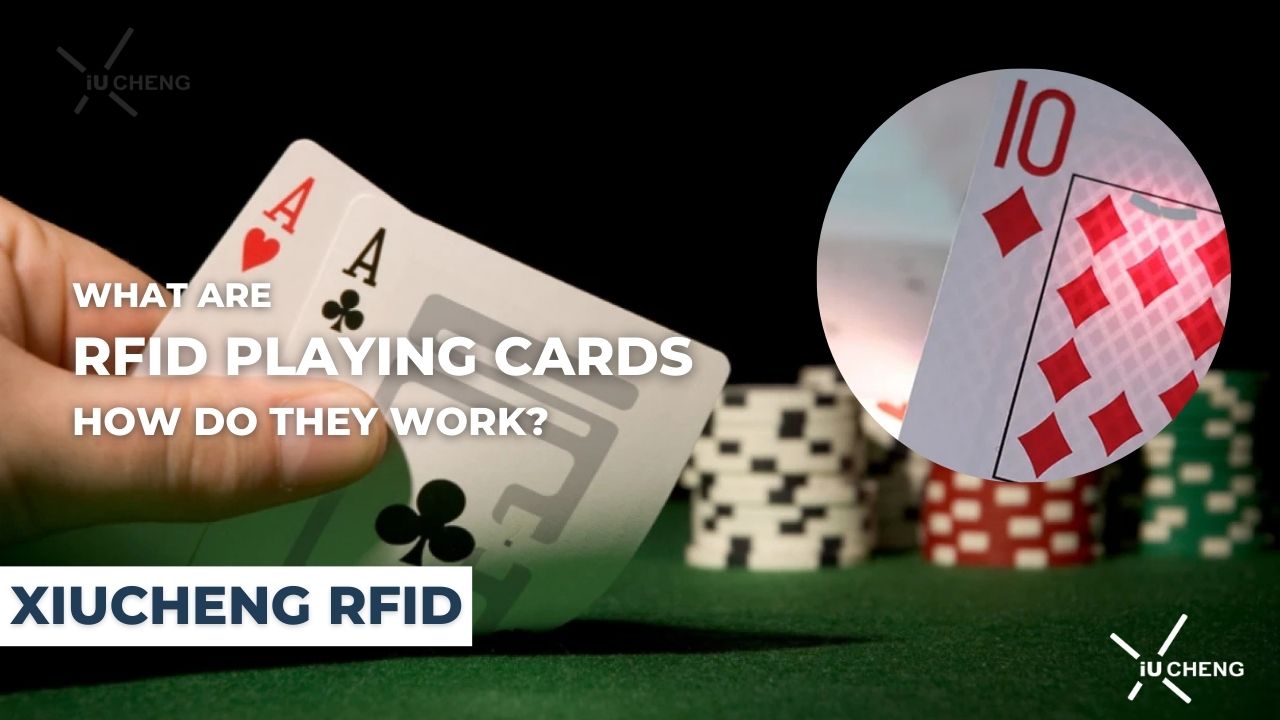
RFID playing cards are traditional-looking game cards enhanced with embedded radio frequency identification technology. Unlike standard decks, each card contains a miniature RFID inlay—comprising a microchip and an ultra-thin antenna—integrated between printed layers during manufacturing. This transformation allows physical cards to be digitally identified, monitored, and interpreted by electronic systems without altering how they are handled, shuffled, or dealt.
From a user’s perspective, RFID playing cards behave exactly like conventional poker or game cards. From a system perspective, however, each card becomes a uniquely identifiable object within a connected environment, enabling real-time data capture, automation, and analytics at scale.
How RFID Playing Cards Work in Practice
RFID playing cards operate using passive RFID communication, meaning the cards themselves do not contain batteries or active electronics. When a card enters the electromagnetic field generated by an RFID reader, the embedded chip draws enough energy from the field to activate and respond.
The chip then transmits its stored data—most commonly a unique identifier (UID)—back to the reader. This exchange typically occurs within milliseconds and requires no physical contact, line-of-sight, or user action.
In professional deployments such as RFID-enabled gaming tables, multiple antennas are installed beneath or around the table surface. These reader arrays continuously scan for card presence and position, allowing the system to:
- Identify which cards are on the table
- Detect when cards are dealt, revealed, or removed
- Track the sequence of play in real time
All of this occurs automatically, without interrupting the flow of the game or requiring manual input from dealers or players.
RFID Standards and Frequencies Used in Playing Cards
Most RFID playing card systems rely on High Frequency (HF) RFID at 13.56 MHz, selected for its balance of reliability, short-range control, and compatibility with thin inlays.
Common standards and technologies include:
- ISO/IEC 14443 Type A – widely used for near-field identification and NFC-compatible chips
- ISO/IEC 15693 – used in some extended-range HF applications
Typical chip families used in RFID playing cards include MIFARE Ultralight EV1, ICODE SLIX, and ICODE ILT variants, chosen for their stable performance, anti-collision capabilities, and suitability for ultra-thin card construction.
Why HF RFID Is Preferred
HF RFID offers several advantages for playing card applications:
- Controlled read range to avoid unintended detection
- Reliable multi-card anti-collision handling
- Minimal sensitivity to human hands and table materials
- Compatibility with laminated paper or plastic card structures
Ultra High Frequency (UHF) RFID is rarely used in playing cards due to its longer read range and higher susceptibility to interference, which can complicate table-level accuracy.
Data Model: UID-Based Card Identification
In most RFID playing card systems, the chip stores a factory-programmed unique identifier rather than extensive game data. The system software maps this UID to a logical card identity (such as suit and rank) in the backend database.
This architecture offers several advantages:
- Simplified card manufacturing
- Faster read performance
- Reduced risk of data corruption
- Easier system updates without re-encoding cards
More advanced implementations may use limited user memory for additional markers or security features, but UID-based identification remains the industry standard.
Primary Applications of RFID Playing Cards
Game Integrity and Anti-Cheating Systems
One of the most established uses of RFID playing cards is in professional gaming environments. By continuously verifying card identity and sequence, systems can:
- Detect missing or substituted cards
- Validate hand outcomes automatically
- Identify irregular dealing patterns
- Support post-game audits and dispute resolution
This significantly increases transparency and trust in regulated gaming operations.
Automated Game Tracking and Analytics
RFID playing cards generate structured, machine-readable data that can be used to analyze gameplay in ways that manual observation cannot. Operators can collect:
- Card distribution and hand histories
- Player decision timing and tendencies
- Dealer consistency and procedural accuracy
These insights are valuable for live broadcasts, operational optimization, training, and long-term performance analysis.
Interactive and Experiential Gaming
Beyond casinos, RFID playing cards are widely used in interactive installations, branded events, and entertainment experiences. Cards can trigger digital responses such as:
- On-screen animations
- Sound or lighting effects
- Score updates or progression logic
This enables hybrid physical-digital experiences while preserving the tactile appeal of traditional card play.
Collectibles and Smart Deck Concepts
RFID-enabled decks also introduce new possibilities for collectors and premium products. Each card can be uniquely registered, authenticated, or linked to digital content, creating a bridge between physical ownership and online ecosystems.
RFID Playing Cards vs. Standard RFID Cards
While both products rely on RFID technology, their design priorities differ fundamentally.
Standard RFID cards are typically rigid credentials designed for access control, payments, or identification. They are optimized for durability, security protocols, and compatibility with readers such as door locks or POS terminals.
RFID playing cards, by contrast, are engineered for playability first. The RFID component must be invisible, lightweight, and flexible enough to withstand constant handling, shuffling, and bending. The technology supports gameplay automation rather than user authentication.
Additionally, RFID playing cards operate in specialized environments with custom reader layouts, whereas standard RFID cards interact with standalone readers in fixed access points.
Conclusion
RFID playing cards represent a specialized application of RFID technology where physical interaction and digital intelligence coexist seamlessly. By embedding passive HF RFID chips into standard card decks, these products enable automated recognition, real-time tracking, enhanced security, and data-driven insights—without compromising the traditional card-playing experience.
For casinos, tournament organizers, system integrators, and interactive experience designers, RFID playing cards offer a powerful tool to modernize card-based environments while maintaining the familiarity players expect. As demand grows for transparent, data-enabled gaming and entertainment systems, RFID playing cards continue to play a critical role at the intersection of physical design and digital infrastructure.