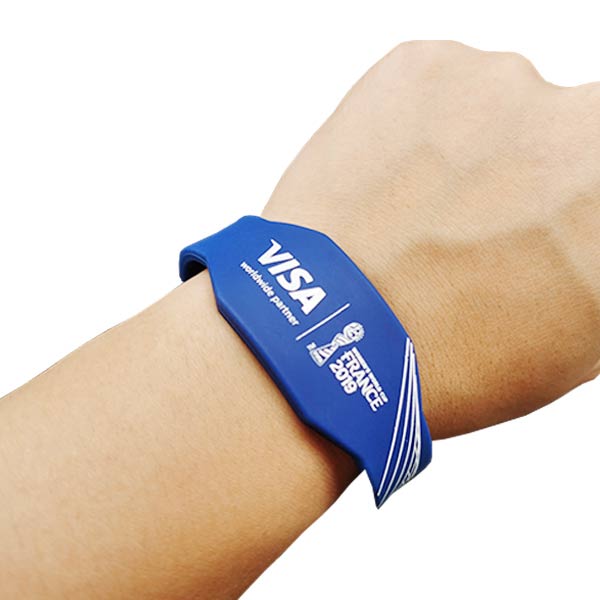
RFID wristbands are wearable identification devices embedded with Radio Frequency Identification (RFID) technology, designed to enable contactless identification, access control, and data interaction in a wide range of environments. Unlike traditional tickets or barcode-based credentials, RFID wristbands allow fast, secure, and automated identification without requiring line-of-sight scanning.
They are widely used in events, access control systems, healthcare facilities, hospitality, cashless payments, and industrial environments where efficiency, durability, and traceability are critical.
How RFID Wristbands Work
An RFID wristband consists of three core components: an RFID chip, an antenna, and a wristband substrate (such as silicone, fabric, or PVC). When the wristband enters the electromagnetic field generated by an RFID reader, the chip is activated and transmits stored data—typically a unique identifier—to the reader.
Most RFID wristbands operate as passive devices, meaning they do not require an internal battery. The reader supplies the energy needed for communication, making the wristbands lightweight, durable, and suitable for long-term or high-volume use.
RFID Technologies Used in RFID Wristbands
RFID wristbands are manufactured using different frequency technologies depending on the application requirements:
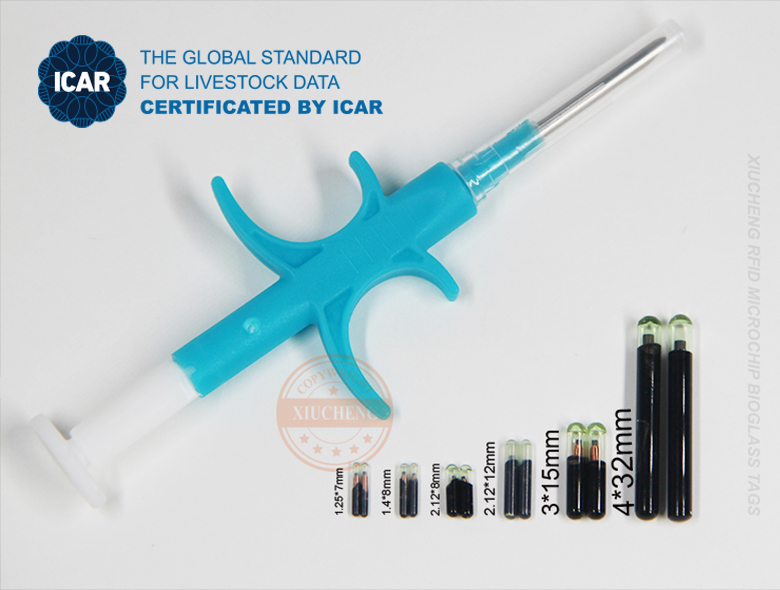
- LF (125 kHz): Short read range, commonly used for basic access control and animal identification.
- HF (13.56 MHz): Includes NFC-compatible chips such as MIFARE and NTAG series, widely used for events, payments, and secure access.
- UHF (860–960 MHz): Supports long-range and bulk reading, ideal for crowd management, asset tracking, and logistics-driven applications.
Each frequency band offers different trade-offs in read range, data speed, and environmental performance.
Common Applications of RFID Wristbands
RFID wristbands are adopted across industries where rapid identification and automation are required:
- Events and Festivals: Fast entry validation, anti-counterfeiting, and attendee tracking.
- Access Control: Secure entry for offices, gyms, resorts, and restricted areas.
- Cashless Payments: Linked to prepaid accounts for food, beverages, and merchandise.
- Healthcare: Patient identification, medication administration, and workflow tracking.
- Hospitality and Leisure: Hotel room access, water parks, and cruise ships.
RFID Wristbands vs Barcode Wristbands
While both RFID and barcode wristbands are used for identification, their capabilities and application scenarios differ significantly.

| Feature | RFID Wristbands | Barcode Wristbands |
|---|---|---|
| Reading Method | Contactless, no line-of-sight required | Optical scan, line-of-sight required |
| Reading Speed | Instant, supports bulk reading | One-by-one scanning |
| Durability | Resistant to water, dirt, and abrasion | Easily damaged or unreadable |
| Security | Encrypted UID and optional data protection | Easily copied or duplicated |
| Data Capacity | Stores unique ID and optional data | Limited to printed information |
| Automation Level | High, supports real-time system integration | Low, mostly manual |
| Typical Use Cases | Access control, cashless payment, tracking | Basic ticketing, temporary identification |
When Barcode Wristbands Are Still Used
Barcode wristbands remain suitable for low-cost, short-term applications such as single-day events or environments where security and automation are not critical. However, as scale and complexity increase, RFID wristbands offer superior performance and reliability.
Advantages of RFID Wristbands
RFID wristbands provide several operational advantages over traditional identification methods:
- Faster throughput at entry points
- Reduced labor costs and human error
- Improved security and anti-fraud protection
- Seamless integration with digital platforms
- Enhanced user experience with tap-and-go interactions
These benefits make RFID wristbands a preferred solution for large-scale and data-driven environments.
Material Options for RFID Wristbands
RFID wristbands are available in various materials to suit different usage scenarios:
- Silicone RFID Wristbands: Waterproof, reusable, ideal for gyms and water parks.
- Fabric RFID Wristbands: Comfortable, customizable, commonly used for events.
- PVC RFID Wristbands: Cost-effective, disposable, suitable for short-term access.
- Tyvek RFID Wristbands: Lightweight and tamper-evident for temporary use.
Material selection impacts comfort, durability, and cost-effectiveness.
Conclusion
RFID wristbands are a powerful upgrade over traditional identification solutions, enabling fast, secure, and scalable contactless interactions. Compared to barcode wristbands, RFID wristbands deliver higher automation, better durability, and stronger security—making them essential for modern access control, event management, and cashless ecosystems.
As digital transformation accelerates across industries, RFID wristbands continue to play a central role in bridging physical access and digital systems.