How RFID Helped Modernize Dairy Farm Management
The livestock industry has changed dramatically over the last two decades. Dairy farms are no longer managed purely by manual observation, paper records, or visual identification. As herd sizes increase and labor costs rise, farms require more precise and automated methods to monitor animal health, feeding behavior, milk production, breeding cycles, and traceability.
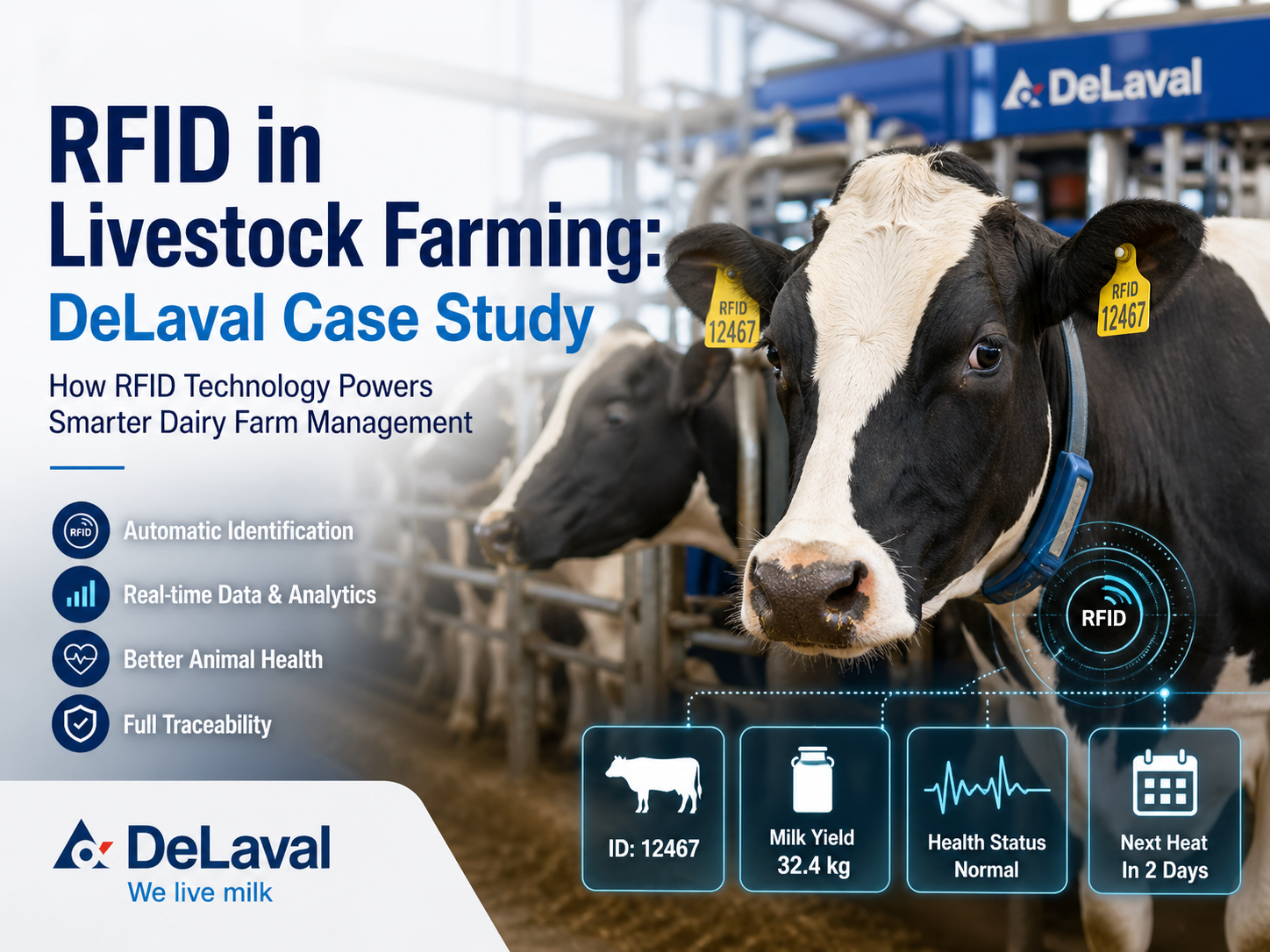
One of the companies leading this transformation is DeLaval, a global supplier of dairy farm automation systems. Through the integration of RFID technology into milking parlors, robotic milking systems, and herd management platforms, DeLaval helped demonstrate how RFID can become the digital backbone of modern dairy operations.
This case study examines how RFID works inside DeLaval systems, the operational problems it solves, and why RFID has become essential infrastructure for large-scale dairy farming.
About DeLaval
DeLaval is one of the world’s best-known dairy technology providers. The company supplies:
- Automated milking systems
- Rotary milking platforms
- Herd management software
- Animal identification systems
- Feeding automation equipment
- Farm analytics platforms
Its solutions are widely deployed across Europe, North America, Oceania, Latin America, and Asia.
A core part of these systems is reliable animal identification. Without accurate identification, no automated dairy system can function correctly. RFID enables that identification layer.
Why RFID Matters in Dairy Farming
Traditional livestock identification methods create major operational limitations:
| Traditional Method | Common Problems |
|---|---|
| Visual ear tags | Difficult to read from distance |
| Paper records | Human error and slow updates |
| Manual monitoring | Labor intensive |
| Branding or tattoos | Limited data integration |
| Batch tracking | Poor individual animal visibility |
Modern dairy farms need real-time visibility into individual cows.
Farm operators need to know:
- Which cow entered the milking station
- How much milk she produced
- Whether her activity levels changed
- Feeding behavior trends
- Heat detection status
- Vaccination and medical history
- Pregnancy and breeding records
- Traceability compliance information
RFID enables all of this automatically.
The RFID System Used in DeLaval Operations
DeLaval systems commonly use low-frequency animal RFID technology operating at 134.2 kHz under ISO 11784 and ISO 11785 standards.
The RFID components typically include:
| Component | Function |
|---|---|
| RFID ear tags | Unique animal identification |
| RFID rumen bolus tags | Internal permanent identification |
| RFID readers | Detect animal ID automatically |
| Antennas | Capture tag signals |
| Herd management software | Stores and analyzes data |
| Automated milking robots | Perform cow-specific operations |
Most systems use FDX-B animal RFID tags compliant with international livestock standards.


How RFID Works Inside a Dairy Farm
Step 1: Each Cow Receives a Unique RFID Identity
Every cow is assigned a unique RFID transponder.
This may be:
- An RFID ear tag
- An injectable microchip
- A rumen bolus tag
The RFID chip contains a globally unique identification number.
Once registered inside herd management software, the animal becomes digitally traceable throughout its entire lifecycle.
Step 2: RFID Automatically Identifies Cows
As cows move through the farm, RFID readers positioned at key locations automatically identify them.
Common reading points include:
- Milking stations
- Feeding systems
- Sorting gates
- Health inspection areas
- Barn entrances
- Weighing stations
No line-of-sight scanning is required.
This eliminates manual checking and reduces labor dependency.
Step 3: Milking Systems Personalize Operations
Inside DeLaval robotic milking systems, RFID identification triggers automated workflows.
When a cow enters the robot:
- The RFID reader identifies the animal
- The system retrieves her production history
- Milking parameters are adjusted automatically
- Feed allocation is personalized
- Milk yield is recorded
- Health anomalies are monitored
Each cow effectively receives individualized treatment.
This is one of the biggest advantages of RFID-enabled dairy automation.
RFID and Automated Milking Robots
One of DeLaval’s most recognized innovations is robotic milking.
Without RFID, robotic milking would not be practical.
The robot must instantly know:
- Which cow entered
- Whether she is eligible for milking
- Previous milking time
- Milk production averages
- Health alerts
- Feeding permissions
RFID enables this decision-making process in real time.
If a cow has already been milked recently, the system may redirect her automatically.
If milk conductivity suggests mastitis risk, the software can trigger alerts immediately.
This creates a closed-loop automated management system.
Herd Health Monitoring Through RFID
RFID is not only about identification.
It becomes the foundation for behavioral analytics.
DeLaval systems combine RFID with sensors to monitor:
| Monitoring Area | Purpose |
|---|---|
| Activity tracking | Detect estrus and illness |
| Rumination behavior | Identify digestive problems |
| Milk conductivity | Detect mastitis |
| Feeding frequency | Monitor nutrition health |
| Weight trends | Track overall condition |
| Movement patterns | Detect injuries or stress |
Because every data point is linked to a unique RFID identity, farms gain highly accurate animal-level insights.
This dramatically improves preventive healthcare.
Operational Benefits Achieved
1. Reduced Labor Costs
Large dairy farms struggle with labor shortages.
RFID automation reduces the need for:
- Manual recordkeeping
- Visual identification
- Repetitive inspection work
- Manual milking procedures
Workers can focus on higher-value tasks instead of repetitive operational work.
2. Improved Milk Production Efficiency
Automated RFID-based systems optimize:
- Milking intervals
- Feeding schedules
- Animal flow
- Lactation monitoring
This improves overall herd productivity.
3. Better Animal Welfare
Continuous monitoring helps farms identify health issues earlier.
Early intervention reduces:
- Stress
- Disease spread
- Treatment costs
- Production losses
Animal welfare compliance is increasingly important globally.
RFID supports data-backed welfare management.
4. Enhanced Traceability
Governments and food supply chains increasingly require livestock traceability.
RFID enables:
- Individual animal records
- Movement tracking
- Vaccination verification
- Disease outbreak management
- Export compliance
This is especially important in international dairy and meat supply chains.
Why ISO 11784/11785 RFID Standards Matter
Livestock RFID systems must operate across multiple vendors, countries, and regulatory environments.
ISO 11784 and ISO 11785 standards ensure interoperability.
This allows:
- RFID tags from one supplier to work with multiple readers
- Governments to standardize livestock databases
- Farms to scale systems more easily
- International traceability systems to function correctly
DeLaval’s use of standardized animal RFID technology helped accelerate global adoption.
Challenges of RFID Deployment in Dairy Farms
Although RFID delivers major advantages, deployment is not always simple.
Common challenges include:
| Challenge | Description |
|---|---|
| Metal interference | Milking equipment can affect signal performance |
| Wet environments | Dairy farms are harsh operating conditions |
| Tag durability | Ear tags may become damaged |
| Reader positioning | Poor installation reduces read rates |
| Data integration | Legacy systems may lack compatibility |
| Initial investment | Automation systems require capital expenditure |
Successful RFID deployment requires proper infrastructure design.
This is why industrial-grade RFID hardware is critical in livestock environments.
RFID Hardware Requirements for Livestock Applications
Livestock RFID systems require tags and readers designed for extreme agricultural environments.
Important characteristics include:
RFID Ear Tags
Requirements:
- Waterproof
- UV resistant
- Chemical resistant
- Long lifespan
- Tamper resistant
RFID Rumen Bolus Tags
Requirements:
- Biocompatible materials
- High retention rate
- Acid resistance
- Reliable long-term readability
RFID Readers
Requirements:
- High read accuracy
- Anti-interference design
- Stable operation in wet environments
- Fast multi-animal detection
Agricultural RFID deployments are far more demanding than many retail RFID applications.
The Future of RFID in Dairy Farming
RFID is evolving from simple identification into intelligent livestock analytics infrastructure.
Future trends include:
- AI-driven herd management
- Predictive disease detection
- Smart feeding optimization
- Integration with IoT farm sensors
- Cloud-based livestock analytics
- Autonomous livestock monitoring
RFID remains the foundational identity layer connecting these technologies together.
Without reliable identification, advanced farm automation cannot function effectively.
Lessons from the DeLaval RFID Case
The DeLaval case demonstrates several important realities about livestock RFID adoption:
- RFID is no longer optional for large-scale dairy automation
- Accurate animal identification drives operational efficiency
- Data collection becomes far more valuable when automated
- RFID enables individualized livestock management
- Dairy automation depends heavily on reliable RFID infrastructure
For RFID manufacturers, integrators, and livestock equipment suppliers, dairy farming remains one of the most mature and commercially valuable RFID application sectors.
Conclusion
DeLaval helped demonstrate how RFID can transform dairy farming from labor-intensive management into data-driven automation.
By combining RFID animal identification with robotic milking, herd analytics, and automated feeding systems, dairy farms gain:
- Higher efficiency
- Better traceability
- Improved animal welfare
- Reduced labor dependence
- More accurate herd management
As global demand for food traceability and agricultural efficiency continues to rise, RFID will remain a core technology in the future of livestock farming.
For RFID manufacturers and agricultural technology suppliers, livestock management continues to be one of the strongest long-term growth opportunities in industrial RFID applications.

About XIUCHENG RFID
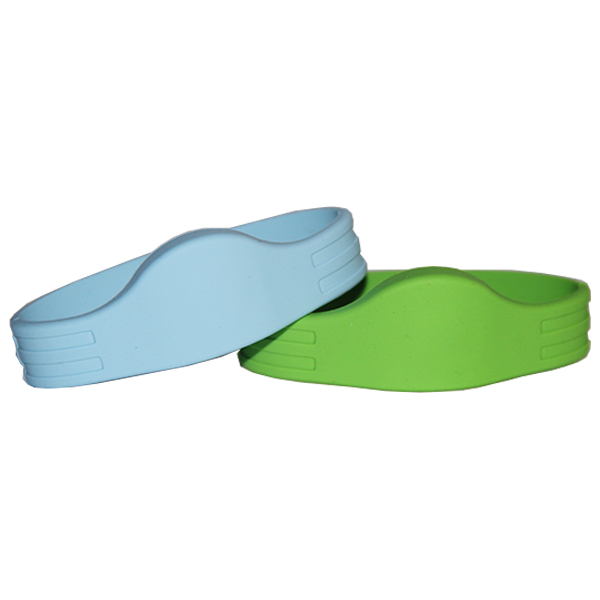
XIUCHENG RFID specializes in manufacturing a wide range of RFID products, including RFID Silicone Wristbands, Tyvek Wristbands, Fabric Wristbands, Elastic Wristbands, Vinyl Wristbands, RFID Laundry Tags, Animal Tags, and RFID Cards. All products are produced under strict quality control and advanced production technology.
With 12 years of experience in wristband design, tag design, quality management, and customer relationship management, we have built a solid foundation for delivering reliable and high-performance RFID solutions.