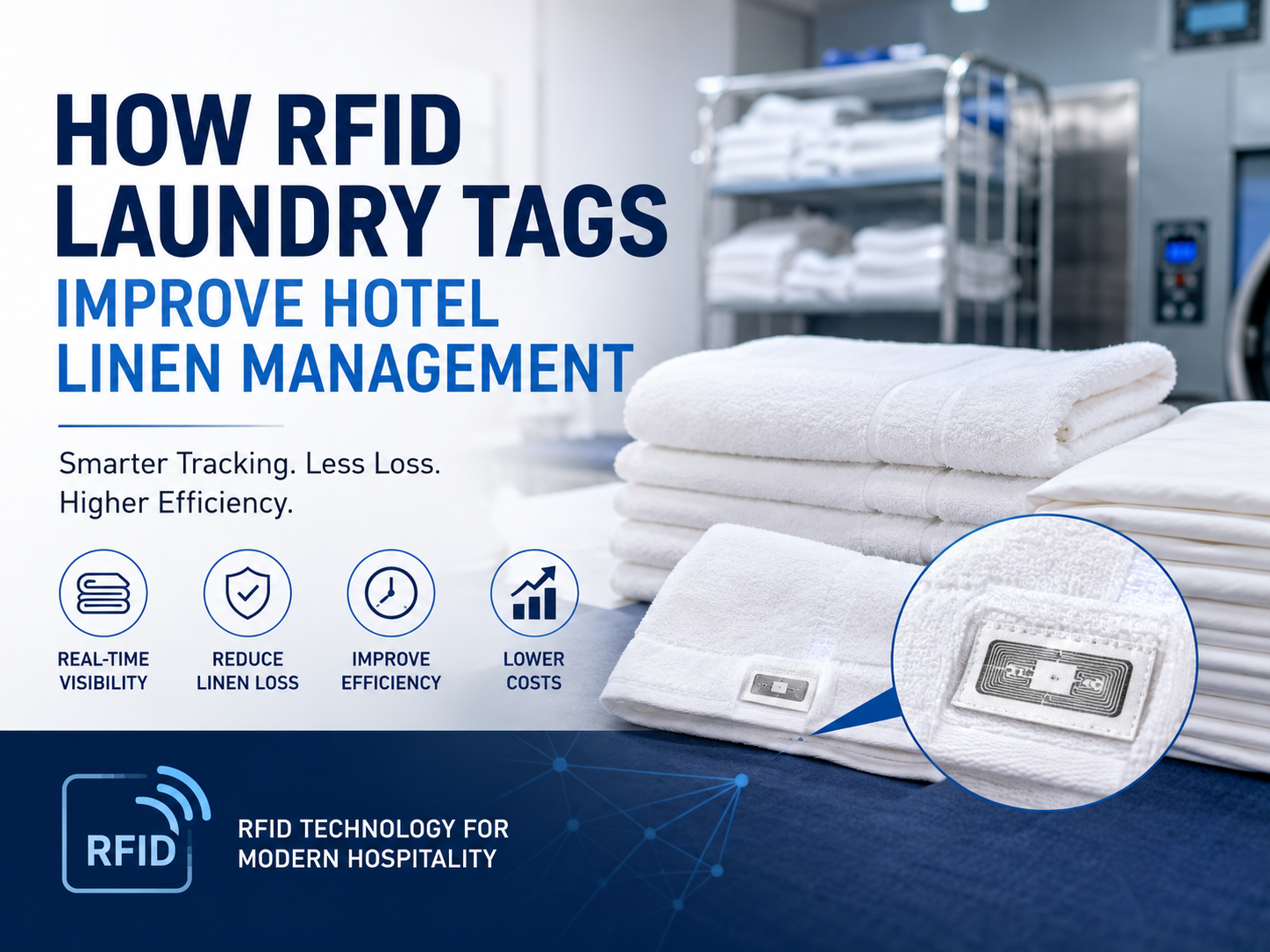
Hotel linen management has always been one of the most difficult operational challenges in the hospitality industry. Hotels process thousands of sheets, towels, bathrobes, uniforms, and table linens every week. Manual tracking methods often lead to inventory loss, delayed laundry cycles, rising replacement costs, and poor guest experiences.
Today, many international hotel groups are adopting RFID laundry tags to automate textile tracking and improve operational efficiency. From luxury resorts to large commercial laundries, RFID technology is becoming a standard solution for hotel linen management.
What Are RFID Laundry Tags?
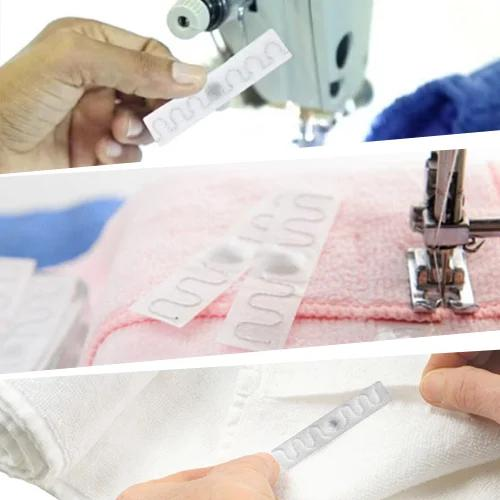
RFID laundry tags are small washable RFID transponders designed specifically for textile tracking applications. These tags can be sewn into linens, inserted into hems, heat-sealed, or attached through pouch installation methods.
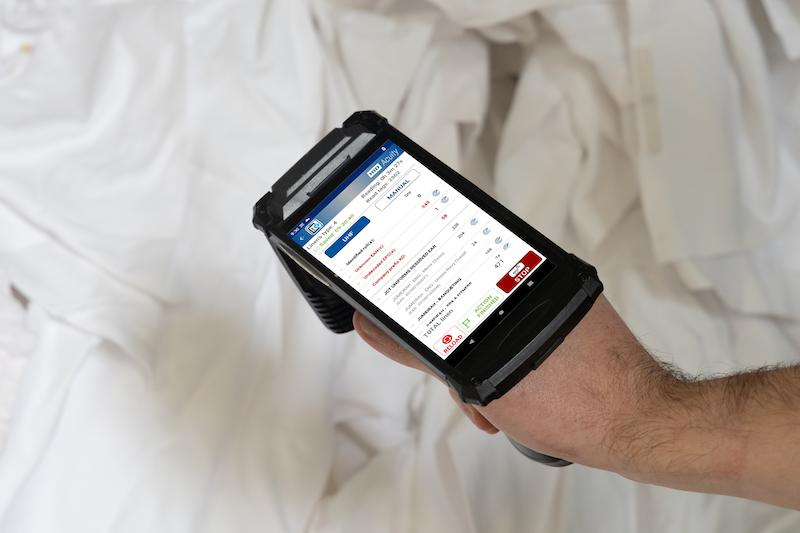
Unlike barcodes, RFID tags do not require line-of-sight scanning. Hundreds of tagged linens can be identified automatically within seconds using RFID readers.
Most hotel laundry systems use:
- UHF RFID laundry tags
- EPC Gen2 / ISO 18000-6C standards
- Heat-resistant encapsulated materials
- Industrial washing durability
- Long read range capability
High-quality RFID laundry tags can survive:
- High-temperature washing
- Water extraction
- Ironing
- Dry cleaning
- Chemical exposure
- Industrial tumble drying
Many tags are rated for over 200 washing cycles.
Common Problems in Hotel Linen Management
1. Linen Loss and Theft
Hotels frequently lose towels, bedsheets, and bathrobes due to:
- Guest theft
- Laundry mix-ups
- Outsourced laundry operations
- Internal mismanagement
- Untracked inventory movement
Without accurate tracking, hotels often over-purchase linens to compensate for losses.
2. Manual Inventory Counting
Traditional inventory counting is labor-intensive and inaccurate.
Housekeeping staff may spend hours manually counting:
- Bedsheets
- Pillowcases
- Towels
- Staff uniforms
- Restaurant linens
Human error creates discrepancies between actual and recorded inventory.
3. Delayed Laundry Turnaround
Hotels require fast linen turnover to maintain room availability.
Without real-time tracking:
- Dirty linens may accumulate
- Clean linens may be misplaced
- Laundry sorting becomes inefficient
- Delivery delays affect housekeeping operations
4. High Operational Costs
Linen replacement is a major operational expense for hotels.
Poor visibility into linen lifecycle data makes it difficult to determine:
- Actual usage rates
- Wash cycle counts
- Damage frequency
- Asset lifespan
How RFID Laundry Tags Work in Hotels
The RFID linen management workflow is relatively straightforward.
Step 1: RFID Tag Installation
Each linen item receives a unique RFID laundry tag containing an electronic identification number.
Examples include:
- Bedsheets
- Towels
- Pillowcases
- Uniforms
- Bathrobes
Step 2: Database Registration
The RFID system records:
- Linen type
- Purchase date
- Department assignment
- Wash count
- Inventory status
Each textile asset becomes digitally traceable.
Step 3: Automated Laundry Tracking
RFID readers automatically scan linens during:
- Collection
- Sorting
- Washing
- Drying
- Storage
- Distribution
Bulk scanning dramatically reduces manual labor.
Step 4: Real-Time Inventory Monitoring
Hotel managers can instantly view:
- Current inventory levels
- Missing items
- Laundry circulation status
- Linen lifecycle analytics
This improves operational decision-making.
Key Benefits of RFID Laundry Tags for Hotels
Improved Inventory Accuracy
RFID systems typically achieve inventory accuracy rates above 95%.
Hotels gain real-time visibility into:
- Available stock
- Linen movement
- Usage frequency
- Replacement needs
This reduces inventory discrepancies significantly.
Reduced Linen Loss
8
RFID technology helps identify where losses occur.
Hotels can track:
- Missing linens
- Unauthorized movement
- Laundry vendor accountability
- Department-level usage
Some hotels report linen loss reductions of 20% to 30% after RFID implementation.
Faster Inventory Audits
Traditional linen counting may take several hours.
With RFID handheld readers:
- Thousands of linens can be counted within minutes
- Minimal staff involvement is required
- Audit accuracy improves dramatically
This is especially useful for large hotels and resorts.
Better Laundry Efficiency
RFID systems optimize the entire laundry workflow.
Benefits include:
- Faster sorting
- Reduced bottlenecks
- Automated batch tracking
- Improved delivery coordination
Commercial laundries can process textiles more efficiently with less manual handling.
Extended Linen Lifespan
RFID software tracks wash cycle counts for every linen item.
Hotels can identify:
- Overused textiles
- Damaged linens
- Replacement schedules
- Quality degradation trends
This helps maximize textile lifespan while maintaining guest experience standards.
Labor Cost Reduction
Automation reduces the need for manual counting and recordkeeping.
Hotels can reallocate staff to:
- Guest service
- Room preparation
- Operational supervision
The result is lower labor costs and improved productivity.
RFID Laundry Tags Used in Hotels
Sew-In RFID Laundry Tags
These tags are stitched directly into textiles.
Advantages:
- Flexible
- Comfortable
- Durable
- Ideal for sheets and uniforms
Heat-Seal RFID Laundry Tags
These tags are attached using heat press technology.
Advantages:
- Fast installation
- Secure bonding
- Suitable for towels and flat linens
Silicone RFID Laundry Tags
Silicone tags provide enhanced durability for harsh industrial environments.
Advantages:
- Waterproof
- Chemical-resistant
- High-temperature resistant
RFID Linen Tracking in Large Hotel Groups
Several major hospitality companies have publicly discussed RFID adoption in laundry and textile management operations.
Examples include:
- Marriott International
- Hilton Hotels & Resorts
- Hyatt Hotels Corporation
Large-scale hotel RFID deployments are often integrated with:
- Property management systems (PMS)
- Commercial laundry providers
- Asset management platforms
- Housekeeping operations
RFID Laundry Tags vs Barcode Tracking
| Feature | RFID Laundry Tags | Barcode Labels |
|---|---|---|
| Bulk Reading | Yes | No |
| Line-of-Sight Required | No | Yes |
| Washing Durability | Excellent | Limited |
| Automation Capability | High | Low |
| Reading Speed | Very Fast | Slow |
| Inventory Accuracy | High | Medium |
RFID systems are significantly more efficient for large-scale hotel operations.
Choosing the Right RFID Laundry Tag
When selecting RFID laundry tags for hotel applications, buyers should evaluate:
Washing Durability
Industrial laundry environments involve:
- High heat
- Chemicals
- Water pressure
- Mechanical stress
Choose tags tested for long-term durability.
RFID Frequency
Most hotels use UHF RFID because it supports:
- Long read range
- Fast bulk scanning
- Large-scale inventory management
Tag Size and Installation Method
Different linens require different tag formats.
For example:
- Small tags for towels
- Flexible tags for sheets
- Reinforced tags for uniforms
Compliance Standards
Ensure compatibility with:
- EPC Gen2
- ISO 18000-6C
- Commercial laundry systems

About XIUCHENG RFID
XIUCHENG RFID specializes in manufacturing a wide range of RFID products, including RFID Silicone Wristbands, Tyvek Wristbands, Fabric Wristbands, Elastic Wristbands, Vinyl Wristbands, RFID Laundry Tags, Animal Tags, and RFID Cards. All products are produced under strict quality control and advanced production technology.
With 12 years of experience in wristband design, tag design, quality management, and customer relationship management, we have built a solid foundation for delivering reliable and high-performance RFID solutions.
Future Trends in RFID Hotel Linen Management
The hospitality industry is increasingly combining RFID with:
- IoT platforms
- Cloud-based analytics
- AI-powered inventory forecasting
- Automated laundry tunnels
- Smart housekeeping systems
Future RFID linen systems may provide predictive maintenance and fully automated textile lifecycle management.
Conclusion
RFID laundry tags are transforming hotel linen management by improving inventory visibility, reducing losses, lowering labor costs, and optimizing laundry operations.
As hotels continue to modernize operational workflows, RFID technology is becoming an essential tool for efficient textile management.
For hotels, resorts, hospitals, and commercial laundries, RFID laundry tracking offers measurable ROI through better asset utilization and operational efficiency.
Businesses seeking scalable textile tracking solutions should consider industrial-grade washable RFID laundry tags designed specifically for hospitality environments.