Die RFID-Technologie revolutioniert die Bestandsverwaltung in der Schönheits- und Kosmetikbranche. Von Hautpflege- und Make-up-Produkten bis hin zu Haarpflegeprodukten setzen Einzelhändler und Hersteller zunehmend UHF-RFID-Etiketten ein, um die Bestandsgenauigkeit zu verbessern, Abläufe zu optimieren und die Omnichannel-Abwicklung zu verbessern.
Kosmetikprodukte stellen jedoch besondere Herausforderungen für den Einsatz von RFID dar. Flüssigkeiten, kleine Verpackungen und hochwertige Waren erfordern eine sorgfältige Auswahl und Anbringung der Etiketten. Die Wahl eines ungeeigneten Etiketts kann zu schlechten Leseraten, Bestandsabweichungen und Problemen bei der Einhaltung von Einzelhandelsstandards führen.
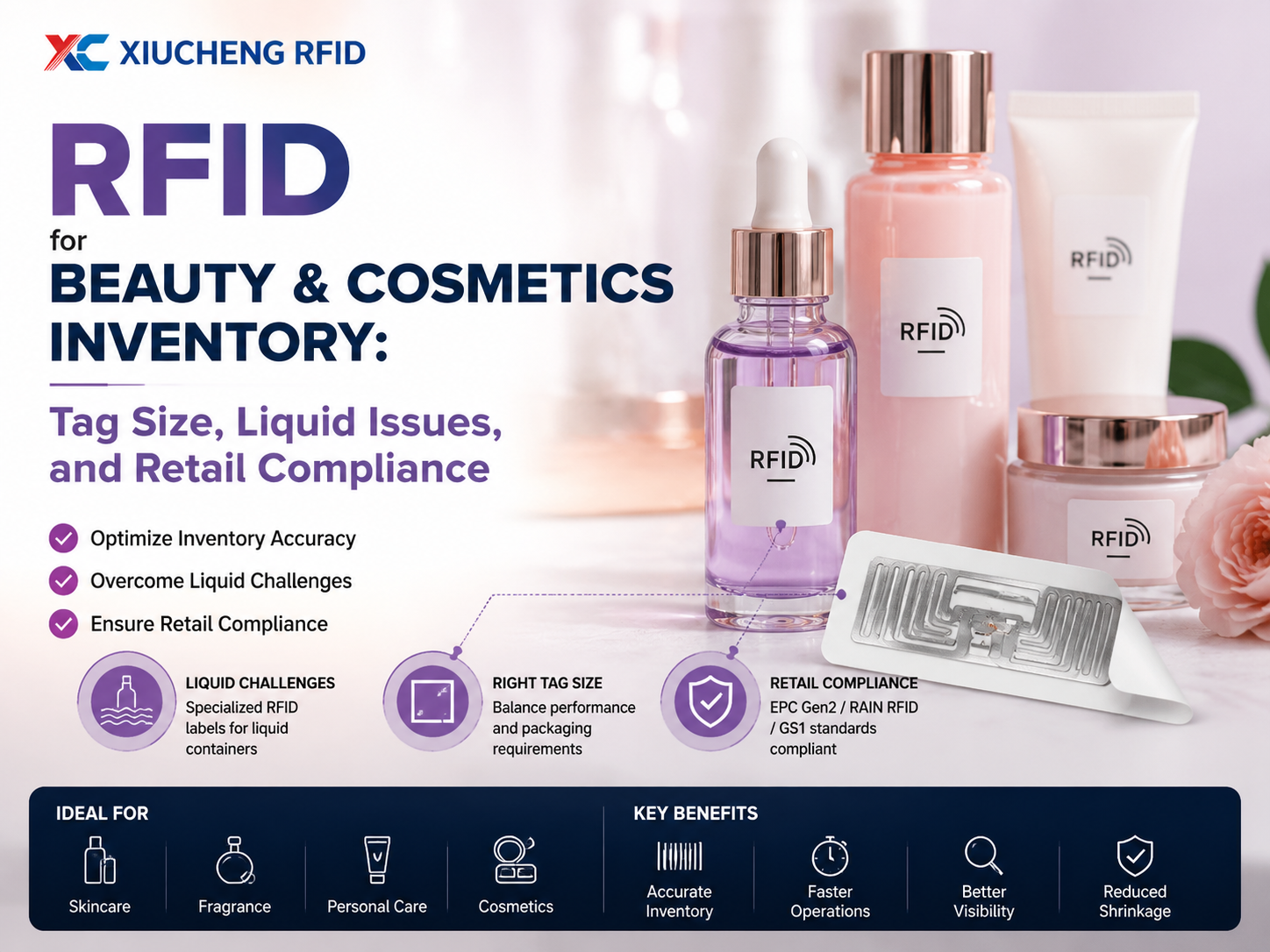
In diesem Leitfaden wird erläutert, wie Sie die richtigen RFID-Etiketten für Schönheits- und Kosmetikprodukte auswählen, wobei der Schwerpunkt auf der Tag-Größe, der Beeinträchtigung durch Flüssigkeiten und den Anforderungen an die Einhaltung der Vorschriften im Einzelhandel liegt.
Warum RFID für die Beauty- und Kosmetikbranche von großem Nutzen ist
Die Kosmetikbranche steht vor verschiedenen Herausforderungen im Bereich der Bestandsverwaltung:
- Große SKU-Vielfalt mit zahlreichen Farbtönen, Größen und Verpackungsvarianten
- Kleine Produktgrößen, die das manuelle Scannen zeitaufwendig machen
- Flüssigkeiten, die die Leistung von RFID-Signalen beeinträchtigen
- Luxusprodukte, die Maßnahmen zur Fälschungssicherung erfordern
RFID verbessert die Betriebsabläufe durch folgende Vorteile:
- Schnellere Bestandsaufnahmen
- Echtzeit-Bestandsübersicht
- Benachrichtigungen zur automatischen Nachbestellung
- Erhöhte Sicherheit für hochwertige Produkte
- Optimierte Selbstbedienungskassen für Einzelhandelskunden
Überlegungen zur Tag-Größe
Die Wahl der richtigen Größe für RFID-Etiketten ist entscheidend für die Leistungsfähigkeit bei Kosmetikprodukten.
Kleine Verpackungen
Viele Kosmetikartikel, wie beispielsweise Lippenstifthülsen, kleine Fläschchen oder Puderdosen, bieten nur begrenzten Platz für RFID-Etiketten.
Bewährte Praktiken:
- Wählen Sie kompakte Einlagen, die auf kleine Flächen passen, ohne die Ästhetik der Verpackung zu beeinträchtigen.
- Verwenden Sie Anhängeetiketten oder Kartonetiketten für sehr kleine Artikel, bei denen eine direkte Beschriftung nicht praktikabel ist.
- Stellen Sie sicher, dass die Antenne für kurze Lesereichweiten optimiert ist, falls die Produktgröße die Abmessungen des Tags einschränkt.
Mittlere und große Verpackungen
Produkte wie Shampooflaschen, Lotionsflaschen und Parfümflakons bieten mehr Platz für Etiketten.
Bewährte Praktiken:
- Größere Antennen verbessern die Lesereichweite und die Zuverlässigkeit.
- Bringen Sie das Etikett möglichst auf der flachen Seite des Behälters oder des Verpackungskartons an.
- Testen Sie die Anbringung der Etiketten am tatsächlichen Produkt, um die Leseraten zu maximieren.
Herausforderungen durch Flüssigkeitsinterferenzen
Flüssigkeiten absorbieren UHF-Signale, wodurch sich die Lesereichweite verringert und es zu Leistungsschwankungen kommt.
Strategien zur Minimierung von Flüssigkeitsstörungen
- Schaumstoff oder Abstandshalter: Legen Sie eine dünne Schaumstoffunterlage zwischen das Etikett und den Flüssigkeitsbehälter, um die Antennenleistung zu verbessern.
- Etikettierung direkt auf der Verpackung: Anstatt den RFID-Chip direkt auf der Flasche anzubringen, versehen Sie bitte die Umverpackung mit einem Tag.
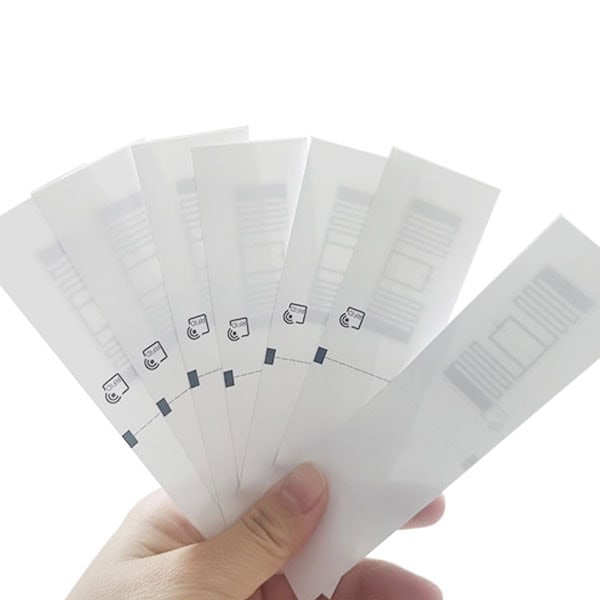
- Für Flüssigkeiten optimierte Etiketten: Wählen Sie RFID-Inlays, die speziell für Flüssigkeitsbehälter entwickelt wurden und häufig über eine speziell abgestimmte Antennenform verfügen.
Tests sind von entscheidender Bedeutung
Testen Sie Etiketten stets mit:
- Tatsächlich mit Flüssigkeit gefüllte Produkte
- Vorgesehene Verkaufsverpackung
- Bedingungen für das Lesen großer Datenmengen
Laborwerte allein lassen keine Rückschlüsse auf die tatsächliche Leistung im Praxiseinsatz zu.
Compliance und Standards im Einzelhandel
Einzelhändler verlangen zunehmend die Einhaltung folgender Vorschriften:
- EPC Gen2 UHF: Gewährleistet weltweite Interoperabilität.
- RAIN-RFID-Standards: Für Anwendungen in den Bereichen Lieferkette und Bestandsverwaltung.
- GS1-EPC-Richtlinien: Zur Harmonisierung von Barcodes und RFID.
Etiketten, die nicht den Vorgaben entsprechen, können von Einzelhandelspartnern zurückgewiesen werden, was zu kostspieligen Nacharbeiten oder verspäteten Lieferungen führen kann.
Weitere Überlegungen
- Seriennummern-Etiketten zur Authentifizierung und zur Fälschungssicherung.
- Integration mit Kassensystemen für den automatisierten Bezahlvorgang.
- Unterstützung für den Omnichannel-Einzelhandel, einschließlich der Abwicklung von E-Commerce-Bestellungen.
Empfohlene Etikettentypen für Kosmetikprodukte
| Produkttyp | Empfohlenes Etikett | Anmerkungen |
|---|---|---|
| Parfümflakons | Flüssigkeitsbeständiges UHF-Etikett | Optimieren Sie die Platzierung für eine maximale Lesereichweite |
| Lotion und Hautpflege | RFID-Etiketten mit Schaumstoffrückseite oder direkt auf dem Karton | Schutz vor Flüssigkeitsaufnahme |
| Make-up und Puderdosen | Kleine Einlagen oder Anhängeetiketten | Stellen Sie sicher, dass die Ästhetik gewahrt bleibt |
| Haarpflegeflaschen | Mittelgroße UHF-Etiketten | Flache Oberflächen werden für eine bessere Antennenleistung bevorzugt |
Häufige Fehler, die Sie vermeiden sollten
- Produktprüfungen außer Acht lassen: Überprüfen Sie die Etiketten stets anhand der tatsächlichen Flüssigprodukte und Verpackungen.
- Verwendung generischer Bezeichnungen: Herkömmliche RFID-Etiketten erzielen bei flüssigen Produkten möglicherweise keine optimale Leistung.
- Falsche Platzierung der Antenne: Die Platzierung hat einen größeren Einfluss auf die Lesesicherheit als die Auswahl des Chips.
- Missachtung der Standards im Einzelhandel: Etiketten, die den Vorschriften nicht entsprechen, können zurückgewiesen werden oder müssen neu etikettiert werden.
Die Zusammenarbeit mit einem erfahrenen RFID-Anbieter
Ein erfahrener RFID-Hersteller kann:
- Empfehlen Sie für jedes Produkt die beste Einlage und den besten Antennentyp.
- Bieten Sie individuelle Etikettengrößen für kleine oder unregelmäßig geformte Verpackungen an
- Testen Sie die Leistung der Etiketten unter realen Bedingungen
- Stellen Sie die Einhaltung der EPC-, RAIN- und GS1-Standards sicher
- Bieten Sie zur Fälschungsbekämpfung Optionen zur Kodierung und zur seriennummerngestützten Nachverfolgung an
Bei XIUCHENG RFID, sind wir auf RFID-Etiketten für die Beauty- und Kosmetikbranche spezialisiert. Unser Team unterstützt Marken bei der Auswahl des passenden Tags, der Prüfung der Anbringungsorte und der Umsetzung von Lösungen, die die Lesegenauigkeit und die betriebliche Effizienz maximieren.

Über XIUCHENG RFID
XIUCHENG RFID ist auf die Herstellung einer breiten Palette von RFID-Produkten spezialisiert, darunter RFID-Silikonarmbänder, Tyvek-Armbänder, Stoffarmbänder, elastische Armbänder, Vinyl-Armbänder, RFID-Wäscheetiketten, Tieretiketten und RFID-Karten. Alle Produkte werden unter strenger Qualitätskontrolle und mit fortschrittlicher Produktionstechnologie hergestellt.
Mit 12 Jahren Erfahrung in den Bereichen Armbanddesign, Tag-Design, Qualitätsmanagement und Kundenbeziehungsmanagement haben wir eine solide Grundlage für die Bereitstellung zuverlässiger und leistungsstarker RFID-Lösungen geschaffen.
Abschließende Gedanken
RFID ist ein leistungsstarkes Instrument zur Verwaltung von Beauty- und Kosmetikbeständen, doch eine erfolgreiche Umsetzung erfordert Liebe zum Detail:
- Wählen Sie Etikettengrößen aus, die den Produktabmessungen entsprechen
- Minderung von Störungen durch Flüssigkeiten durch die Gestaltung und Anordnung der Etiketten
- Sicherstellung der Einhaltung globaler Standards im Einzelhandel
Durch die Zusammenarbeit mit einem erfahrenen RFID-Anbieter und die Erprobung praxisnaher Szenarien können Marken eine zuverlässige Bestandsverfolgung erreichen, die betriebliche Effizienz steigern und das Kundenerlebnis verbessern.