


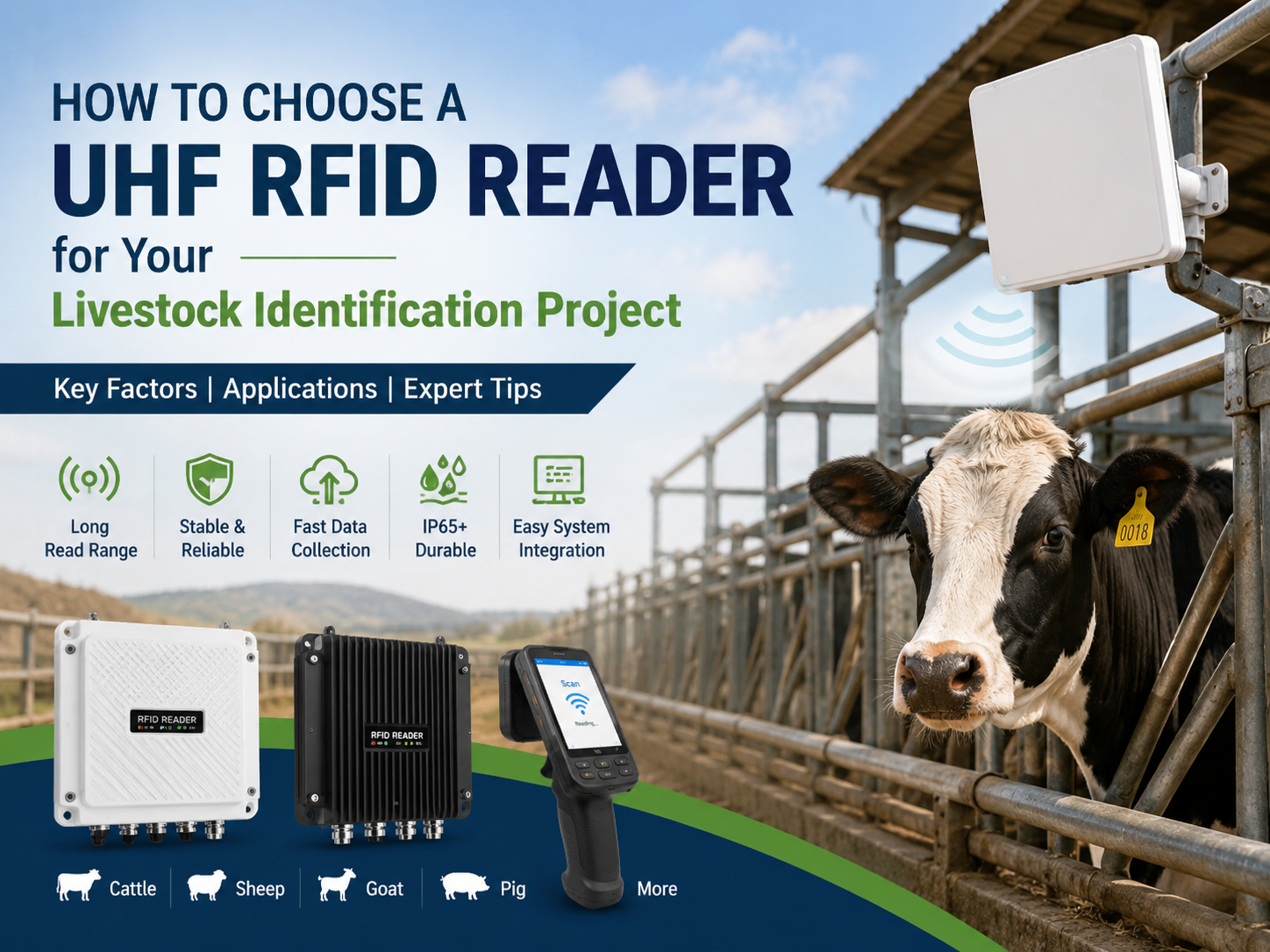
L'identificazione del bestiame è diventata una componente fondamentale dell'allevamento moderno. Che si tratti di bovini, ovini, caprini, suini o altri animali da allevamento, gli allevatori e le organizzazioni agricole si affidano sempre più alla tecnologia RFID per migliorare la tracciabilità, il controllo delle malattie, la gestione riproduttiva e la conformità alle normative.
Sebbene i marchi auricolari RFID siano spesso al centro dell’attenzione, è il lettore RFID il dispositivo che raccoglie e trasferisce i dati relativi agli animali nei sistemi di gestione. La scelta di un lettore non adeguato può comportare bassi tassi di lettura, operazioni lente e un aumento dei costi di manodopera.
Questa guida illustra i fattori chiave da considerare nella scelta di un lettore RFID UHF per progetti di identificazione del bestiame.
Perché utilizzare la tecnologia RFID UHF nella gestione del bestiame?
I metodi tradizionali di identificazione visiva richiedono un'ispezione manuale e l'inserimento manuale dei dati, operazioni che possono richiedere molto tempo ed essere soggette a errori.
La tecnologia RFID UHF consente di:
- Identificazione più rapida degli animali
- Funzionamento senza mani
- Distanze di lettura più lunghe
- Raccolta automatizzata dei dati
- Miglioramento della tracciabilità
- Riduzione del fabbisogno di manodopera
I sistemi RFID UHF sono comunemente utilizzati in:
- Allevamenti di bestiame
- Aziende lattiero-casearie
- Allevamenti ovini
- Allevamenti intensivi
- Strutture per l'allevamento degli animali
- Aste di bestiame
- Gestione del trasporto degli animali
Comprendi il tuo ambiente di lettura
Il primo passo nella scelta di un lettore è capire dove verrà utilizzato.
A seconda del tipo di allevamento, sono necessari lettori di tipo diverso.
Lettori portatili
I lettori portatili sono adatti per:
- Piccole aziende agricole
- Ispezioni veterinarie
- Gestione dell'allevamento
- Identificazione mobile degli animali
I vantaggi includono:
- Funzionamento portatile
- Implementazione flessibile
- Controlli di magazzino semplici
- Costi di infrastruttura più bassi
Lettori RFID fissi
I lettori fissi sono installati in modo permanente nei principali punti di controllo.
Tra i luoghi di installazione più comuni figurano:
- Punti di rifornimento
- Cancelli di smistamento
- Stazioni di pesatura
- Sale di mungitura
- Rampe di carico
- Cancelli di ingresso e di uscita
I vantaggi includono:
- Monitoraggio continuo
- Raccolta automatizzata dei dati
- Riduzione della manodopera
- Monitoraggio degli animali in tempo reale
Per gli allevamenti su larga scala, i lettori fissi rappresentano generalmente la soluzione preferita.
Tenere conto dei requisiti relativi alla distanza di lettura
La distanza di lettura è uno dei fattori di selezione più importanti.
Progetti diversi richiedono gamme diverse.
Applicazioni a corto raggio
Intervallo tipico:
- da 1 a 3 metri
Adatto per:
- Verifica individuale degli animali
- Visite veterinarie
- Programmi di allevamento
Applicazioni a medio raggio
Intervallo tipico:
- 3–8 metri
Adatto per:
- Sistemi di smistamento
- Sistemi di alimentazione
- Monitoraggio degli spostamenti degli animali
Applicazioni a lungo raggio
Intervallo tipico:
- da 8 a 15 metri o più
Adatto per:
- Lettori montati su veicoli
- Grandi cancelli d'ingresso
- Posti di blocco per i trasporti
Una maggiore autonomia non è sempre sinonimo di qualità.
Una portata di lettura eccessiva potrebbe rilevare tag non desiderati e ridurre l'accuratezza dell'identificazione.
Valutare la configurazione dell'antenna
Spesso l'antenna influisce sulle prestazioni in misura maggiore rispetto al lettore stesso.
Sistemi a singola antenna
Adatto per:
- Piccoli corridoi
- Elementi fondamentali per l'identificazione
- Installazioni a basso costo
Sistemi multi-antenna
Adatto per:
- Cancelli larghi
- Corsie multiple
- Aree di movimentazione del bestiame di grandi dimensioni
Molti lettori UHF industriali supportano:
- 4 porte per antenna
- 8 porte per antenna
- Reti di antenne espandibili
Per i corridoi di smistamento del bestiame e i sistemi di selezione, le configurazioni con più antenne garantiscono in genere la massima precisione di lettura.
Verifica della compatibilità con gli standard RFID
Non tutti i tag RFID per animali utilizzano la stessa tecnologia.
Prima di acquistare un lettore, verificare quanto segue:
- Frequenza RFID
- Protocollo dei tag
- Normative regionali
La maggior parte dei progetti UHF nel settore zootecnico utilizza:
- EPC Gen2
- ISO 18000-6C
Il lettore deve supportare pienamente i dispositivi di identificazione applicati agli animali.
Considerare la durata del lettore
Gli ambienti in cui si allevano gli animali sono difficili.
I lettori potrebbero essere esposti a:
- Polvere
- Fango
- Pioggia
- Elevata umidità
- Luce solare
- Impatti sugli animali
Cerca lettori con:
- Grado di protezione IP65 o superiore
- Alloggiamento di tipo industriale
- Ampio intervallo di temperature di funzionamento
- Resistenza agli urti
Le installazioni all'aperto richiedono spesso apparecchiature con grado di protezione IP67.
Opzioni di connettività dati
I moderni sistemi di allevamento richiedono un'integrazione perfetta dei dati.
Tra le opzioni di comunicazione più diffuse figurano:
Ethernet
Ideale per:
- Impianti fissi
- Monitoraggio in tempo reale
Wi-Fi
Ideale per:
- Implementazione flessibile
- Connettività a livello di azienda agricola
Bluetooth
Ideale per:
- Applicazioni mobili
- Lettori portatili
RS232 / RS485
Ideale per:
- Sistemi di automazione industriale
- Integrazione delle apparecchiature preesistenti
USB
Ideale per:
- Configurazione
- Trasferimento locale dei dati
Scegli un lettore compatibile con il tuo software di gestione aziendale e con l'infrastruttura esistente.
Integrazione con il software di gestione del bestiame
Un lettore RFID è solo una parte del sistema.
Dovrebbe integrarsi con:
- Software di gestione della mandria
- Banche dati sull'allevamento
- Piattaforme di tracciabilità
- Sistemi veterinari
- Software ERP
- Banche dati governative sul bestiame
Prima dell'acquisto, verificare quanto segue:
- Disponibilità dell'SDK
- Supporto API
- Protocolli di comunicazione
- Funzionalità di integrazione con sistemi di terze parti
Durata della batteria dei lettori portatili
Per le aziende zootecniche mobili, le prestazioni delle batterie sono fondamentali.
Specifiche consigliate:
- Almeno 8 ore di funzionamento continuo
- Opzione con batteria sostituibile
- Supporto alla ricarica rapida
I ranch di grandi dimensioni potrebbero necessitare di dispositivi in grado di funzionare per l'intera giornata lavorativa.
Scalabilità futura
Molte aziende agricole iniziano con un'implementazione RFID su piccola scala per poi ampliarla in seguito.
Scegli un lettore che supporti:
- Antenne aggiuntive
- Altri animali
- Punti di lettura multipli
- Sistemi di gestione basati sul cloud
I sistemi scalabili riducono i costi futuri di aggiornamento.
Errori comuni nella scelta dei lettori RFID
Evita questi errori comuni quando fai acquisti:
Scegliere basandosi esclusivamente sul prezzo
I lettori a basso costo spesso offrono prestazioni scadenti negli ambienti agricoli all’aperto.
Progettazione delle antenne: un aspetto spesso trascurato
Un lettore ad alte prestazioni, se abbinato a un posizionamento errato dell'antenna, può causare la mancata lettura dei dati.
Selezione di un intervallo di lettura eccessivo
I lettori troppo potenti potrebbero rilevare animali al di fuori dell'area prevista.
Trascurare la compatibilità del software
I problemi di integrazione possono rivelarsi più costosi dell'hardware stesso.
Tipologie di lettori consigliate per i progetti relativi al bestiame
| Tipo di progetto | Lettore consigliato |
|---|---|
| Piccola azienda agricola | Lettore RFID UHF portatile |
| Clinica veterinaria | Lettore RFID portatile |
| Pista per il bestiame | Lettore RFID fisso a 4 porte |
| Allevamento intensivo | Lettore RFID fisso industriale |
| Asta di bestiame | Sistema RFID a più antenne |
| Varco di trasporto | Lettore RFID a lungo raggio |
Perché affidarsi a un produttore esperto nel settore RFID?
Per garantire il successo dei progetti di identificazione del bestiame non basta la sola attrezzatura.
Un produttore esperto nel settore RFID è in grado di fornire:
- Consigli per la scelta dei libri da leggere
- Supporto per la configurazione dell'antenna
- Test di compatibilità dei tag RFID
- Assistenza per l'integrazione del software
- Personalizzazione OEM
- Assistenza tecnica
Noi di XIUCHENG RFID offriamo Lettori RFID, tag RFID per il bestiame, antenne e soluzioni complete di identificazione RFID per aziende agricole, allevamenti, programmi di tracciabilità degli animali e integratori di sistemi agricoli in tutto il mondo.
Conclusione
La scelta del lettore RFID UHF più adatto è fondamentale per garantire un'identificazione accurata e affidabile del bestiame. Fattori quali la distanza di lettura, la configurazione dell'antenna, la resistenza alle condizioni ambientali, le opzioni di comunicazione e l'integrazione software giocano tutti un ruolo significativo nelle prestazioni del sistema.
Valutando attentamente le proprie esigenze operative e scegliendo apparecchiature RFID di livello industriale, gli allevatori possono migliorare la tracciabilità degli animali, ridurre i costi di manodopera e realizzare un sistema di identificazione scalabile che supporti gli obiettivi di gestione a lungo termine dell’azienda agricola.


