


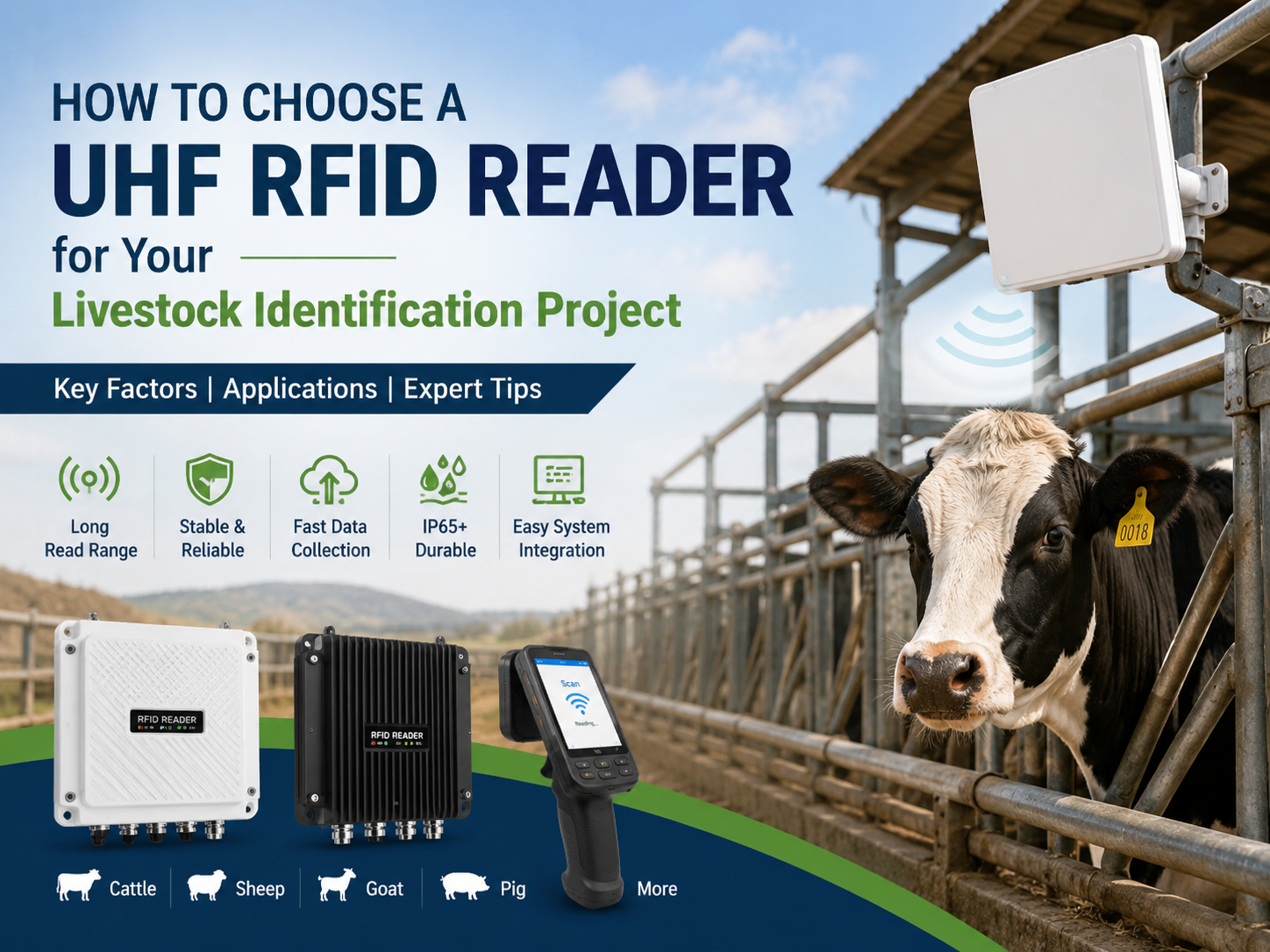
가축 식별은 현대 축산업에서 매우 중요한 부분이 되었습니다. 소, 양, 염소, 돼지 등 어떤 가축을 사육하든, 농가와 농업 관련 기관들은 추적성 향상, 질병 관리, 번식 관리 및 규제 준수를 위해 RFID 기술에 점점 더 많이 의존하고 있습니다.
RFID 귀 태그가 가장 많은 주목을 받는 경우가 많지만, 실제로 동물 데이터를 수집하여 관리 시스템으로 전송하는 장치는 RFID 리더기입니다. 부적절한 리더기를 선택하면 판독률이 떨어지고, 작업 속도가 느려지며, 인건비가 증가할 수 있습니다.
이 가이드에서는 가축 식별 프로젝트를 위해 UHF RFID 리더기를 선정할 때 고려해야 할 주요 요소를 설명합니다.
가축 관리에 UHF RFID를 사용하는 이유는 무엇인가요?
기존의 시각적 식별 방식은 수동 검사 및 데이터 입력을 필요로 하기 때문에 시간이 많이 소요되고 오류가 발생하기 쉽습니다.
UHF RFID 기술은 다음과 같은 기능을 제공합니다:
- 더 빠른 동물 식별
- 핸즈프리 작동
- 더 긴 읽기 거리
- 자동화된 데이터 수집
- 향상된 추적성
- 인력 수요 감소
UHF RFID 시스템은 주로 다음과 같은 분야에서 사용됩니다:
- 가축 농장
- 낙농 사업
- 양 목장
- 사육장
- 동물 사육 시설
- 가축 경매
- 동물 운송 관리
자신의 독서 환경을 파악하세요
리더기를 선택하는 첫 번째 단계는 그 기기가 어디에서 사용될지 파악하는 것입니다.
가축 사육 방식에 따라 필요한 리더기 유형도 다릅니다.
휴대용 리더기
휴대용 리더기는 다음과 같은 용도에 적합합니다:
- 소규모 농장
- 수의학 검사
- 번식 관리
- 이동식 동물 식별
다음과 같은 이점이 있습니다:
- 휴대용 작동
- 유연한 배포
- 간편한 재고 확인
- 인프라 비용 절감
고정형 RFID 리더기
고정식 판독기는 주요 검문소에 영구적으로 설치되어 있습니다.
일반적인 설치 장소는 다음과 같습니다:
- 급식소
- 분류 게이트
- 계량 스테이션
- 착유실
- 적재용 경사로
- 출입 게이트
다음과 같은 이점이 있습니다:
- 지속적인 모니터링
- 자동화된 데이터 수집
- 인건비 절감
- 동물 실시간 추적
대규모 축산 농장의 경우, 일반적으로 고정형 리더기가 선호되는 솔루션입니다.
읽기 거리 요건을 고려하십시오
판독 거리는 가장 중요한 선정 요소 중 하나입니다.
프로젝트에 따라 필요한 범위가 다릅니다.
단거리 응용 분야
일반적인 범위:
- 1~3미터
적합 대상:
- 개별 동물 확인
- 수의학적 검사
- 번식 프로그램
중거리 응용 분야
일반적인 범위:
- 3~8미터
적합 대상:
- 분류 시스템
- 공급 시스템
- 동물 이동 모니터링
장거리 응용 분야
일반적인 범위:
- 8~15미터 이상
적합 대상:
- 차량용 리더기
- 대형 입구 게이트
- 교통 검문소
사정거리가 길다고 해서 항상 좋은 것은 아닙니다.
읽기 범위가 지나치게 넓으면 의도하지 않은 태그가 감지되어 식별 정확도가 떨어질 수 있습니다.
안테나 구성 평가
안테나는 종종 리더기 자체보다 성능에 더 큰 영향을 미칩니다.
단일 안테나 시스템
적합 대상:
- 좁은 통로들
- 기본 식별 사항
- 저비용 설치
다중 안테나 시스템
적합 대상:
- 넓은 문
- 여러 차선
- 대형 가축 처리 구역
많은 산업용 UHF 리더기는 다음을 지원합니다:
- 안테나 포트 4개
- 안테나 포트 8개
- 확장 가능한 안테나 네트워크
소용 레이스웨이 및 선별 시스템의 경우, 다중 안테나 구성이 일반적으로 가장 높은 판독 정확도를 제공합니다.
RFID 표준 호환성 확인
모든 동물용 RFID 태그가 동일한 기술을 사용하는 것은 아닙니다.
리더기를 구매하기 전에 다음 사항을 확인하십시오:
- RFID 주파수
- 태그 프로토콜
- 지역별 규정
대부분의 가축용 UHF 프로젝트에서는 다음을 사용합니다:
- EPC 2세대
- ISO 18000-6C
독자는 동물들에게 부착된 태그를 전적으로 지지해야 합니다.
독자의 지속성을 고려하십시오
가축 사육 환경은 까다롭습니다.
독자들은 다음과 같은 내용에 노출될 수 있습니다:
- 먼지
- 진흙
- Rain
- 높은 습도
- 햇빛
- 동물에 미치는 영향
다음과 같은 독자를 찾아보세요:
- IP65 이상의 방진·방수 등급
- 산업용 하우징
- 넓은 작동 온도 범위
- 내충격성
실외 설치에는 대개 IP67 등급의 장비가 필요합니다.
데이터 연결 옵션
현대적인 축산 시스템에는 원활한 데이터 통합이 필요합니다.
주로 사용되는 통신 수단으로는 다음이 있습니다:
이더넷
최적 대상:
- 고정 설비
- 실시간 모니터링
Wi-Fi
최적 대상:
- 유연한 배포
- 농장 전체의 연결성
블루투스
최적 대상:
- 모바일 애플리케이션
- 핸드헬드 리더기
RS232 / RS485
최적 대상:
- 산업용 자동화 시스템
- 기존 장비 통합
USB
최적 대상:
- 구성
- 로컬 데이터 전송
귀사의 농장 관리 소프트웨어와 기존 인프라를 지원하는 리더기를 선택하십시오.
가축 관리 소프트웨어와의 연동
RFID 리더기는 시스템의 일부일 뿐입니다.
다음과 연동되어야 합니다:
- 무리 관리 소프트웨어
- 번식 데이터베이스
- 추적 플랫폼
- 수의학 시스템
- ERP 소프트웨어
- 정부 가축 데이터베이스
구매하기 전에 다음 사항을 확인해 주세요:
- SDK 제공 현황
- API 지원
- 통신 프로토콜
- 타사 시스템 연동 기능
휴대용 리더기의 배터리 사용 시간
이동식 가축 사육 시설의 경우, 배터리 성능이 매우 중요합니다.
권장 사양:
- 최소 8시간 연속 작동
- 교체 가능한 배터리 옵션
- 고속 충전 지원
대규모 목장의 경우, 근무 시간 내내 작동할 수 있는 장비가 필요할 수 있습니다.
향후 확장성
많은 농장들이 소규모로 RFID 시스템을 도입한 뒤, 나중에 이를 확대해 나갑니다.
다음 기능을 지원하는 리더기를 선택하세요:
- 추가 안테나
- 더 많은 동물들
- 여러 판독 지점
- 클라우드 기반 관리 시스템
확장성이 뛰어난 시스템은 향후 업그레이드 비용을 절감해 줍니다.
RFID 리더기 선택 시 흔히 저지르는 실수
다음과 같은 흔한 구매 실수를 피하세요:
가격만을 기준으로 선택하기
저가형 판독기는 야외 농업 환경에서 종종 성능이 저조한 경우가 많습니다.
안테나 설계 무시하기
고성능 리더기에 안테나 위치가 부적절하면 판독 오류가 발생할 수 있습니다.
과도한 읽기 범위 선택
감지 성능이 지나치게 뛰어난 리더기의 경우, 지정된 영역 밖의 동물도 감지할 수 있습니다.
소프트웨어 호환성 간과
통합 문제로 인해 하드웨어 자체보다 더 많은 비용이 발생할 수 있습니다.
가축 프로젝트에 적합한 독자 유형
| 프로젝트 유형 | 추천 독자 |
|---|---|
| 소규모 농장 | 휴대용 UHF RFID 리더기 |
| 동물병원 | 휴대용 RFID 리더기 |
| 소 경주장 | 고정형 4포트 RFID 리더기 |
| 사육장 | 산업용 고정형 RFID 리더기 |
| 가축 경매 | 다중 안테나 RFID 시스템 |
| 교통 게이트 | 장거리 RFID 리더기 |
왜 경험이 풍부한 RFID 제조업체와 협력해야 할까요?
성공적인 가축 식별 프로젝트를 위해서는 하드웨어만으로는 부족합니다.
경험이 풍부한 RFID 제조업체는 다음과 같은 서비스를 제공할 수 있습니다:
- 독자 선정 조언
- 안테나 구성 지원
- RFID 태그 호환성 테스트
- 소프트웨어 통합 지원
- OEM 맞춤 제작
- 기술 지원
XIUCHENG RFID에서는 다음과 같은 서비스를 제공합니다. RFID 리더기, 가축용 RFID 태그, 안테나 및 전 세계 농장, 목장, 동물 추적 프로그램, 농업 시스템 통합업체를 위한 종합 RFID 식별 솔루션을 제공합니다.
결론
정확하고 신뢰할 수 있는 가축 식별을 위해서는 적합한 UHF RFID 리더기를 선택하는 것이 필수적입니다. 판독 거리, 안테나 구성, 환경 내구성, 통신 옵션, 소프트웨어 통합과 같은 요소들은 모두 시스템 성능에 중요한 역할을 합니다.
가축 사육업자들은 운영 요건을 신중하게 평가하고 산업용 등급의 RFID 장비를 선택함으로써, 가축의 추적성을 향상시키고 인건비를 절감하며, 장기적인 농장 관리 목표를 뒷받침하는 확장 가능한 식별 시스템을 구축할 수 있습니다.


