


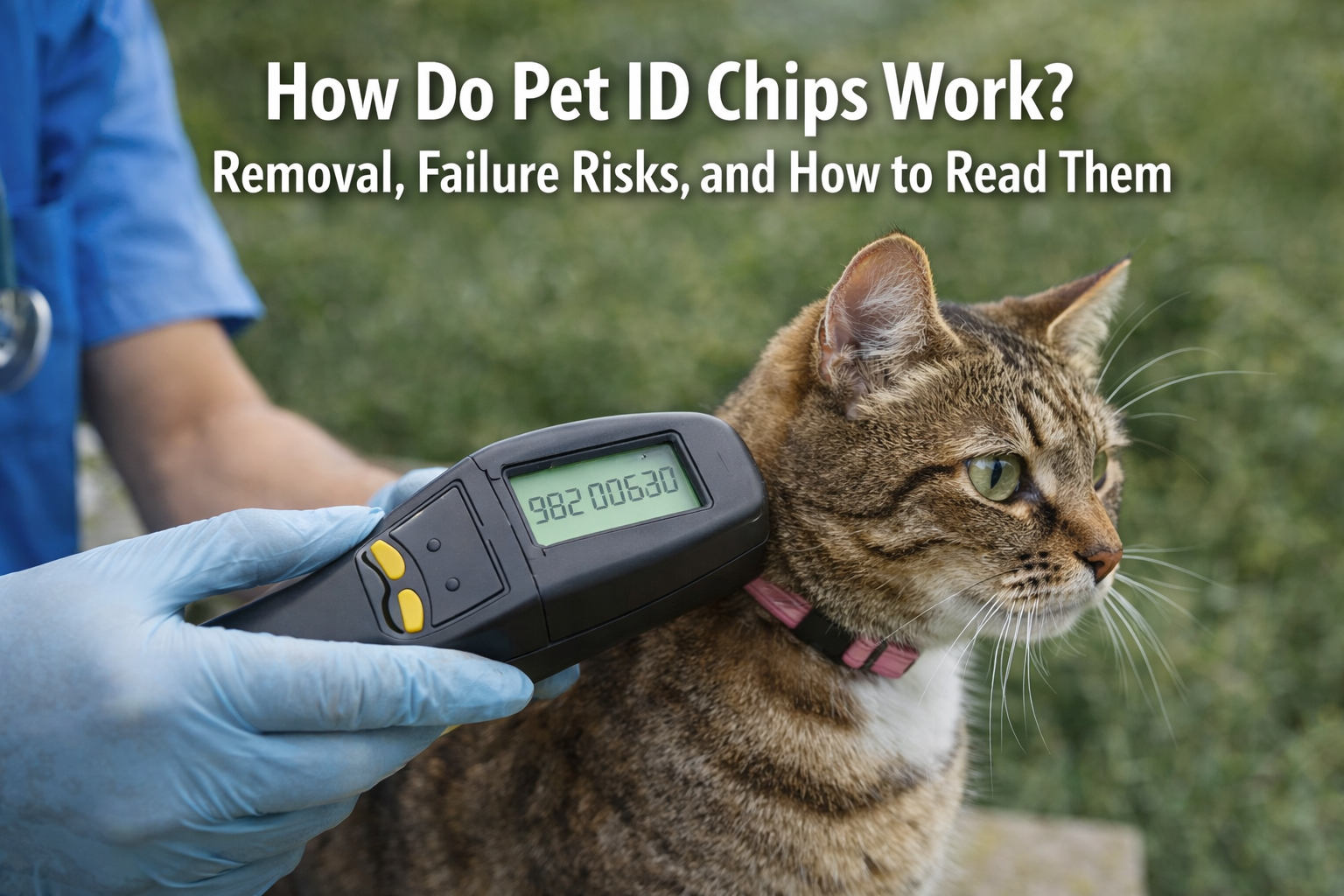
Pet identification microchips—commonly called pet ID chips—are widely used by veterinarians, shelters, breeders, and pet owners to provide permanent, reliable animal identification. Despite their popularity, many people still ask important questions such as:
- How do pet ID chips work?
- Can pet ID chips be removed or reversed?
- Can pet ID chips fail?
- How to read a pet ID chip?
- How to get ID from a pet chip?
How Do Pet ID Chips Work?
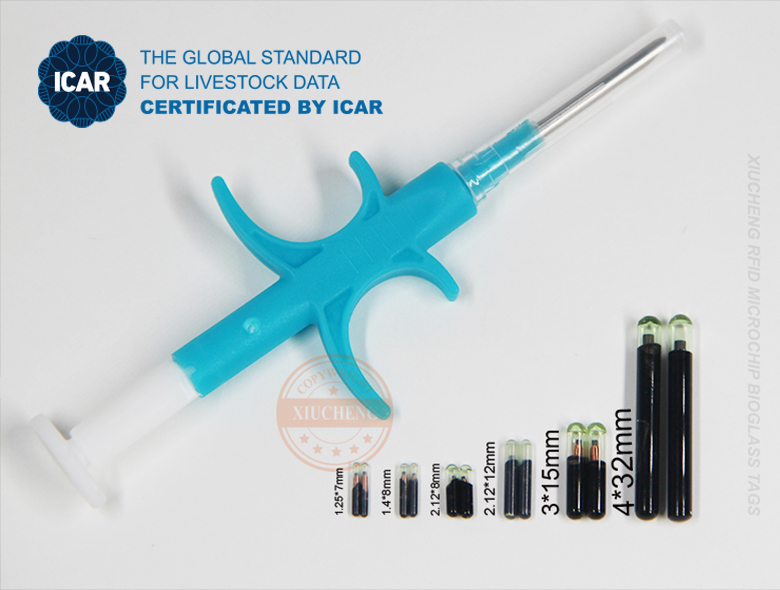
Pet ID chips are passive RFID microchips implanted under a pet’s skin—usually between the shoulder blades or in the neck area.
How the Technology Works
- The chip contains:
- A unique 15-digit identification number
- A tiny copper antenna
- A glass biocompatible capsule
- The chip has no battery
- When scanned by an RFID reader:
- The reader emits a low-frequency radio signal
- The chip is energized by the signal
- The chip transmits its ID number back to the reader
This process is fast, safe, and painless for the animal.
Most modern pet microchips comply with:
Can Pet ID Chip Be Removed or Reversed?
One of the most common concerns is whether a pet ID chip can be removed or reversed.
Short Answer
Yes, a pet ID chip can be removed, but not easily, and it is not reversible once implanted.
In Practice
- Removal requires:
- Veterinary imaging (scanner or X-ray)
- Surgical incision
- Professional veterinary intervention
- The procedure:
- Leaves surgical evidence
- Is costly
- Is rarely performed unless medically necessary
Important Context
- Pet ID chips are designed to be tamper-resistant, not tamper-proof
- Most shelters and legal systems treat microchips as permanent identifiers
- Attempting unauthorized removal may raise legal or ethical concerns
This is why microchips are trusted for ownership verification and lost pet recovery.
Can Pet ID Chips Fail?
Another frequent question is: can pet ID chips fail?
The Reality
Pet ID chips are highly reliable, but failure is possible, though rare.
Potential Causes of Failure
- Extremely rare manufacturing defects
- Physical damage due to severe trauma
- Incorrect implantation depth
- Use of non-ISO or low-quality chips
- Incompatible RFID readers
What Does Not Cause Failure
- Aging of the pet
- Normal movement
- Airport scanners
- X-rays
- MRI (with ISO-compliant chips)
Studies and veterinary data show failure rates are extremely low, especially for ISO-compliant chips from reputable manufacturers.
How to Read Pet ID Chip
Understanding how to read a pet ID chip is critical for vets, shelters, and rescue organizations.
Steps to Read a Pet ID Chip
- Use a compatible RFID scanner
- Power on the reader
- Slowly scan:
- Between the shoulder blades
- Along the neck
- Across the chest (chips can migrate slightly)
- Hold the scanner close to the skin
- Wait for the ID number to display
Best Practices
- Scan in multiple directions
- Use universal readers when possible
- Repeat scanning if no number appears immediately
A readable chip does not automatically mean owner data is visible—only the ID number is stored on the chip.
How to Get ID From Pet Chip
Once you obtain the chip number, the next question is how to get ID from a pet chip.
What the Chip Contains
- The chip stores only a numeric ID
- No personal data is stored on the chip itself
How Owner Information Is Retrieved
- Record the chip ID number
- Search the number in:
- National pet microchip databases
- Manufacturer registries
- Universal lookup platforms
- Access registered owner contact details
If a chip is not registered, the number will appear but return no owner data—this is a common reason pets are not reunited.
Why Pet ID Chips Are Still the Gold Standard
Despite questions about removal or failure, pet ID chips remain the most reliable identification method available.
Key Advantages
- Permanent and tamper-resistant
- Cannot be lost like collars
- Works across borders
- Recognized by shelters worldwide
- Supports legal ownership claims
Microchips complement, rather than replace, visible ID tags.
Common Myths About Pet ID Chips
- ❌ “Chips track pets via GPS”
→ False. Pet ID chips have no tracking capability. - ❌ “They store owner address inside the chip”
→ False. Data is stored in databases, not on the chip. - ❌ “They stop working after a few years”
→ False. Chips are designed to last the pet’s lifetime.
Frequently Asked Questions
Can a pet ID chip move inside the body?
Yes, slight migration can occur, which is why scanning multiple areas is recommended.
Is microchipping painful for pets?
The sensation is similar to a routine vaccination.
Do shelters always scan for chips?
Reputable shelters and clinics routinely scan every incoming animal.
Final Thoughts
Understanding how pet ID chips work, whether pet ID chips can be removed or fail, and how to read and retrieve information from a chip helps pet owners make informed decisions and improves recovery rates for lost animals.
When manufactured to ISO standards and implanted correctly, pet ID chips remain one of the most trusted, proven technologies in animal identification.


