


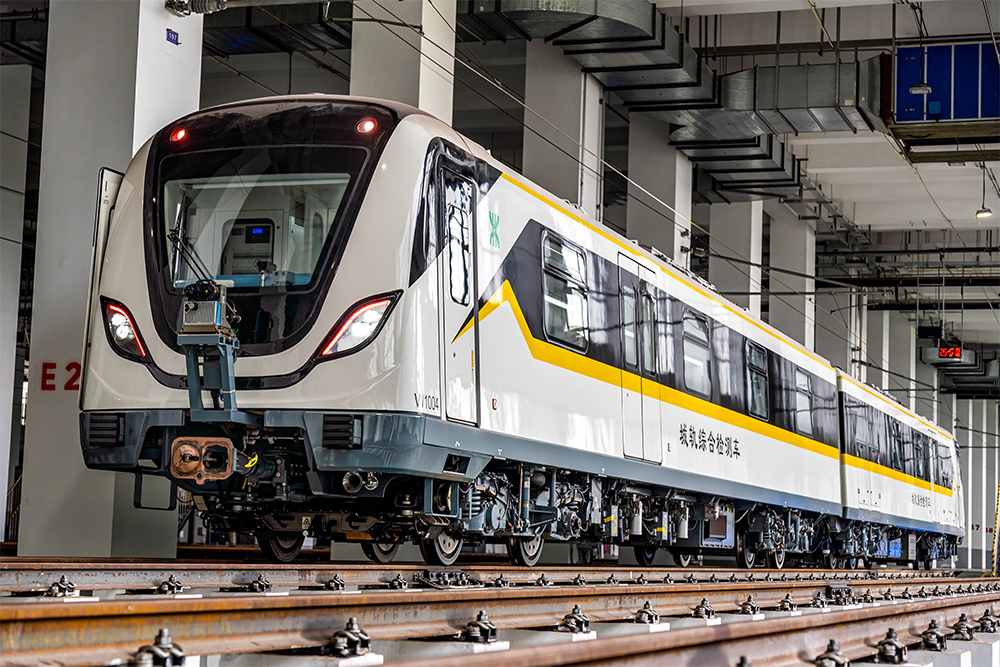
Shenzhen is widely regarded as one of the most advanced smart cities in the world. As a city with over eight million daily metro passengers, Shenzhen’s public transportation system serves as a real-world laboratory for large-scale digital payment innovation.
Among the various technologies deployed, Near Field Communication (NFC) has become a core pillar of Shenzhen Metro’s fare payment ecosystem. This article provides a comprehensive business-oriented analysis of how NFC is implemented in the Shenzhen Metro system, covering technology infrastructure, standards, operational models, user adoption, and long-term strategic impact.
1. What Is NFC and Why It Matters for Urban Rail Transit
Near Field Communication (NFC) is a short-range wireless communication technology operating at 13.56 MHz, primarily defined by the ISO/IEC 14443 standard. It enables secure, contactless data exchange between a reader (such as a metro turnstile) and a passive or active device (smart card, smartphone, wearable).
In urban rail systems, NFC is especially valuable because it enables:
- Tap-and-go fare payment
- Extremely fast transaction times (typically under 0.2 seconds)
- Offline transaction capability
- High reliability in underground environments
Globally, NFC has become the foundation of modern transit payment systems, including London Oyster, Hong Kong Octopus, and Tokyo Suica. Shenzhen follows this global trend while also aligning with China’s national interoperability framework.
2. NFC Payment Infrastructure in the Shenzhen Metro
2.1 Turnstile and Reader Hardware
All Shenzhen Metro stations are equipped with NFC-enabled AFC (Automatic Fare Collection) gates. These gates include ISO/IEC 14443-compliant readers capable of interacting with:
- UnionPay contactless bank cards
- Mobile wallets (Apple Pay, Huawei Pay, Samsung Pay, etc.)
- China T-Union transportation cards
The reader energizes the NFC chip and processes the transaction within a few centimeters of proximity.
2.2 Offline Transaction Architecture
A critical requirement for metro systems is the ability to operate without continuous network connectivity. Shenzhen Metro achieves this using a pre-authorization (fare freezing) model:
- Upon entry, the system temporarily freezes the maximum single-trip fare (14 CNY).
- The passenger completes the journey.
- Upon exit, the system calculates the actual fare and finalizes settlement.
- Any unused balance is automatically released.
This design ensures uninterrupted gate operation even during network outages.
2.3 Backend Clearing and Settlement
Shenzhen Metro integrates directly with China UnionPay’s clearing infrastructure. Transactions are batch-processed and settled through participating banks, allowing the metro system to function as an open-loop payment environment, similar to systems in London and Singapore.
3. Standards and Protocols Behind Shenzhen Metro NFC
3.1 ISO/IEC 14443
This international standard governs proximity contactless cards and devices and forms the technical backbone of Shenzhen’s NFC fare collection system.
3.2 China T-Union (交通联合)
China T-Union is a national transit card interoperability standard launched in 2015. Shenzhen Metro fully supports T-Union cards, enabling:
- Inter-city transit access across 336 Chinese cities
- Cross-regional fare compatibility
- Reduced fragmentation between municipal systems
3.3 UnionPay QuickPass (云闪付)
UnionPay QuickPass is UnionPay’s EMV-based contactless payment framework. It enables:
- NFC payments using physical bank cards
- Mobile NFC payments via HCE or secure element
- Strong cryptographic security and device authentication
4. Shenzhen Metro NFC Deployment Timeline and Ecosystem
4.1 Early Experiments
In 2018, Shenzhen Metro began testing advanced payment models, including biometric and credit-based access systems in partnership with Tencent and financial institutions.
4.2 Full Network Launch (March 1, 2019)
On March 1, 2019, Shenzhen Metro officially enabled NFC payments across all lines and stations. This marked one of the earliest full-scale NFC metro deployments in China.
4.3 Key Partners
- Shenzhen Metro Group / MTR (Shenzhen) – system owner and operator
- China UnionPay – payment network and clearing provider
- Das Intellitech – AFC system and infrastructure upgrade provider
- Commercial banks – issuing and settlement institutions
- Mobile device manufacturers – wallet and NFC hardware support
5. Passenger Experience and Adoption
5.1 User Experience
For passengers, NFC payment offers:
- No app download required
- No ticket purchase or card top-up
- Simple tap-in and tap-out process
- Extremely fast gate response times
5.2 Adoption Rates
Shenzhen has one of the highest electronic payment adoption rates among Chinese metro systems:
- Over 50% mobile/electronic payments as early as 2019
- Approximately 72% adoption by late 2020
- Single-journey paper tickets account for less than 1% of trips
5.3 Tourists and Foreign Users
Shenzhen Metro also supports:
- UnionPay cards issued outside Shenzhen
- International bank cards at ticketing POS terminals
- Alipay and UnionPay Wallet registrations using passports
This significantly lowers entry barriers for international travelers.
6. NFC vs Other Metro Ticketing Methods
6.1 NFC vs Shenzhen Tong Smart Cards
Smart cards remain popular but require issuance, deposits, and manual top-ups. NFC removes these friction points while maintaining comparable transaction speed.
6.2 NFC vs QR Code Payments (Alipay / WeChat Pay)
QR codes dominate in China but have limitations:
- Require smartphone unlocking and app navigation
- Depend on camera scanning and network connectivity
- Slower throughput during peak hours
NFC offers faster, more seamless gate access, especially for high-volume stations.
6.3 Cash and Single-Journey Tickets
Cash-based ticketing is now marginal in Shenzhen, used by less than 1% of riders, and continues to decline.
7. Cost–Benefit Analysis for Operators and Government
7.1 Costs
- Gate hardware upgrades
- System integration and testing
- Bank transaction fees
- Staff training and public education
7.2 Benefits
- Reduced cash handling and operational overhead
- Higher passenger throughput
- Lower ticket issuance costs
- Improved data analytics and planning
- Strong alignment with smart-city policies
From a long-term perspective, NFC delivers both operational efficiency and strategic value.
8. Strategic Impact on the Ecosystem
8.1 Financial Institutions
UnionPay and partner banks benefit from increased transaction volume and payment ecosystem dominance.
8.2 Technology Companies
Smartphone manufacturers leverage transit compatibility as a key feature of their NFC wallets.
8.3 Government and Urban Planning
NFC-based transit payment supports:
- Greater Bay Area integration
- Digital RMB adoption
- Sustainable, low-friction public transport
9. Deployment Challenges and Solutions
Key challenges included:
- System integration complexity
- Passenger education
- Card interference issues
- Discount and premium carriage limitations
These were addressed through phased rollout, offline design, clear signage, and user guidance.
10. Future Outlook: NFC as a Core Mobility Infrastructure
Looking ahead, NFC in Shenzhen Metro is expected to evolve through:
- Greater Bay Area interoperability
- Digital RMB and wearable device integration
- Potential biometric payment options
- Deeper integration with city-wide mobility and IoT services
NFC is no longer just a payment method—it is becoming foundational infrastructure for urban mobility.
Conclusion
Shenzhen Metro’s NFC implementation demonstrates how large-scale transit systems can successfully adopt open-loop, standards-based payment technology. By combining international NFC standards, national transport interoperability, and strong public–private collaboration, Shenzhen has created one of the most advanced metro payment ecosystems in the world.
For cities planning future transit modernization, Shenzhen provides a practical, scalable reference model—both technically and commercially.


