A Complete Guide for Forestry, Timber Tracking, and Urban Tree Management
In modern forestry and environmental asset management, traceability is no longer optional — it is operationally critical. Governments, timber exporters, municipalities, and environmental agencies increasingly rely on RFID nail tags for trees to enable long-term, tamper-resistant identification in harsh outdoor environments.
This guide explains what RFID nail tags are, how they work, where they are used, and how they compare to traditional tree identification methods — structured to rank for commercial and informational search intent such as:
- RFID nail tag for trees
- Tree tracking RFID
- Forestry RFID tag
- Timber traceability RFID
- Passive RFID tree identification
What Is an RFID Nail Tag?
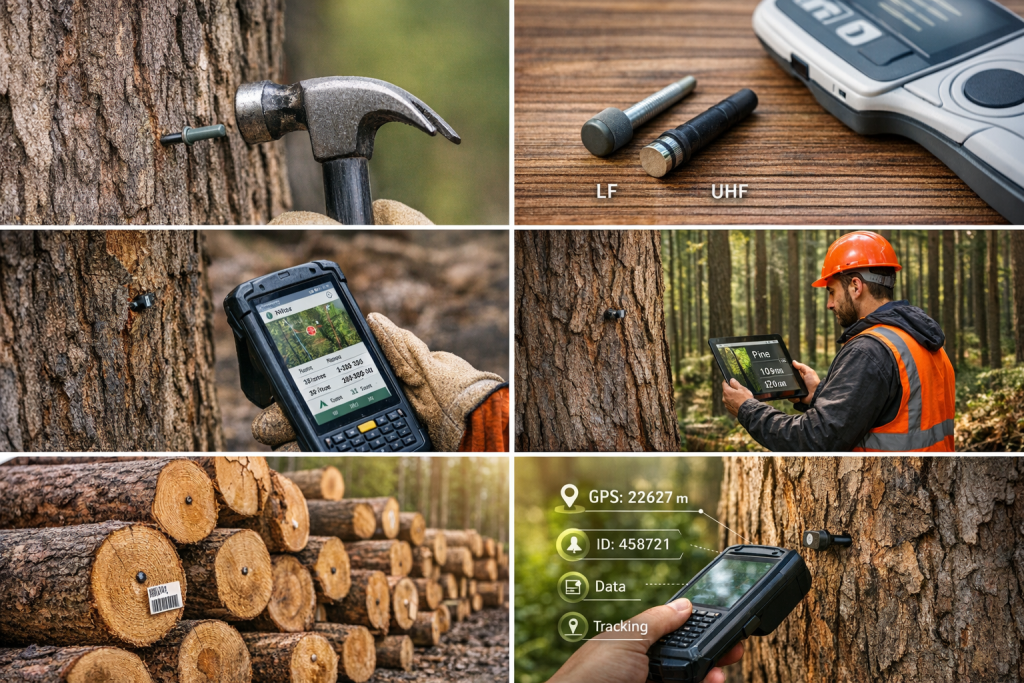
An RFID nail tag for trees is a ruggedized, nail-shaped RFID transponder designed to be hammered directly into a tree trunk. Once installed, it provides a unique, machine-readable identifier that can be scanned using an RFID reader without line-of-sight.
Unlike barcode labels or painted numbers, RFID nail tags:
- Cannot be easily removed without visible damage
- Withstand outdoor exposure for years
- Enable digital database integration
- Support automated inventory and audit processes
These tags are typically deployed in forestry operations, urban tree management, fruit orchards, and timber supply chains.
How Does an RFID Nail Tag Work?
An RFID nail tag consists of:
- A microchip (IC) storing a unique ID
- An antenna (embedded within the nail body)
- Encapsulation material (fiberglass, reinforced plastic, or ABS)
When an RFID reader emits radio waves, the tag’s antenna captures energy and powers the chip (in passive systems). The chip then transmits its unique identifier back to the reader.
Two Main Frequency Types
1. LF (Low Frequency, 125–134.2 kHz)
- Short read range (up to 10 cm)
- More stable around moisture and organic materials
- Common in forestry applications
Many forestry systems align with ISO 11784/11785 standards.
2. UHF (Ultra High Frequency, 860–960 MHz)
- Longer read range (up to 3–5 meters depending on environment)
- Faster bulk reading
- Suitable for timber yard logistics
UHF systems typically follow EPCglobal standards maintained by GS1 and supported by the RAIN Alliance.
Why Use RFID Nail Tags Instead of Barcodes?
1. No Line of Sight Required
Barcodes require visual alignment. RFID works through bark, dirt, and minor obstructions.
2. Long-Term Durability
RFID nail tags are designed for:
- UV exposure
- Rain and snow
- Temperature fluctuations
- Physical impact
3. Anti-Tampering
Removing a nailed tag leaves visible damage, reducing fraud risk in regulated timber markets.
4. Digital Integration
Each tag can link to:
- Tree species
- Plantation block
- GPS coordinates
- Harvest schedule
- Certification data (FSC, PEFC, etc.)
Core Applications of RFID Nail Tags for Trees
1. Forestry Inventory Management
Forestry agencies use RFID to:
- Assign unique IDs to each tree
- Monitor growth cycles
- Record disease inspection data
- Automate audit processes
This reduces manual errors and improves regulatory compliance.
2. Timber Traceability & Chain of Custody
Illegal logging is a major global concern. RFID tagging allows:
- Pre-harvest tagging
- Logging event recording
- Transport verification
- Mill processing validation
- Export documentation tracking
Regulatory bodies such as Forest Stewardship Council emphasize traceability in certified supply chains.
RFID nail tags support digital chain-of-custody systems required in export markets like the EU and North America.
3. Urban Tree Asset Management
Municipal governments deploy RFID tree tags to:
- Track tree maintenance history
- Schedule pruning and inspections
- Record pest treatment
- Monitor liability risks
This is particularly useful in smart city infrastructure initiatives.
4. Fruit Orchards and Plantations
In orchards, RFID nail tags enable:
- Tree-level productivity tracking
- Fertilizer management records
- Harvest performance analysis
- Lifecycle replacement planning
Precision agriculture increasingly integrates RFID with IoT platforms.
Technical Specifications of RFID Nail Tags
Although specifications vary by manufacturer, typical parameters include:
- Diameter: 6–10 mm
- Length: 30–50 mm
- Material: Fiberglass reinforced polymer
- IP Rating: IP67 or higher
- Operating temperature: -25°C to +85°C
- Lifespan: 5–10+ years
For UHF versions:
- Protocol: EPC Class 1 Gen 2
- Frequency: 860–960 MHz
- Memory: 96–512 bits EPC
Installation Best Practices
Improper installation can affect performance.
Recommendations:
- Hammer into hardwood (avoid soft or cracked areas)
- Leave slight clearance from metal tools
- Avoid installing near metal fences or wiring
- Test read range after installation
Moisture content in wood can influence UHF performance; LF may be preferred in high-moisture environments.
Benefits for B2B Buyers
If you are a:
- Forestry enterprise
- Timber exporter
- Environmental regulator
- Smart agriculture operator
RFID nail tags provide:
- Improved audit accuracy
- Reduced labor costs
- Faster inventory cycles
- Enhanced compliance reporting
- Stronger anti-counterfeit protection
For B2B procurement managers, ROI is typically realized through labor savings and compliance risk reduction.
Challenges and Considerations
1. Environmental Interference
Wood moisture and density can impact UHF performance.
2. Reader Infrastructure Costs
Deployment requires:
- Handheld readers
- Fixed gate readers (for sawmills)
- Backend software integration
3. Data Management Complexity
Hardware alone is insufficient. A robust digital management platform is required.
RFID Nail Tag vs. Traditional Tree Marking Methods
| Feature | Paint Marking | Barcode Label | RFID Nail Tag |
|---|---|---|---|
| Durability | Low | Medium | High |
| Digital Integration | No | Yes | Yes |
| Tamper Resistance | Low | Low | High |
| Read Without Line of Sight | No | No | Yes |
| Suitable for Automation | No | Limited | Yes |
Future Trends in Forestry RFID
The next stage of tree tagging includes:
- Integration with GPS mapping systems
- Cloud-based forestry dashboards
- AI-driven growth analytics
- Blockchain-backed timber traceability
- Sensor-enabled environmental monitoring
RFID nail tags serve as the digital identity anchor for these systems.
How to Choose the Right RFID Nail Tag Supplier
When evaluating suppliers, consider:
- Frequency compatibility (LF vs UHF)
- Chip origin (NXP, Impinj, etc.)
- Environmental testing certifications
- Customization capability
- MOQ requirements
- Export compliance support
Industrial forestry buyers should request:
- Read range testing reports
- Material durability certifications
- Sample validation

About XIUCHENG RFID
XIUCHENG RFID specializes in manufacturing a wide range of RFID products, including RFID Silicone Wristbands, Tyvek Wristbands, Fabric Wristbands, Elastic Wristbands, Vinyl Wristbands, RFID Laundry Tags, Animal Tags, and RFID Cards. All products are produced under strict quality control and advanced production technology.
With 12 years of experience in wristband design, tag design, quality management, and customer relationship management, we have built a solid foundation for delivering reliable and high-performance RFID solutions.
Conclusion
An RFID nail tag for trees is a rugged, embedded identification solution that enables long-term, tamper-resistant digital tracking across forestry, timber logistics, urban tree management, and agriculture.
As global regulations tighten and supply chains demand transparency, RFID-based tree identification is transitioning from optional innovation to operational necessity.
For organizations seeking scalable, compliant, and automation-ready tree tracking systems, RFID nail tags represent a proven and future-ready solution.
XIUCHENG RFID Team