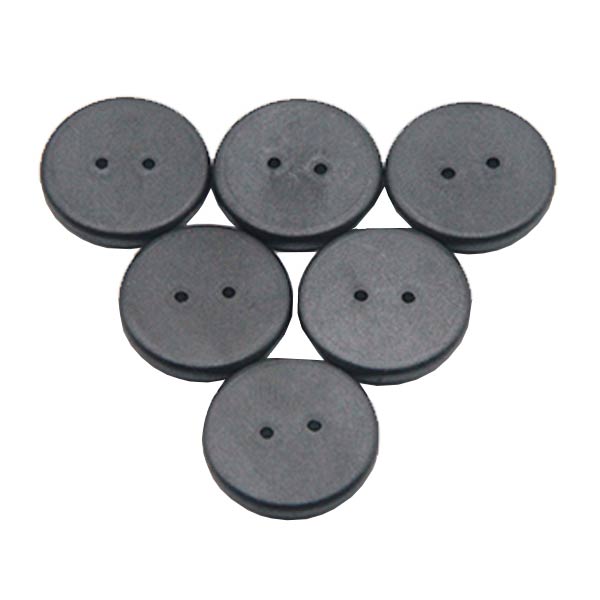
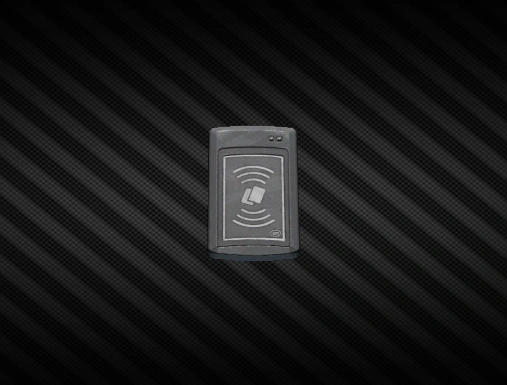
In the gaming world of Escape from Tarkov, players may come across the so-called “RFID card encryption device,” a high-value item used to unlock secure areas. While it adds excitement in a virtual environment, the concept touches on a very real and critical technology used worldwide: RFID card encryption and secure authentication systems.
This article explores the real-world applications of RFID encryption devices, explains how they work, and details how encrypted RFID cards are manufactured and deployed across industries. Whether for access control, secure payments, or asset management, understanding this technology is essential for security professionals and enterprise procurement managers.
Understanding RFID and the Need for Encryption
RFID (Radio Frequency Identification) refers to a technology where a small chip and antenna embedded in a card, tag, or device communicate wirelessly with a reader. RFID is used in countless applications: building access, transportation cards, payment systems, identity verification, and even industrial asset tracking.
Why Encryption Matters
While unencrypted RFID cards transmit data in plain format, they are susceptible to:
- Cloning: Attackers can copy card IDs and gain unauthorized access.
- Skimming: Signals can be intercepted by nearby readers.
- Replay Attacks: Previously captured signals can be reused if not encrypted.
Encryption addresses these vulnerabilities by ensuring that:
- The card and reader authenticate each other before access is granted.
- Data transmitted is encrypted, so intercepted information cannot be reused.
- Keys remain protected inside secure hardware, preventing unauthorized extraction.
High-security RFID cards, such as MIFARE DESFire EV2 or HID iCLASS, use AES or 3DES encryption for secure communication and mutual authentication.
How Encrypted RFID Cards Are Used in the Real World
Encrypted RFID systems are not just for gaming — they are critical in many sectors:
1. Secure Access Control
Modern offices, hospitals, data centers, and airports rely on encrypted RFID cards for building access. Cards perform challenge–response authentication with readers:
- The reader generates a random challenge when the card enters its field.
- The card encrypts the challenge using a secret key stored securely inside.
- The reader verifies the encrypted response. Access is granted only if the response matches the expected value.
This prevents cloning, replay attacks, and unauthorized access.
2. National ID and Passport Systems
Many countries issue e-passports and government ID cards with embedded encrypted RFID chips. These chips secure sensitive personal information, including biometric data, and prevent fraudulent duplication.
3. Payment and Transit Systems
Encrypted RFID cards are widely used in:
- Contactless payment cards for retail and banking.
- Public transit smartcards, where encrypted communication prevents fare evasion.
- Cashless access at stadiums or events, ensuring secure transactions.
4. Asset Tracking and Industrial Applications
In logistics and industrial environments, RFID tags with encryption are used to:
- Track high-value items.
- Prevent counterfeiting or theft.
- Ensure authenticity of machinery, medical equipment, or sensitive assets.
How Encrypted RFID Systems Work: Challenge–Response Workflow
Below is a simplified workflow that illustrates the key steps in an RFID encrypted authentication system:
1. RFID Card with Embedded Cryptographic Chip
The card contains a secure microcontroller and secret key injected during production. The key cannot be read externally.
2. Reader Sends a Random Challenge
When the card enters the reader’s field, the reader generates a unique random number to prevent replay attacks.
3. Card Encrypts the Challenge
The card encrypts the challenge internally using its secret key. This ensures that the key never leaves the card.
4. Reader Verifies the Response
The reader compares the encrypted response to its own expected result. If the values match, authentication is successful.
5. Access Granted or Denied
The system grants or denies access based on authentication.
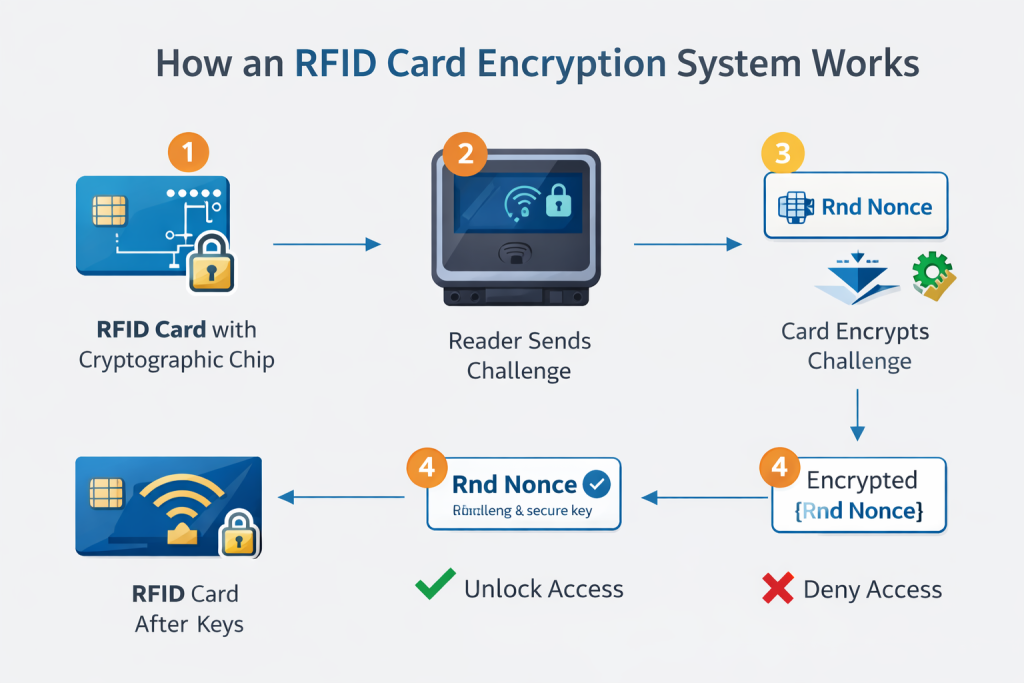
This workflow ensures that:
- Card data is never transmitted in plain text.
- Each authentication session is unique.
- Unauthorized cloning or replay attacks are prevented.
Hardware and Software Components of RFID Encryption Systems
To operate securely, encrypted RFID systems rely on multiple components:
- Secure RFID Chips: ICs capable of AES or 3DES encryption.
- Key Injection Devices: Tamper-proof hardware used during card production.
- Readers with Secure Modules: Devices that protect keys and perform encrypted communication.
- Backend Key Management Systems (KMS): Software to rotate and distribute encryption keys securely.
- Secure Firmware: Ensures readers and cards communicate using authenticated and encrypted protocols.
When all components are correctly implemented, the system achieves high assurance of security.
Types of Encrypted RFID Cards
Encrypted RFID cards come in different categories:
| Card Type | Typical Use | Encryption |
|---|---|---|
| Standard ID Card | Office access, low-risk areas | Optional/Basic |
| Smart Card | Enterprise access, transit | AES/DES, mutual authentication |
| Payment Card | Retail and transit | EMV standard, high security |
| Custom RFDD-style Card | Specialized applications, gaming-inspired designs | AES or proprietary encryption |
High-security cards prevent unauthorized duplication and can be tailored for specific protocols or applications.

Key Management and Security Considerations
The effectiveness of encryption depends on secure key management:
- Hardware Security Modules (HSMs): Store keys in a protected environment.
- Secure Elements in Cards: Embedded secure memory ensures key integrity.
- Tokenization: Real data replaced with temporary tokens in communication to prevent leakage.
- Key Rotation: Regularly updating encryption keys reduces risk if one is compromised.
Neglecting key management is a common source of breaches in low-security RFID deployments.
Practical Lessons from Security Research
Real-world incidents highlight the importance of encryption:
- Weak hotel key systems were exploited due to poor encryption.
- Transit card vulnerabilities were identified when basic IDs were used instead of encrypted authentication.
These examples underscore the importance of AES-enabled chips, challenge–response protocols, and robust key lifecycle management.
Real-World Applications Inspired by Tarkov
While the “RFID card encryption device” in Tarkov is fictional, the concept mirrors:
- Encrypted access cards for secure buildings
- Cashless event wristbands with encrypted NFC chips
- Industrial RFID tags for tracking and verification
- Custom encrypted smartcards for enterprise or research use
The idea is not far from reality — modern systems employ cryptographic chips, mutual authentication, and secure key management, just like the game implies.
Custom Encrypted RFID Cards with XIUCHENG RFID
For enterprises or specialized applications requiring custom encrypted RFID cards, XIUCHENG RFID offers:
- Custom IC Selection: HF/NFC/UHF encrypted chips based on application needs
- AES/DES Encryption Configuration: Key injection and authentication protocols
- RFDD-style Designs: Inspired by gaming concepts like Tarkov, but fully functional and secure
- Small Batch Prototyping & Large Scale Production: From proof-of-concept to enterprise deployment
- Secure Printing and Physical Customization: Logos, holograms, or tamper-evident features
With over a decade of experience in RFID card manufacturing, XIUCHENG RFID can produce fully secure, encrypted cards tailored to your specific needs.

About XIUCHENG RFID
XIUCHENG RFID specializes in manufacturing a wide range of RFID products, including RFID Silicone Wristbands, Tyvek Wristbands, Fabric Wristbands, Elastic Wristbands, Vinyl Wristbands, RFID Laundry Tags, Animal Tags, and RFID Cards. All products are produced under strict quality control and advanced production technology.
With 12 years of experience in wristband design, tag design, quality management, and customer relationship management, we have built a solid foundation for delivering reliable and high-performance RFID solutions.
Conclusion
Encrypted RFID cards are far more than gaming fantasy—they are a cornerstone of modern access control, payment, and identification systems. Challenge–response authentication, AES encryption, and secure key management ensure that RFID systems remain secure against cloning and skimming threats.
Whether for industrial, commercial, or even promotional applications inspired by games like Tarkov, custom encrypted RFID cards are achievable today. Companies like XIUCHENG RFID can design and manufacture these cards with secure encryption, specialized ICs, and custom physical design to match your exact specifications.