Luxury brands face a structural problem that traditional branding cannot solve alone: how to authenticate products, protect brand equity, and maintain control across a fragmented global supply chain. Dior, as part of the LVMH Group, addresses this challenge through embedded NFC technology.
This article answers one core question:
How do NFC tags work inside Dior products, and why did Dior choose this technology?
The Problem Dior Needed to Solve
From an industry perspective, Dior faced four non-negotiable challenges:
- Counterfeiting at scale
Dior products are among the most counterfeited luxury items globally, especially in leather goods and accessories. - Lack of post-sale visibility
Once a product leaves the boutique, traditional barcodes and paper certificates lose value. - Customer trust in resale markets
The rise of luxury resale platforms created demand for verifiable authenticity. - Operational inefficiency in after-sales service
Manual serial checks slow down repairs, returns, and warranty validation.
NFC offered a single infrastructure capable of addressing all four.
What Technology Does Dior Use?
Yes, Dior uses NFC.
More specifically, Dior embeds passive NFC tags inside selected products, commonly referred to in the industry as digital ID chips.
Key characteristics:
- Passive NFC (no battery)
- Short-range communication (typically < 4 cm)
- Encrypted UID + secure memory
- Embedded invisibly inside the product (leather lining, label, sole, or internal tag)
These NFC tags comply with ISO/IEC 14443 standards, the same family used in contactless payments and secure identity cards.
Where Is the NFC Tag Placed?
Dior’s implementation prioritizes tamper resistance and invisibility.
Common placements include:
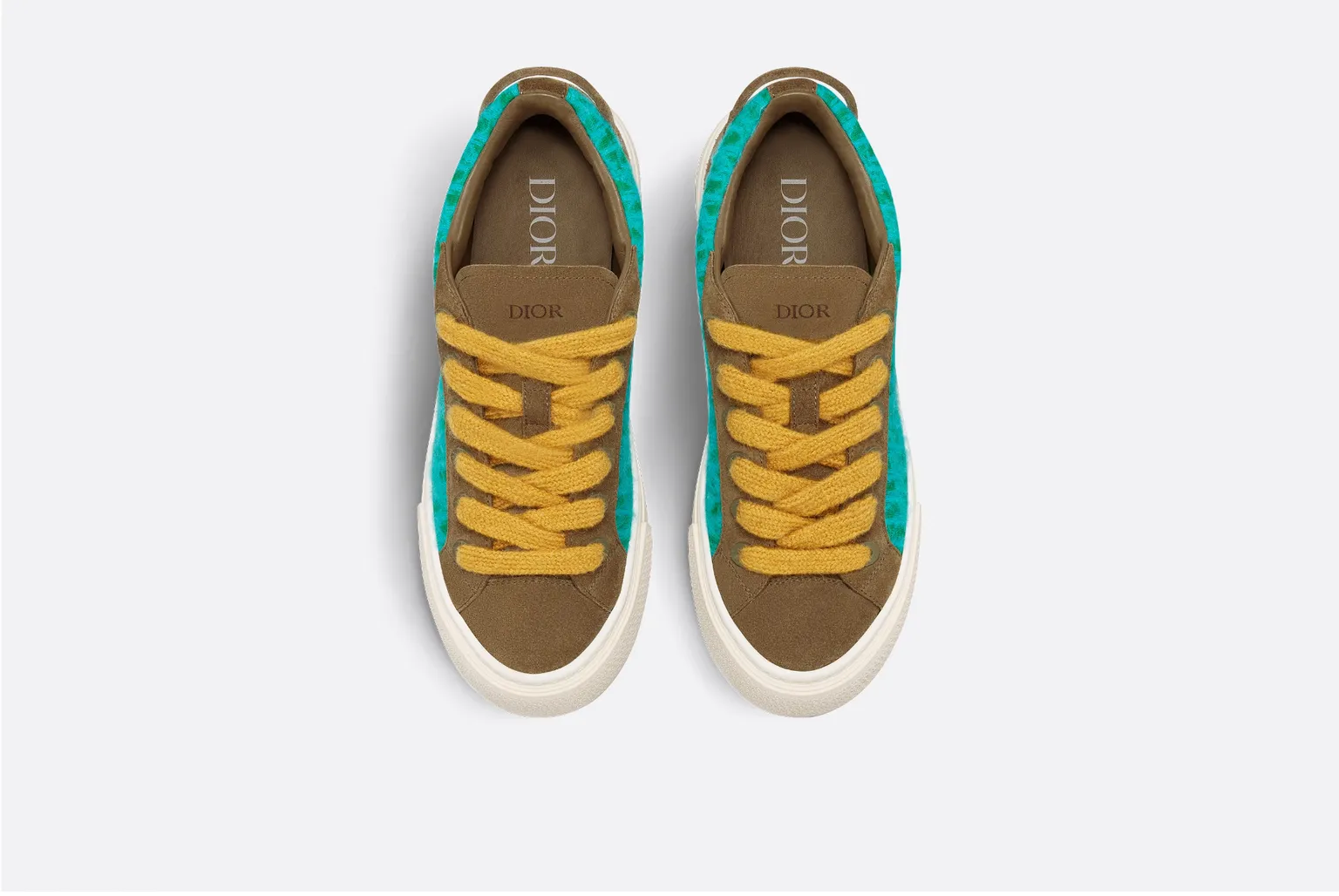
- Inside leather linings of handbags
- Sewn within fabric labels
- Embedded under insoles or internal layers
- Integrated into rigid internal components
The exact location is not disclosed publicly, which is a deliberate security design choice.
How the NFC System Works (Step by Step)
1. Manufacturing Phase
During production, each Dior product receives:
- A unique NFC chip
- A digitally bound identity linked to Dior’s backend system
At this point, the chip is paired with:
- Product model
- Factory batch
- Production date
- Internal serial reference
This creates a one-to-one digital twin.
2. Supply Chain Tracking
As the product moves through:
- Factory
- Logistics centers
- Regional distribution
- Boutique inventory
Authorized readers or internal systems can scan the NFC tag to:
- Verify authenticity
- Confirm logistics status
- Prevent substitution or diversion
Unlike barcodes, NFC cannot be visually copied.
3. Retail Authentication
In Dior boutiques:
- Staff can authenticate products instantly
- Returns can be validated without paper receipts
- Grey-market products are easier to identify
This reduces operational friction while strengthening brand control.
4. Consumer Interaction
For end users, NFC enables:
- Smartphone-based authentication (on supported products)
- Verification through official Dior digital experiences
- Access to product-specific content or services
Importantly, the chip itself does not store personal data. It acts as a secure key to Dior’s system.
5. After-Sales and Resale
In repairs, warranty claims, or resale authentication:
- The NFC chip confirms product origin
- Service history can be referenced
- Counterfeit substitution during repair is prevented
This is particularly valuable for high-value leather goods.
Why Dior Chose NFC Instead of QR Codes
From an industry standpoint, the decision is clear:
| Factor | NFC | QR Code |
|---|---|---|
| Copy resistance | High | Low |
| Invisible integration | Yes | No |
| Tamper detection | Possible | No |
| Luxury aesthetics | Preserved | Compromised |
| Long-term durability | Excellent | Poor |
For Dior, QR codes fail the luxury test.
Is This the Same as RFID?
NFC is a subset of RFID.
- RFID: Broad category (LF, HF, UHF)
- NFC: HF RFID operating at 13.56 MHz, optimized for secure short-range use
Dior specifically uses NFC-grade HF RFID, not UHF inventory tags.
Security and Privacy Considerations
A common misconception is that NFC enables tracking.
In reality:
- The NFC chip has no GPS
- It only responds when scanned at close range
- Consumer data is managed by Dior’s backend, not stored on the chip
This architecture aligns with GDPR and luxury privacy standards.
Strategic Impact for Dior
From an industry lens, NFC delivers Dior three long-term advantages:
- Anti-counterfeiting infrastructure
- Digital product lifecycle management
- Foundation for future Web3 / digital passport initiatives
NFC is not a marketing gimmick; it is infrastructure-level technology.
Industry Takeaway
Dior’s use of NFC demonstrates a broader trend:
Luxury brands are moving from visible authentication to embedded, system-level digital identity.
For manufacturers, system integrators, and RFID suppliers, this signals sustained demand for:
- Secure NFC chips
- Biocompatible or textile-integrated inlays
- Long-life, passive RFID solutions