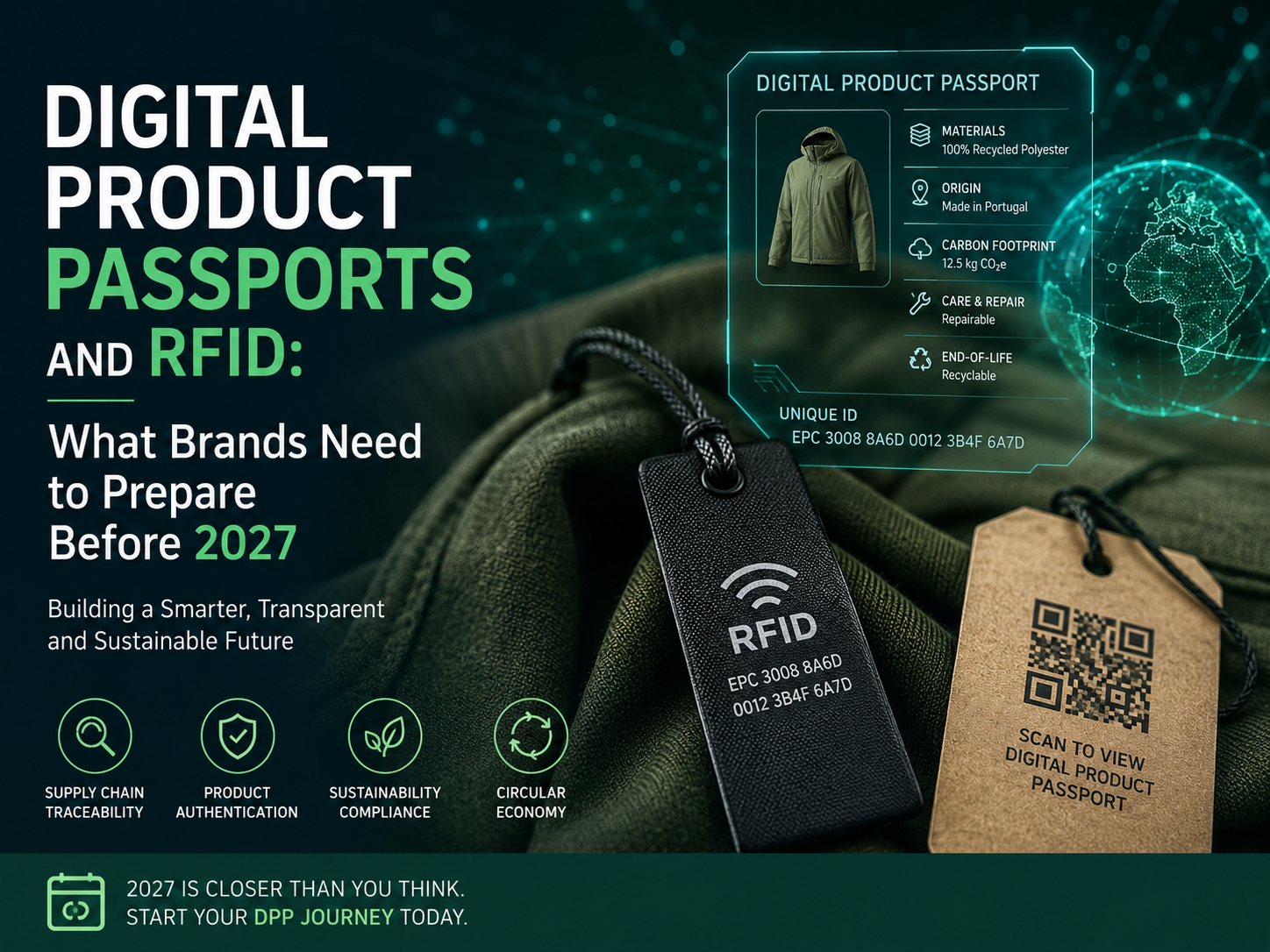
W całej Europie, a w coraz większym stopniu także na całym świecie, marki stają przed nową rzeczywistością: produkty wkrótce będą musiały posiadać cyfrową tożsamość, która będzie im towarzyszyć przez cały cykl życia.
Inicjatywa ta nosi nazwę „Cyfrowy paszport produktu” (DPP).
W związku ze strategią zrównoważonego rozwoju Unii Europejskiej oraz planem działania na rzecz gospodarki o obiegu zamkniętym oczekuje się, że w nadchodzących latach cyfrowe paszporty produktów staną się obowiązkowe dla wielu kategorii produktów. Do 2027 r. przedsiębiorstwa działające w branżach takich jak odzież, elektronika, akumulatory, sprzęt przemysłowy i dobra konsumpcyjne będą musiały udostępniać przejrzyste dane dotyczące produktów organom regulacyjnym, klientom, podmiotom zajmującym się recyklingiem oraz partnerom w łańcuchu dostaw.
Dla marek wyzwanie jest oczywiste:
Jak w sposób niezawodny, skalowalny i ekonomiczny powiązać produkt fizyczny z jego cyfrowym zapisem?
Odpowiedź coraz częściej wskazuje na technologię RFID.
Czym jest cyfrowy paszport produktu?
Cyfrowy paszport produktu to cyfrowy zapis zawierający kluczowe informacje o produkcie w całym cyklu jego życia.
Paszport może zawierać:
- Pochodzenie produktu
- Miejsce produkcji
- Źródła surowców
- Dane dotyczące śladu węglowego
- Certyfikaty zgodności
- Instrukcja naprawy
- Informacje dotyczące recyklingu
- Historia własności
- Weryfikacja autentyczności produktu
Celem jest zapewnienie większej przejrzystości w łańcuchach dostaw przy jednoczesnym wspieraniu inicjatyw na rzecz zrównoważonego rozwoju i gospodarki o obiegu zamkniętym.
Zamiast tego, by produkty traciły swoją tożsamość po opuszczeniu fabryki, każdy z nich może zachować stałą tożsamość cyfrową.
Dla konsumentów oznacza to większą przejrzystość.
Dla organów regulacyjnych oznacza to łatwiejsze monitorowanie zgodności z przepisami.
Dla marek oznacza to niespotykaną dotąd widoczność produktów.
Dlaczego technologia RFID staje się kluczowa dla wdrożenia DPP
Cyfrowy paszport produktu ma sens tylko wtedy, gdy produkt fizyczny można zawsze powiązać z jego danymi cyfrowymi.
Tradycyjne metody identyfikacji mają pewne ograniczenia:
| Technologia | Ograniczenia |
|---|---|
| Etykiety drukowane | Łatwo ulegają uszkodzeniu lub mogą zostać usunięte |
| Kody kreskowe | Wymagane skanowanie w linii wzroku |
| Kody QR | Może wyblaknąć lub stać się nieczytelne |
| Ręczne numery seryjne | Wymagające dużego nakładu pracy i podatne na błędy |
Technologia RFID stanowi bardziej niezawodne rozwiązanie.
Etykieta RFID zawiera unikalny identyfikator elektroniczny, który można odczytać bezprzewodowo, nawet bez bezpośredniej widoczności.
W ten sposób powstaje trwałe połączenie między:
Produkt fizyczny ↔ Paszport cyfrowy
Korzyści obejmują:
- Automatyczna identyfikacja
- Możliwość czytania zbiorczego
- Długa żywotność
- Odporność na trudne warunki środowiskowe
- Szybsze zarządzanie zapasami
- Ulepszona weryfikacja autentyczności produktów
Wraz z rozszerzaniem się przepisów dotyczących DPP technologia RFID staje się jedną z najbardziej praktycznych rozwiązań służących do zachowania tożsamości produktu w całym łańcuchu dostaw.
Branże, w których najprawdopodobniej zostaną wdrożone cyfrowe paszporty produktów oparte na technologii RFID
Moda i odzież
Branża modowa należy do pierwszych sektorów objętych unijnymi przepisami dotyczącymi zrównoważonego rozwoju.
Marki prawdopodobnie będą musiały podać takie informacje, jak:
- Skład tkaniny
- Kraj pochodzenia
- Wpływ na środowisko
- Wskazówki dotyczące naprawy
- Wskazówki dotyczące recyklingu
Etykiety RFID na odzieży umożliwiają powiązanie każdego egzemplarza z „paszportem” w chmurze, który pozostaje dostępny przez cały cykl życia produktu.
Marki luksusowe są tym szczególnie zainteresowane, ponieważ technologia RFID wspiera również działania mające na celu zwalczanie podrabiania produktów.
Elektronika
Produkty elektroniczne zawierają cenne materiały i często generują znaczne ilości odpadów.
Przyszłe wymagania dotyczące DPP mogą obejmować:
- Identyfikowalność komponentów
- Informacje o baterii
- Wyniki w zakresie możliwości naprawy
- Procedury recyklingu
- Informacje dotyczące materiałów niebezpiecznych
Tagi RFID mogą pozostać wbudowane w urządzenia, co umożliwia efektywne zarządzanie zasobami oraz weryfikację zgodności z przepisami.
Sprzęt przemysłowy
Producenci maszyn przemysłowych coraz częściej potrzebują możliwości śledzenia cyklu życia produktów.
Cyfrowe paszporty produktów z technologią RFID mogą przechowywać informacje dotyczące:
- Historia konserwacji
- Dokumentacja gwarancyjna
- Harmonogramy usług
- Kompatybilność części zamiennych
- Certyfikaty bezpieczeństwa
Pozwala to usprawnić zarządzanie zasobami, jednocześnie ograniczając przestoje.
Części samochodowe
Producenci pojazdów już teraz szeroko wykorzystują technologię RFID w produkcji i logistyce.
Cyfrowe paszporty produktów mogą zapewnić lepszy wgląd w:
- Pochodzenie części
- Partie produkcyjne
- Emisje dwutlenku węgla
- Recykling po zakończeniu eksploatacji
Technologia RFID umożliwia ciągłą identyfikowalność od etapu produkcji podzespołów aż po utylizację pojazdu.
Jakie informacje marki powinny zacząć gromadzić już teraz?
Wiele organizacji nie docenia ilości danych niezbędnych do zapewnienia zgodności z przyszłymi wymogami DPP.
Marki powinny zacząć tworzyć systemy umożliwiające gromadzenie:
Dane dotyczące produktów
- Unikalny identyfikator produktu
- Informacje o numerze katalogowym (SKU)
- Data produkcji
- Partia produkcyjna
Dane dotyczące materiału
- Skład materiału
- Procentowa zawartość materiałów pochodzących z recyklingu
- Informacje o dostawcy
Wskaźniki zrównoważonego rozwoju
- Ślad węglowy
- Zużycie energii
- Zużycie wody
- Certyfikaty środowiskowe
Dane dotyczące łańcucha dostaw
- Lokalizacje zakładów produkcyjnych
- Dokumentacja logistyczna
- Trasy transportowe
Informacje dotyczące końca życia
- Instrukcja naprawy
- Zalecenia dotyczące ponownego wykorzystania
- Procedury recyklingu
Firmy, które już dziś zaczną gromadzić te informacje, będą miały mniej problemów, gdy przepisy DPP staną się obowiązkowe.
Dlaczego producenci technologii RFID będą odgrywać strategiczną rolę
Wiele marek uważa, że cyfrowe paszporty produktów to wyłącznie projekty programistyczne.
W rzeczywistości technologie identyfikacji sprzętu są równie ważne.
Bez niezawodnego nośnika zawierającego informacje o tożsamości produktu cyfrowe zapisy tracą swoją wartość.
Producenci technologii RFID staną się kluczowymi partnerami, zapewniając:
Trwała identyfikacja produktów
Tagi RFID są odporne na warunki, które mogłyby uszkodzić etykiety drukowane.
Unikalna numeracja seryjna
Każdy chip RFID może zawierać unikalny na całym świecie identyfikator.
Automatyczne pozyskiwanie danych
Produkty można skanować automatycznie na etapie produkcji, magazynowania, wysyłki, sprzedaży detalicznej oraz recyklingu.
Wdrażanie z możliwością skalowania
Można śledzić miliony produktów przy minimalnych kosztach pracy.
Z tego powodu oczekuje się, że technologia RFID stanie się podstawową technologią dla ekosystemów DPP.
W jaki sposób technologia RFID wspiera cele zrównoważonego rozwoju
Celem cyfrowych paszportów produktów jest przede wszystkim wspieranie zrównoważonego rozwoju.
Technologia RFID przyczynia się do tego, umożliwiając:
Lepszy recykling
Firmy zajmujące się recyklingiem mogą natychmiast zidentyfikować skład materiałów oraz wytyczne dotyczące przetwarzania.
Ponowne wykorzystanie produktów
Rynki towarów używanych zyskują dostęp do zweryfikowanych historii produktów.
Ograniczenie ilości odpadów
Większa dokładność stanów magazynowych ogranicza nadprodukcję.
Wydłużony cykl życia produktów
Dostęp do dokumentacji dotyczącej konserwacji i napraw staje się łatwiejszy.
Dzięki połączeniu technologii RFID i DPP produkty, które dotychczas były artykułami jednorazowego użytku, stają się zasobami, których pochodzenie można prześledzić.
Wyzwania, którym marki powinny sprostać przed 2027 r.
Chociaż możliwości są ogromne, niezbędne jest odpowiednie przygotowanie.
Do głównych wyzwań należą:
Standaryzacja danych
Dane muszą być gromadzone w spójny sposób we wszystkich dostawcach i regionach.
Wybór technologii
Marki muszą wybrać jedną z następujących opcji:
- RFID
- NFC
- Kody QR
- Hybrydowe rozwiązania w zakresie identyfikacji
Integracja systemu
Systemy ERP, PLM, WMS oraz platformy związane ze zrównoważonym rozwojem muszą płynnie wymieniać dane.
Współpraca z dostawcami
Partnerzy w łańcuchu dostaw muszą wdrożyć wspólne standardy wymiany danych.
Im wcześniej marki rozpoczną te rozmowy, tym płynniejsze będzie ich przejście.
W jaki sposób technologia RFID wspiera hybrydowe rozwiązania DPP
Chociaż technologia RFID stanowi potężne narzędzie w zakresie cyfrowych paszportów produktów, oczekuje się, że wiele przyszłych wdrożeń będzie łączyć różne technologie identyfikacji.
Typowa konfiguracja DPP może obejmować:
| Technologia | Główny cel |
|---|---|
| RFID | Automatyzacja łańcucha dostaw i śledzenie stanów magazynowych |
| NFC | Zaangażowanie konsumentów i uwierzytelnianie |
| Kod QR | Łatwy publiczny dostęp do informacji o produktach |
| Baza danych w chmurze | Przechowywanie zapisów DPP |
| Aplikacje mobilne | Dostęp do paszportu produktu i jego aktualizacje |
Na przykład ubranie może zawierać tag RFID służący do obsługi magazynowej oraz kod QR, dzięki któremu konsumenci mogą uzyskać dostęp do informacji dotyczących zrównoważonego rozwoju.
Marki powinny zastanowić się, w jaki sposób technologie te mogą ze sobą współdziałać, zamiast postrzegać je jako konkurencyjne rozwiązania.
W jaki sposób XIUCHENG RFID pomaga markom w przygotowaniach
Jako profesjonalny producent rozwiązań RFID firma XIUCHENG RFID współpracuje z przedsiębiorstwami na całym świecie, tworząc rozwiązania w zakresie identyfikowalności dla nowoczesnych łańcuchów dostaw.
Nasze produkty RFID obsługują:
- Serializacja produktów
- Zarządzanie zapasami
- Śledzenie zasobów
- Systemy zapobiegające fałszerstwom
- Inicjatywy na rzecz zrównoważonego rozwoju
- Wdrożenia cyfrowego paszportu produktu
Oferujemy:
- Znaczniki RFID UHF
- Tagi NFC
- Etykiety RFID
- Antymetalowe tagi RFID
- Przemysłowe rozwiązania RFID
- Usługi kodowania RFID na zamówienie
Niezależnie od tego, czy przygotowujesz się do przyszłych przepisów DPP, czy też chcesz zwiększyć przejrzystość swojego łańcucha dostaw, technologia RFID może stanowić fizyczną podstawę Twojej transformacji cyfrowej.
Przemyślenia końcowe
Cyfrowe paszporty produktów nie są już odległą koncepcją.
Przewiduje się, że do 2027 roku wiele marek będzie zobowiązanych do zapewnienia przejrzystych i weryfikowalnych informacji o produktach w całym cyklu życia swoich wyrobów.
Firmy, które już dziś zaczną się przygotowywać, jutro zyskają przewagę konkurencyjną.
Technologia RFID stanowi jedno z najskuteczniejszych rozwiązań pozwalających powiązać produkty fizyczne z tożsamościami cyfrowymi, co czyni ją kluczowym elementem przyszłych strategii dotyczących cyfrowych paszportów produktów.
Wraz z ewolucją przepisów i rosnącymi oczekiwaniami klientów identyfikowalność oparta na technologii RFID przestanie być jedynie przewagą konkurencyjną, a stanie się biznesową koniecznością.