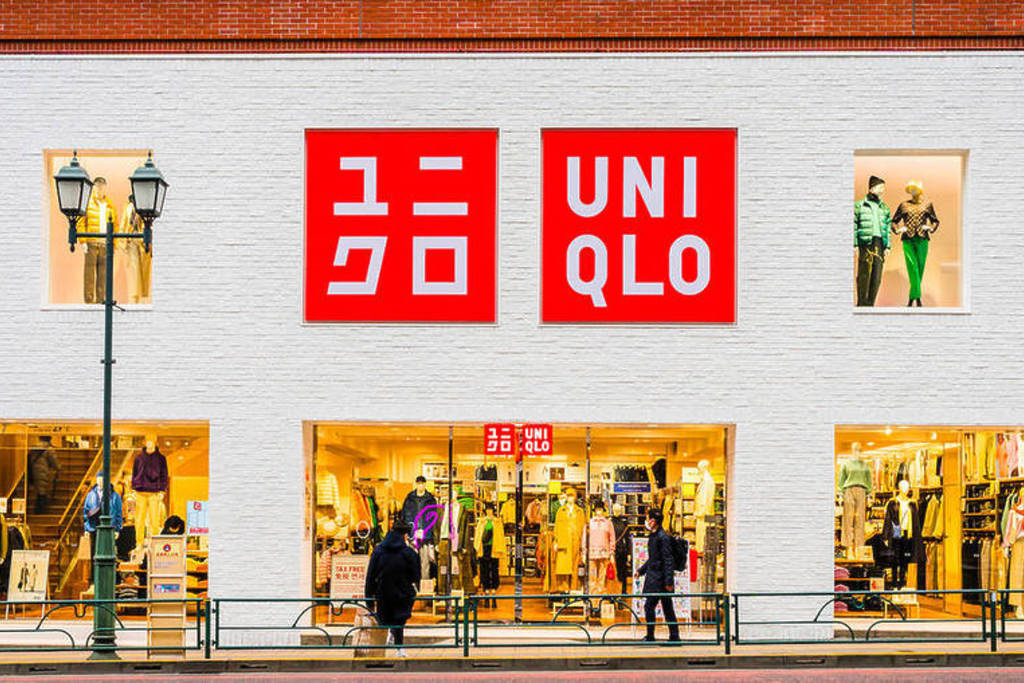
UNIQLO, a core brand of Fast Retailing, has implemented one of the most extensive item-level RFID deployments in the global apparel industry. By embedding passive UHF RFID tags into garments at the point of manufacture, the company established end-to-end inventory visibility across distribution centers and retail stores.
This document examines the technical architecture behind the UNIQLO RFID tag system, operational impacts, infrastructure requirements, and strategic implications for apparel retailers evaluating similar deployments.
1. Industry Context: RFID in Apparel Retail
Apparel retail presents structural inventory challenges:
- High SKU complexity (size, color, style variations)
- Rapid product turnover
- Distributed store networks
- Omnichannel fulfillment requirements
- Shrinkage and stock inaccuracy
Traditional barcode-based systems rely on manual, line-of-sight scanning, which limits speed and accuracy. Industry studies consistently show that manual inventory accuracy in apparel retail often falls below 80%.
Item-level RFID has emerged as a scalable solution to improve visibility, reduce labor intensity, and enable real-time stock accuracy.
UNIQLO’s RFID deployment must be understood within this operational context.
2. Technical Overview of the UNIQLO RFID Tag
2.1 Frequency and Protocol
UNIQLO utilizes passive UHF RFID technology based on:
- RAIN RFID standard
- EPC Class 1 Gen 2 protocol
- ISO/IEC 18000-63 compliance
- Frequency range: 860–960 MHz (region-specific configuration)
This frequency band supports:
- Multi-item reading
- Meter-level read ranges
- High-speed inventory scanning
- Anti-collision processing for dense tag environments
2.2 Tag Structure
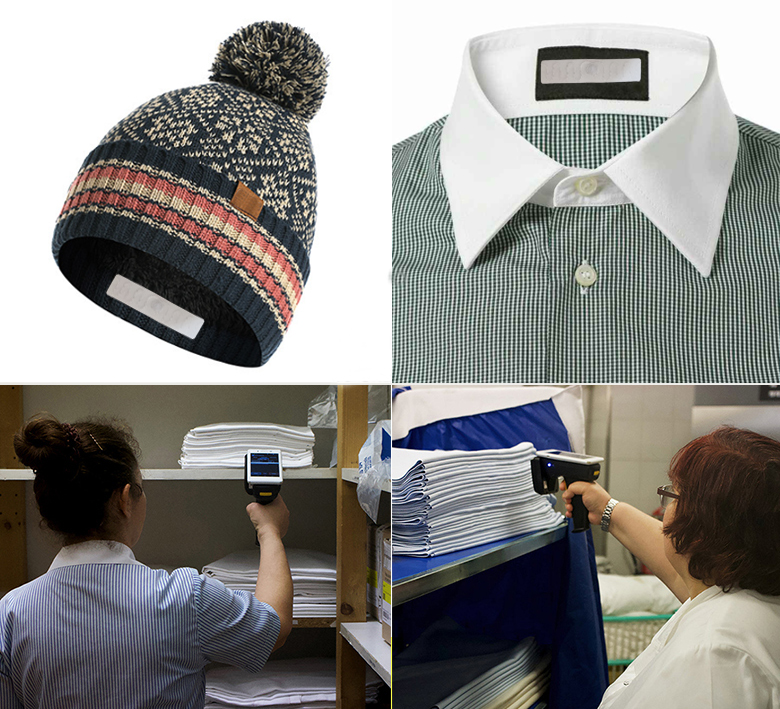
A typical UNIQLO RFID tag consists of:
- Microchip storing a unique EPC code
- Aluminum antenna etched on flexible substrate
- Integration into:
- Hang tags, or
- Sewn care labels
The tags are passive, meaning:
- No internal power source
- Activated only when energized by a reader
- No GPS or active tracking functionality
2.3 Data Architecture
Each RFID tag carries a unique identifier (EPC) linked within backend systems to:
- SKU
- Size
- Color
- Batch data
- Supply chain information
This creates a digital identity for every garment.

3. Deployment Architecture
UNIQLO’s RFID implementation spans multiple operational layers:
3.1 Manufacturing Integration
RFID tags are embedded during garment production. Early integration ensures:
- Consistent tagging standards
- Supply chain traceability
- Reduced retrofitting costs
Source-level tagging is critical for scalability.
3.2 Distribution Centers
At logistics hubs:
- Fixed RFID portals track inbound and outbound cartons.
- Bulk scanning validates shipment accuracy.
- Automated reconciliation reduces manual verification.
This increases distribution accuracy and throughput efficiency.
3.3 Retail Store Operations
In-store applications include:
- Handheld inventory readers
- Backroom stock verification
- Sales floor replenishment monitoring
- Automated self-checkout systems
Full inventory counts that previously required hours can be completed in minutes.
4. Smart Checkout Infrastructure
One of the most visible elements of the UNIQLO RFID tag system is the self-checkout platform.
4.1 Multi-Tag Reading
Customers place multiple garments into a checkout bin. The embedded RFID reader:
- Simultaneously detects all tags
- Processes EPC codes
- Calculates pricing automatically
This process relies on UHF RFID’s anti-collision protocol, allowing dense tag reading without interference.
4.2 Operational Impact
Benefits include:
- Reduced checkout time
- Lower staffing requirements
- Improved customer throughput
- Reduced scanning errors
This infrastructure transforms the point-of-sale environment from manual scanning to automated identification.
5. Inventory Accuracy and Performance Outcomes
RFID deployment in apparel retail commonly delivers:
- Inventory accuracy above 95%
- Reduced stockouts
- Improved size availability
- Lower shrinkage
- Faster replenishment cycles
High accuracy directly impacts revenue performance, particularly in size-sensitive categories where out-of-stock conditions lead to lost sales.
UNIQLO’s scale demonstrates that item-level RFID can operate effectively across global store networks.
6. Privacy and Consumer Considerations
Passive UHF RFID tags used in apparel:
- Do not contain batteries
- Do not transmit continuously
- Cannot be tracked without an RFID reader
- Store product identifiers, not personal customer data
Hang tag RFID labels are typically removed at purchase. Sewn labels may remain but are inactive outside reader environments.
Understanding these characteristics is essential in addressing consumer privacy concerns.
7. Strategic Implications for Apparel Retailers
The UNIQLO RFID tag system provides several strategic insights:
7.1 RFID as Infrastructure, Not a Pilot
Item-level tagging must be implemented as a system-wide architecture rather than a limited trial.
7.2 ERP and WMS Integration Is Critical
Tag data must integrate with:
- Inventory management systems
- Warehouse management systems
- POS systems
- Omnichannel platforms
RFID generates value only when data flows seamlessly.
7.3 Source Tagging Drives Scalability
Embedding RFID during manufacturing reduces:
- Labor costs
- Retrofitting complexity
- Data inconsistencies
This approach supports global rollout.
8. Cost Considerations
Cost components in an RFID deployment include:
- RFID tags (volume-dependent pricing)
- Fixed readers
- Handheld devices
- Software integration
- Infrastructure upgrades
- Staff training
While tag cost has decreased significantly over the past decade, ROI depends on operational scale and inventory complexity.
Large apparel retailers typically achieve ROI through:
- Labor savings
- Sales uplift from stock accuracy
- Reduced shrinkage
9. Future Development Pathways
With item-level RFID infrastructure in place, retailers can expand into:
- Smart fitting rooms
- Automated replenishment algorithms
- AI-based demand forecasting
- Digital product passports
- Sustainability lifecycle tracking
The RFID tag becomes a persistent digital anchor for each garment.
UNIQLO’s deployment provides a foundation for such expansion.
Conclusion
The UNIQLO RFID tag system represents one of the most mature and scalable implementations of item-level UHF RFID in the global apparel sector.
Key characteristics include:
- Passive RAIN RFID technology
- Source-level tag integration
- End-to-end supply chain visibility
- Smart checkout automation
- High inventory accuracy
For apparel retailers evaluating RFID adoption, the UNIQLO model demonstrates that large-scale deployment is operationally viable and strategically transformative.
RFID, when implemented as core infrastructure rather than experimental technology, enables measurable improvements in efficiency, visibility, and customer experience.