RFID technology is widely used in access control, asset tracking, logistics, retail, and industrial automation. However, one of the most common challenges in real-world deployments is RFID signal interference caused by surrounding materials.
Understanding which materials block or degrade RFID signals—and why—can help you design more reliable RFID systems, avoid costly deployment failures, and select the correct tags, readers, and frequencies.
This guide explains which materials interfere with RFID, how different RFID frequencies behave, and what engineering solutions can mitigate these issues.
How RFID Signals Interact with Materials
RFID systems rely on electromagnetic waves to transmit data between a reader and a tag. When these waves encounter certain materials, they may be:
- Absorbed
- Reflected
- Detuned
- Shielded entirely
The severity of interference depends on:
- RFID frequency (LF, HF, UHF)
- Tag antenna design
- Distance and orientation
- Material thickness and conductivity
Materials That Block or Interfere With RFID Signals
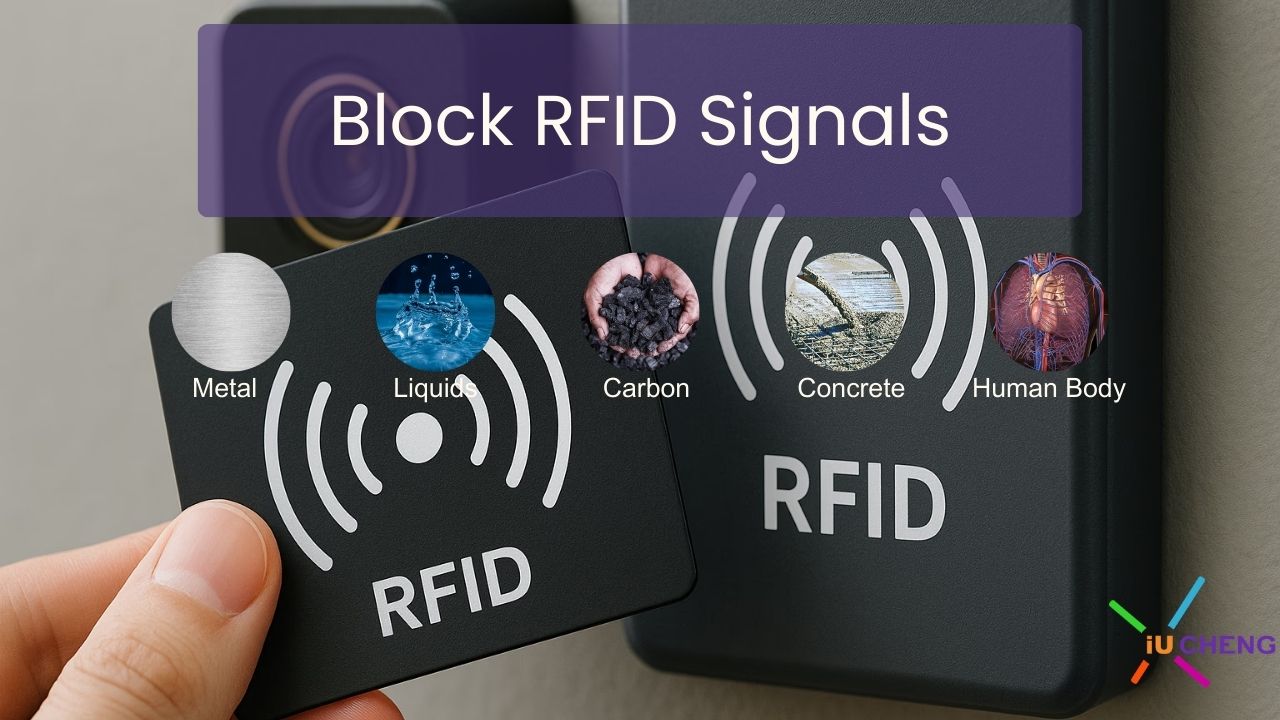
1. Metal (The Strongest RFID Blocker)
Metal is the most problematic material for RFID systems.
Why metal blocks RFID:
- Reflects electromagnetic waves
- Detunes tag antennas
- Creates signal cancellation zones
Impact by frequency:
- LF (125–134 kHz): Moderate interference
- HF (13.56 MHz): Significant detuning near metal
- UHF (860–960 MHz): Severe signal reflection and null zones
Common metal interference scenarios:
- Tags mounted on steel containers
- RFID labels on aluminum packaging
- Industrial equipment with metal surfaces
Mitigation solutions:
- Use on-metal RFID tags
- Add ferrite shielding layers
- Maintain air gaps between tag and metal surface
2. Water and Liquids
Water absorbs RF energy, especially at higher frequencies.
Examples of water-rich materials:
- Human body
- Beverages
- Chemical liquids
- Fresh food (meat, fruit)
Frequency impact:
- LF: Minimal impact
- HF: Moderate absorption
- UHF: High signal loss and reduced read range
Common problem areas:
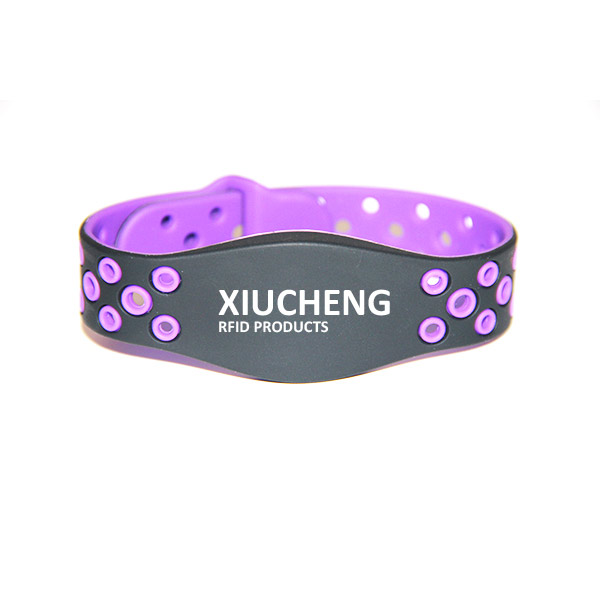
- RFID wristbands worn on skin
- Beverage bottles with UHF labels
- Livestock tracking
Mitigation solutions:
- Use HF RFID for wristbands
- Specialized UHF tags for liquids
- Optimize antenna polarization and placement
3. Carbon-Based Materials
Materials containing carbon can absorb RF signals.
Examples include:
- Carbon fiber
- Graphite
- Rubber with carbon additives
- Black anti-static plastics
These materials often cause unexpected read failures in industrial environments.
Mitigation:
- Field testing before mass deployment
- Use higher-gain antennas
- Adjust tag orientation
4. Concrete and Stone (With Reinforcement)
Concrete itself is moderately RF-transparent, but reinforced concrete contains metal rebar.
Impact:
- Signal attenuation
- Shadow zones behind walls
- Reduced read reliability
This is common in:
- Parking garages
- Warehouses
- Tunnels
Mitigation:
- Use higher reader power
- Strategic antenna placement
- External antennas or portals
5. Human Body and Biological Materials
The human body is approximately 60–70% water, making it a strong absorber of RF energy.
Affected applications:
- RFID wristbands
- Wearable RFID devices
- Access control badges
Best practices:
- Prefer HF RFID (13.56 MHz) for wearables
- Avoid UHF for close-to-body applications unless specifically designed
Materials With Minimal RFID Interference
The following materials generally allow RFID signals to pass with minimal attenuation:
- Paper and cardboard
- Plastic (non-carbon)
- Glass
- Wood
- Foam
- Fabric (non-metallic)
These materials are commonly used for RFID labels, tickets, and packaging.
Can Aluminum Foil Block RFID Signals?
Yes. Aluminum foil can effectively block RFID signals, especially HF (13.56 MHz) and UHF (860–960 MHz) RFID.
Why Aluminum Foil Blocks RFID
Aluminum is a highly conductive metal, which causes:
- Reflection of RF waves
- Creation of a Faraday cage effect
- Severe antenna detuning for nearby RFID tags
Even thin household aluminum foil can:
- Prevent RFID tags from being read
- Reduce read range to zero when fully wrapped
- Cause inconsistent reads when partially covered
RFID Frequency vs Material Sensitivity
| RFID Frequency | Material Sensitivity | Typical Applications |
|---|---|---|
| LF (125 kHz) | Very low | Animal ID, access control |
| HF (13.56 MHz) | Medium | NFC, wristbands, smart cards |
| UHF (860–960 MHz) | High | Logistics, inventory, supply chain |
Choosing the correct frequency is critical when materials cannot be changed.
Engineering Solutions to Overcome RFID Blocking
Professional RFID deployments use a combination of:
- On-metal or anti-metal RFID tags
- Ferrite shielding
- Tag spacers and air gaps
- Optimized antenna polarization
- Frequency selection based on environment
- Site surveys and pilot testing
At XIUCHENG RFID, material compatibility is evaluated during the tag selection and customization phase to ensure stable long-term performance.
Conclusion
RFID signal blockage is not a flaw in the technology—it is a physics challenge that can be engineered around.