Air travel has become faster, more global, and increasingly complex. One of the perennial pain points for passengers and airlines alike is baggage handling—delays, lost luggage, and misrouted bags can cause frustration, operational inefficiencies, and financial loss. To address this, airlines are increasingly turning to RFID (Radio Frequency Identification) technology. RFID provides real-time visibility, improves accuracy, and enhances the overall travel experience.
This article dives into how airlines use RFID to track luggage, the technology behind it, and its operational and passenger benefits.
What Is RFID and How Does It Work for Luggage?
RFID is a wireless technology that uses electromagnetic fields to identify and track objects via RFID tags. In the context of airline baggage:
- Each bag receives an RFID tag, usually embedded in the bag’s boarding pass or luggage tag.
- Tags contain a unique identifier that links to the passenger’s flight information in the airline’s system.
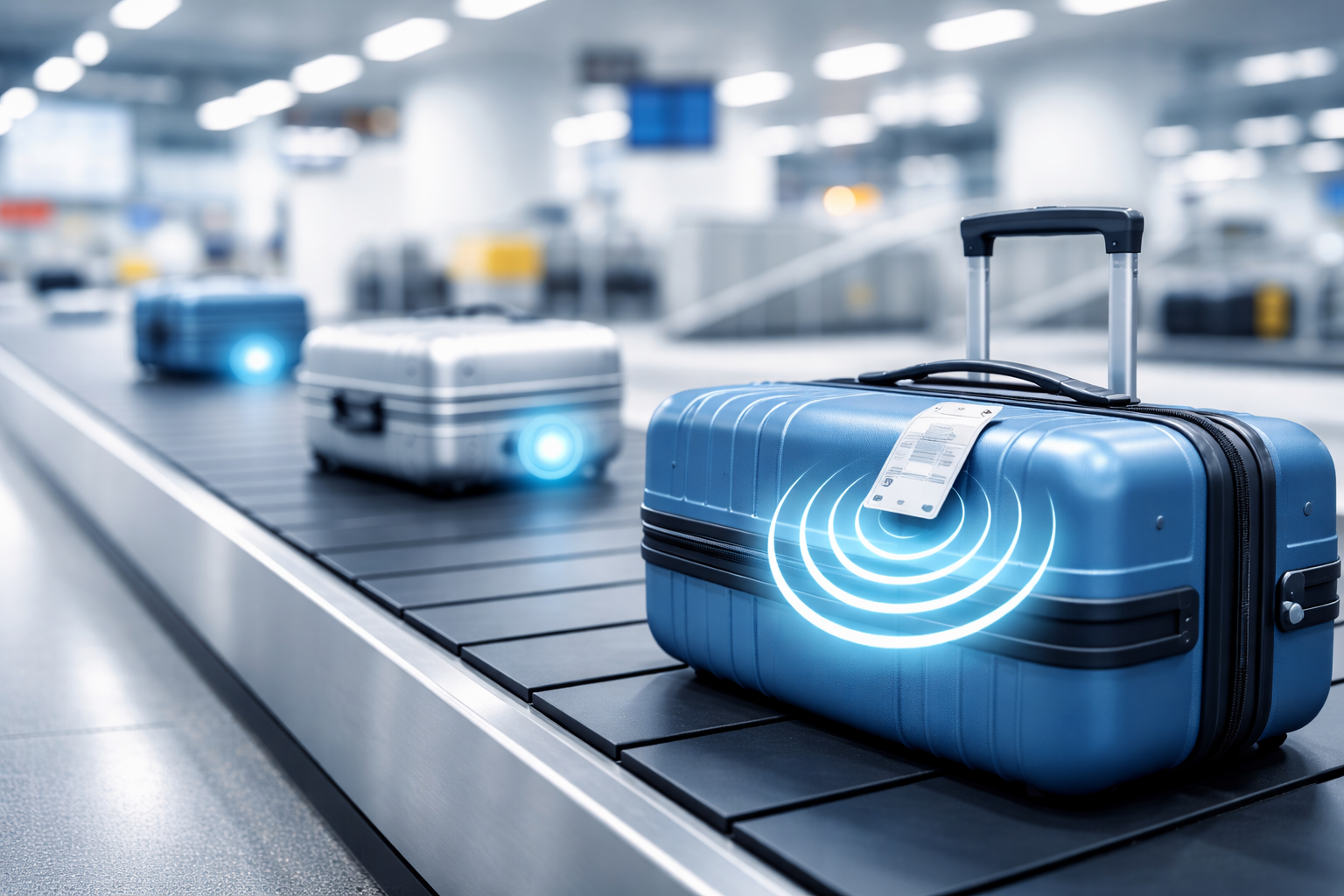
- RFID readers at key points in the baggage handling process detect these tags without requiring line-of-sight scanning.
Unlike traditional barcodes, RFID can be read in bulk and even if the tag is hidden or damaged, dramatically reducing errors.
Key Points in the Luggage Journey Where RFID Is Applied
1. Check-In Counters
At check-in, the bag is tagged with an RFID-enabled label. This tag:
- Stores flight details, passenger information, and a unique bag ID.
- Enables automated updates to the airline’s baggage system.
- Provides immediate confirmation that the bag is associated with the correct flight.
2. Sorting and Conveyor Systems
Airports handle thousands of bags per hour. RFID allows:
- Automated sorting: RFID readers at conveyor junctions detect and route bags to the correct flight.
- Bulk scanning: Hundreds of bags can be scanned simultaneously without manual intervention.
- Error reduction: Misreads or lost barcodes are minimized, which reduces mishandling.
3. Loading onto Aircraft
Before loading:
- RFID readers confirm that each bag is going onto the correct aircraft.
- Any mismatch is immediately flagged, preventing misrouted luggage.
During transit, some airlines integrate RFID with weight sensors and logistics software for optimal loading and balancing.
4. Arrival and Claim
Upon arrival:
- RFID readers track bags off the plane and onto the baggage carousel.
- Passengers can receive real-time notifications about bag arrival, improving satisfaction.
- If a bag is delayed, its RFID trace helps airline staff locate it quickly.
Benefits of RFID in Airline Baggage Handling
- Improved Accuracy:
RFID significantly reduces errors compared to barcodes. Airlines report 99.9% tracking accuracy, drastically lowering lost luggage rates. - Operational Efficiency:
Automation reduces labor costs and speeds up baggage handling, from check-in to loading and unloading. - Enhanced Passenger Experience:
Real-time bag tracking and notifications reduce anxiety and increase trust in the airline. - Data-Driven Insights:
Airlines can analyze RFID data to optimize baggage flow, improve conveyor layouts, and predict delays.
Real-World Adoption
Many leading airlines have already implemented RFID technology:
- Delta Air Lines: Tracks over 90% of bags with RFID, achieving industry-leading on-time baggage delivery.
- American Airlines: Uses RFID to enhance sorting and handling accuracy.
- Lufthansa and Emirates: Deploy RFID for both passenger and cargo luggage, integrating it with advanced logistics software.
The technology is increasingly standard in major airports worldwide, and regulatory bodies support its adoption for improved passenger experience.
Challenges and Considerations
While RFID offers clear advantages, airlines must manage:
- Infrastructure Costs: Installing RFID readers and integrating them with IT systems requires upfront investment.
- Tag Compatibility: Tags must withstand handling, temperature, and scanning conditions.
- Data Security: Sensitive passenger and flight data must be protected against unauthorized access.
Despite these challenges, the long-term operational savings and passenger satisfaction make RFID a worthwhile investment.
The Future of RFID in Air Travel
Looking ahead, RFID could integrate with:
- Mobile apps: Passengers track bags in real-time on their devices.
- IoT-enabled smart luggage: Bags with built-in sensors report location, temperature, or handling status.
- AI-powered logistics: Predictive systems optimize baggage routing and reduce delays before they occur.
RFID is not just a tracking tool; it is becoming a critical enabler for smart, seamless air travel.
Conclusion
RFID technology has transformed airline baggage handling. From check-in to claim, it reduces errors, accelerates operations, and enhances the passenger experience. As airlines continue to expand RFID adoption and integrate it with smart technologies, travelers can look forward to fewer lost bags and smoother journeys.

About XIUCHENG RFID
XIUCHENG RFID specializes in manufacturing a wide range of RFID products, including RFID Silicone Wristbands, Tyvek Wristbands, Fabric Wristbands, Elastic Wristbands, Vinyl Wristbands, RFID Laundry Tags, Animal Tags, and RFID Cards. All products are produced under strict quality control and advanced production technology.
With 12 years of experience in wristband design, tag design, quality management, and customer relationship management, we have built a solid foundation for delivering reliable and high-performance RFID solutions.