


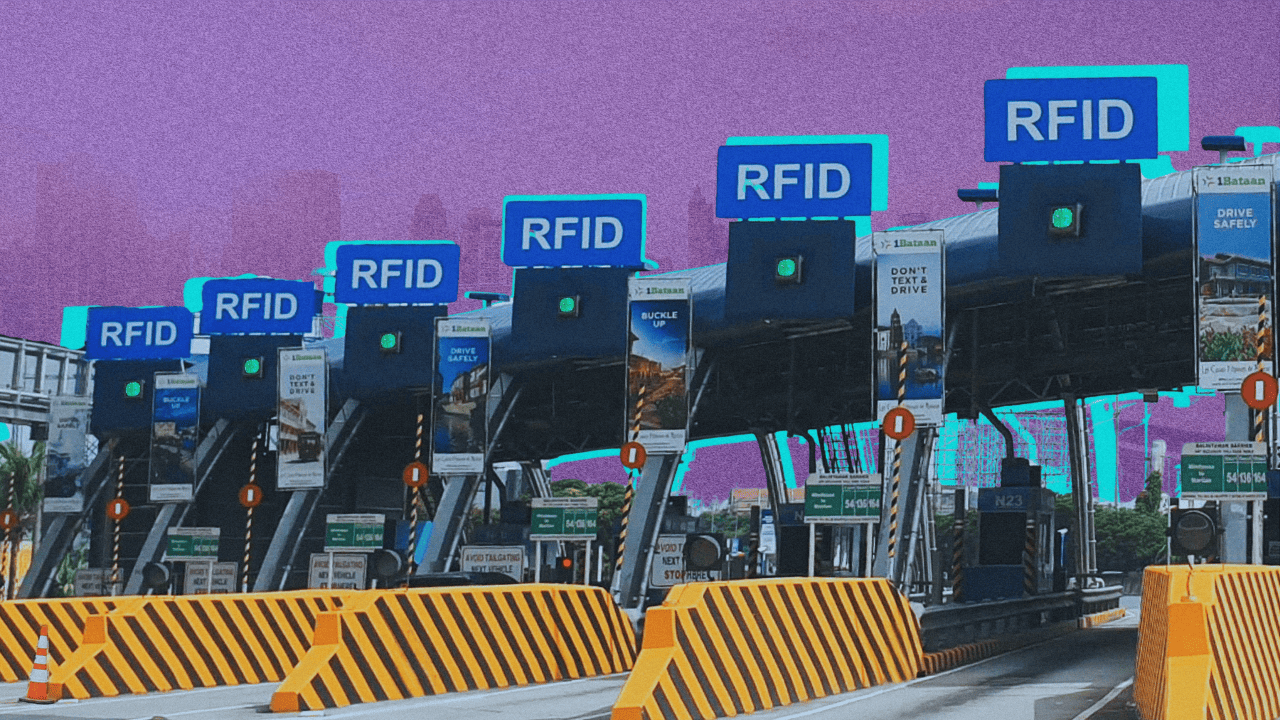
If you’ve ever worked on a tolling project—or supplied RFID components into one—you already know the reality: interoperability is rarely a technical checkbox. It’s where projects either scale nationwide… or stall at regional pilots.
“One RFID, all tollways” sounds simple. In practice, it only works when RF performance, data architecture, and institutional alignment are engineered together from the start.
This article focuses on what actually makes nationwide interoperability work—based on how large-scale systems have been deployed, tuned, and fixed in the real world.
1. Interoperability Starts at the Air Interface—but Doesn’t End There
Most modern toll systems standardize on:
- UHF RFID
- EPC Gen2
That solves only one problem: a reader can talk to a tag.
What it does not solve:
- Whether every toll plaza reads with the same reliability
- Whether duplicate reads are filtered consistently
- Whether transactions are recognized across operators
In other words, protocol compatibility is necessary—but far from sufficient.
2. Tag Performance Is Where Most Projects Quietly Fail
On paper, any Gen2 tag should work. In the field, many don’t.
The difference comes down to how the tag behaves on a windshield at speed.
What matters in practice:
Glass detuning
Windshields are not RF-neutral. Laminated glass, metallic coatings, and installation angle all shift antenna performance. A tag tuned in free air can lose 30–50% read sensitivity once installed.
Vehicle diversity
Trucks, sedans, buses—each presents a different RF environment. A “working” tag on a sedan may underperform on a truck with a steep windshield.
Adhesive and placement discipline
Inconsistent placement creates inconsistent reads. High-performing systems standardize:
- Mounting zone (often behind rear-view mirror)
- Orientation
- Installer training
This is why large programs like FASTag invested heavily in tag certification and installation guidelines—not just chip selection.
3. Reader Deployment: The Gap Between Lab and Highway
Reader datasheets don’t reflect toll lane reality.
Typical field issues:
Cross-lane reads
High RF power improves sensitivity—but also increases the chance of reading a vehicle in the next lane.
Missed reads at speed
At 80–100 km/h, your read window is milliseconds. Antenna placement and polarization become critical.
Multipath interference
Metal gantries, trucks, and surrounding infrastructure create reflections that distort signals.
What actually works:
- Directional antennas with controlled beam patterns
- Careful RF power tuning per lane (not “max power everywhere”)
- Lane-level filtering logic in the middleware
Organizations like National Highways Authority of India standardized these parameters to avoid each operator “tuning their own way”—which breaks interoperability quickly.
4. The Real Core: A Central Transaction Brain
RFID identifies the vehicle. It does not complete the transaction.
Nationwide interoperability depends on a central clearing architecture that does three things in real time:
- Recognize the tag across all operators
- Authorize payment instantly
- Settle funds between stakeholders later
Why account-based systems win
Modern tolling systems map:
RFID ID → cloud account → payment source
This avoids:
- Recharging multiple wallets
- Region-specific balances
- Tag duplication
Systems like E-ZPass and European Electronic Toll Service follow variations of this model, even if governance differs.
5. Interoperability Breaks at the Edges—Here’s Where
Even when the core system is sound, problems appear at scale.
Duplicate transactions
A vehicle gets read twice (entry + exit zone overlap, or multi-antenna triggers).
Fix: time-window filtering + vehicle trajectory logic.
Blacklisted tags still passing
Local systems not syncing blacklist updates fast enough.
Fix: near real-time synchronization with central databases.
Tag cloning or misuse
Rare, but possible in large deployments.
Fix: combine RFID with vehicle plate validation (ANPR).
6. Why Policy Matters More Than Technology
From a purely technical standpoint, interoperability is solvable.
From an operational standpoint, it often fails without enforcement.
Successful nationwide systems share:
- Mandatory technical standards
- Certified vendor ecosystems
- Unified onboarding processes
- Central governance authority
Without that, each toll operator optimizes locally—and breaks the system globally.
7. What Procurement Teams Often Miss
If you’re sourcing RFID components or systems for tolling, the biggest risk is focusing too narrowly.
Common mistake:
“Is this tag EPC Gen2 compliant?”
That’s baseline—not a decision criterion.
Better questions:
- Has this tag been validated on different windshield types?
- What is the read rate at 100 km/h in multi-lane conditions?
- How does the reader handle cross-lane interference?
- Is the system already integrated into a clearinghouse environment?
Interoperability is not a feature you buy.
It’s a system you verify—end to end.
8. What “One RFID” Actually Means in Practice
When implemented correctly, it’s not just convenience.
It’s:
- Throughput: fewer stops, higher lane efficiency
- Revenue assurance: fewer missed or disputed transactions
- Scalability: new toll roads plug into an existing ecosystem
- Data continuity: nationwide vehicle movement insights
That’s why governments push for it—and why poorly executed systems get replaced.
Final Takeaway
“One RFID for all tollways” only works when five layers align:
- Standardized RF protocol
- Field-optimized tag design
- Properly engineered reader infrastructure
- Centralized transaction processing
- Strong governance and enforcement
Most failures happen not because one layer is missing—but because they were designed in isolation.
If you’re building or supplying into a toll system, the goal is not just compliance.
It’s ensuring your component performs reliably inside a national-scale, multi-operator system—where small inconsistencies become large operational problems very quickly.


