


In modern supply chains, retail environments, and smart product ecosystems, identification technologies play a crucial role. Two of the most widely used labeling technologies today are barcode stickers and NFC stickers.
While both serve the purpose of linking physical items to digital information, they operate using completely different technologies and offer very different capabilities.
This article explains the key differences between barcode stickers and NFC stickers, including how they work, their advantages, limitations, and which applications each technology is best suited for.
What Are Barcode Stickers?
Barcode stickers are printed labels that contain a machine-readable pattern of lines or squares representing numeric or alphanumeric data.
A barcode scanner or smartphone camera reads the pattern and converts it into digital information stored in a database.
One of the most widely used barcode standards is the UPC barcode, commonly seen on retail products around the world.
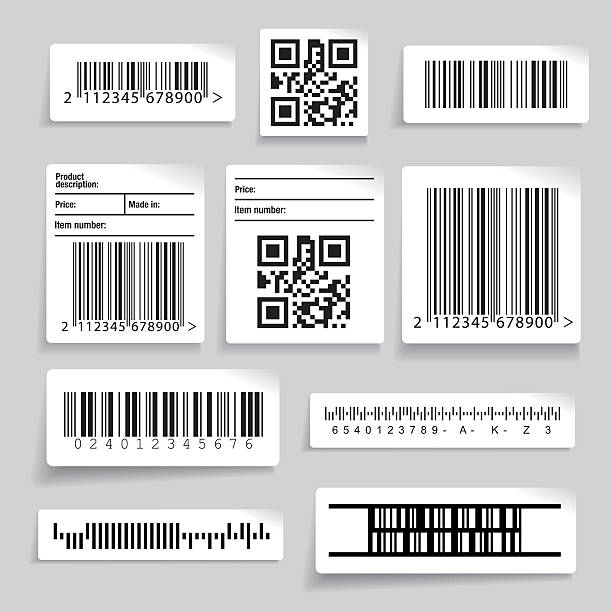
How Barcode Stickers Work
The process is simple:
- A barcode pattern is printed on a label.
- A scanner reads the barcode using a laser or camera.
- The scanner decodes the pattern.
- The system retrieves associated data from a database.
The barcode itself usually stores only an ID number, not detailed product information.
What Are NFC Stickers?
NFC stickers are smart labels embedded with a small NFC chip and antenna.
These stickers communicate wirelessly with NFC-enabled devices such as smartphones or readers using Near Field Communication technology.
Unlike barcodes, NFC stickers can store data directly on the chip and communicate without visual scanning.
Most NFC stickers use integrated circuits from companies like NXP Semiconductors.
Common chip types include:
- NTAG213
- NTAG215
- NTAG216
These chips allow users to store URLs, IDs, or other small data structures directly on the tag.

How NFC Stickers Work
NFC stickers operate through electromagnetic coupling:
- A smartphone or reader generates a radio field.
- The NFC tag receives power from that field.
- The chip transmits stored data back to the reader.
- The smartphone triggers an action such as opening a webpage or launching an app.
Because NFC tags are passive, they do not require batteries.
Barcode Stickers vs NFC Stickers: Key Differences
| Feature | Barcode Stickers | NFC Stickers |
|---|---|---|
| Technology | Optical scanning | Radio frequency communication |
| Data Storage | Usually an ID only | Data stored on chip |
| Reading Method | Camera or laser scanner | NFC reader or smartphone |
| Scan Distance | Several inches to meters | Usually 1–4 cm |
| Rewritable | No | Yes (many chips) |
| Security | Low | Medium to high |
| Cost | Very low | Higher than barcode |
| Durability | Ink may fade | Embedded chip protected |
Advantages of Barcode Stickers
Barcode stickers remain popular because they are extremely simple and inexpensive.
1. Very Low Cost
Barcode labels cost only a few cents to print, making them ideal for high-volume product labeling.
2. Universal Compatibility
Barcode scanners are used globally across industries such as:
- retail
- logistics
- warehousing
- healthcare
Nearly every inventory system supports barcode integration.
3. Easy to Implement
Companies can deploy barcode systems quickly using standard printers and scanners.
Limitations of Barcode Stickers
Despite their widespread use, barcodes have several limitations.
Line-of-Sight Requirement
Barcode scanners must see the code clearly. Dirt, scratches, or poor printing can prevent scanning.
Limited Data Capacity
Barcodes typically contain only a reference number, not full product information.
No Security Features
Standard barcodes can be easily copied or photographed.
Advantages of NFC Stickers
NFC stickers provide advanced functionality that traditional barcodes cannot offer.
1. Contactless Interaction
Users simply tap a phone on the sticker to read the tag.
No camera alignment is required.
2. Data Rewriting
Many NFC tags can be rewritten multiple times, allowing updates to stored data.
3. Smart Interactions
NFC stickers can trigger actions such as:
- opening websites
- sharing digital business cards
- launching apps
- enabling smart device automation
4. Authentication and Security
Some NFC chips support:
- password protection
- encrypted communication
- unique chip identifiers
These features make NFC useful for anti-counterfeiting and brand protection.
Common Applications of Barcode Stickers
Barcode stickers are best suited for high-volume identification and inventory systems.
Typical uses include:
Retail Product Labeling
Every item in a supermarket uses barcodes for checkout scanning.
Warehouse Inventory
Barcodes track packages and pallets in logistics facilities.
Asset Management
Companies label equipment for internal tracking.
Shipping and Logistics
Shipping labels and parcel tracking rely heavily on barcode technology.
Common Applications of NFC Stickers
NFC stickers are increasingly used in smart products and interactive experiences.
Smart Packaging
Brands embed NFC tags in packaging to connect customers to product information.
Contactless Marketing
Consumers can tap packaging to access promotions, videos, or product authenticity checks.
Access Control
NFC stickers are used in smart locks and building entry systems.
IoT and Smart Home Automation
Users can trigger smart device actions by tapping an NFC sticker.
When Should You Choose Barcode Stickers?
Barcode stickers are the better choice when:
- cost must be extremely low
- millions of labels are required
- products only need a simple ID
- existing barcode systems are already deployed
This is why industries such as retail and logistics still rely heavily on barcodes.
When Should You Choose NFC Stickers?
NFC stickers are ideal when:
- interactive user experiences are needed
- authentication or anti-counterfeiting is required
- data needs to be updated after production
- smartphone interaction is part of the workflow
NFC is commonly used in smart packaging, marketing campaigns, and digital identity applications.
The Future: Hybrid Labels
Many companies are now combining both technologies.
A single label may include:
- a printed barcode for logistics scanning
- an NFC tag for consumer interaction
This hybrid approach allows brands to support both internal supply chain tracking and external customer engagement.
Conclusion
Barcode stickers and NFC stickers both play important roles in modern product identification systems.
Barcode stickers remain the most cost-effective solution for large-scale inventory tracking, while NFC stickers provide advanced functionality such as wireless communication, authentication, and interactive experiences.
As smart packaging and IoT technologies continue to expand, NFC stickers are becoming increasingly valuable for businesses looking to connect physical products with digital services.
However, for high-volume supply chains where cost and simplicity are critical, barcode stickers will likely remain the dominant technology for many years.


