


Luxury brands are no longer using RFID and NFC only for internal logistics. In the cases of Miu Miu and Prada, these technologies have evolved into customer-facing trust and experience tools, embedded directly into products and packaging.
Both brands integrate item-level RFID for supply chain control and NFC for consumer interaction, creating a closed loop from factory to end user.
This dual-layer approach allows luxury houses to answer three critical questions at once:
- Is this product authentic?
- Where has it been in the supply chain?
- How can the brand extend the product experience after purchase?
Why Did Prada Introduce RFID Across Its Product Lines?
Prada was among the earliest luxury groups to deploy RFID at scale, initially driven by inventory accuracy and anti-counterfeiting.
What Problem Was Prada Solving?
Luxury retail faces persistent challenges:
- High counterfeit circulation
- Fragmented global supply chains
- Inaccurate boutique inventory visibility
By embedding UHF RFID tags at the item level, Prada achieved:
- Near-real-time stock visibility across stores
- Improved replenishment accuracy
- Traceability from manufacturing to retail floor
This is where Prada RFID becomes more than a backend system—it is a foundation for data integrity across the brand’s ecosystem.
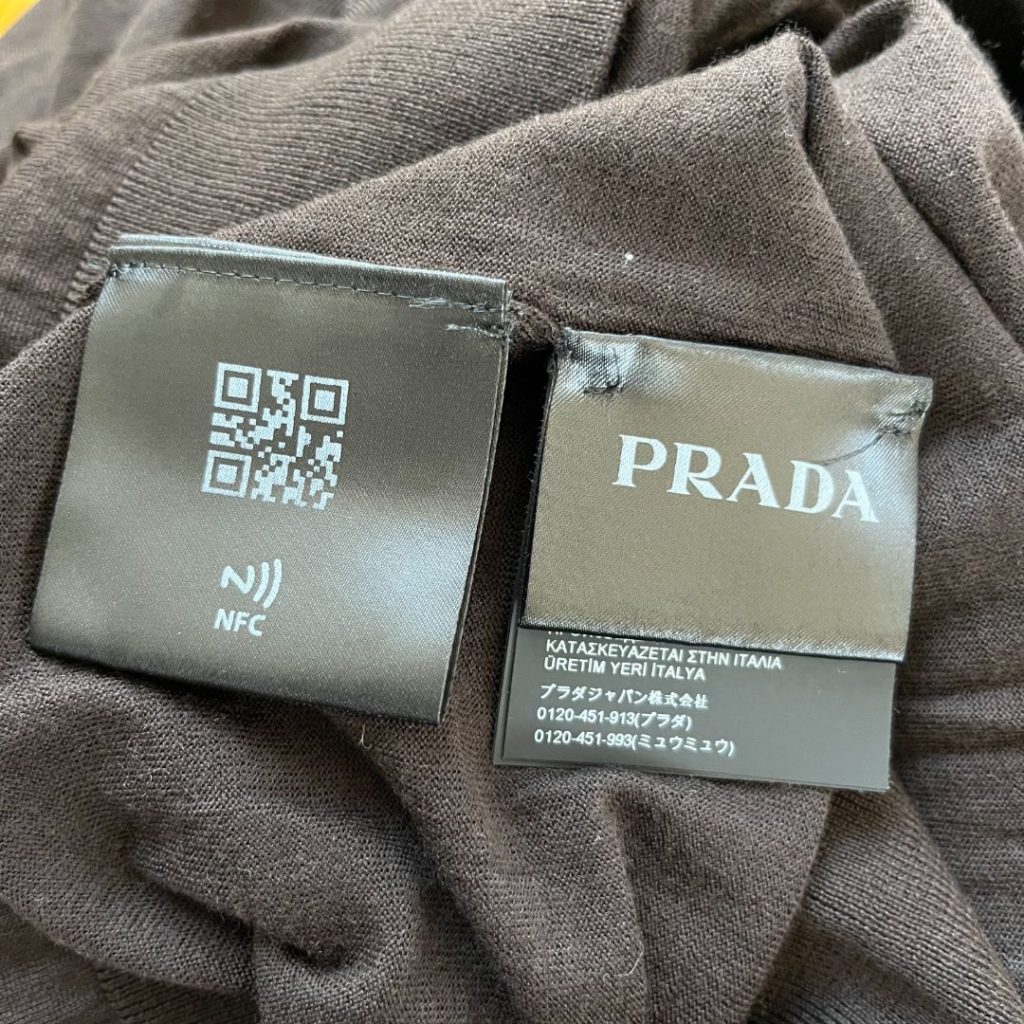
How Does Prada Use NFC to Interact With Customers?
While RFID supports internal operations, Prada’s NFC strategy focuses on the consumer.
Selected Prada products and authentication cards include NFC chips that can be tapped with a smartphone. This enables:
- Instant product verification
- Access to official product information
- Brand-controlled digital touchpoints
Instead of relying on third-party authentication platforms, Prada keeps the verification logic brand-owned, reinforcing trust and exclusivity—key values in luxury.
This is the practical meaning behind Prada NFC:
authentication without friction, controlled by the brand itself.
What Makes Miu Miu’s NFC and RFID Use Case Different?
Miu Miu, as part of the Prada Group, inherits similar infrastructure but applies it with a younger, more experience-driven lens.
How Is Miu Miu Using NFC?
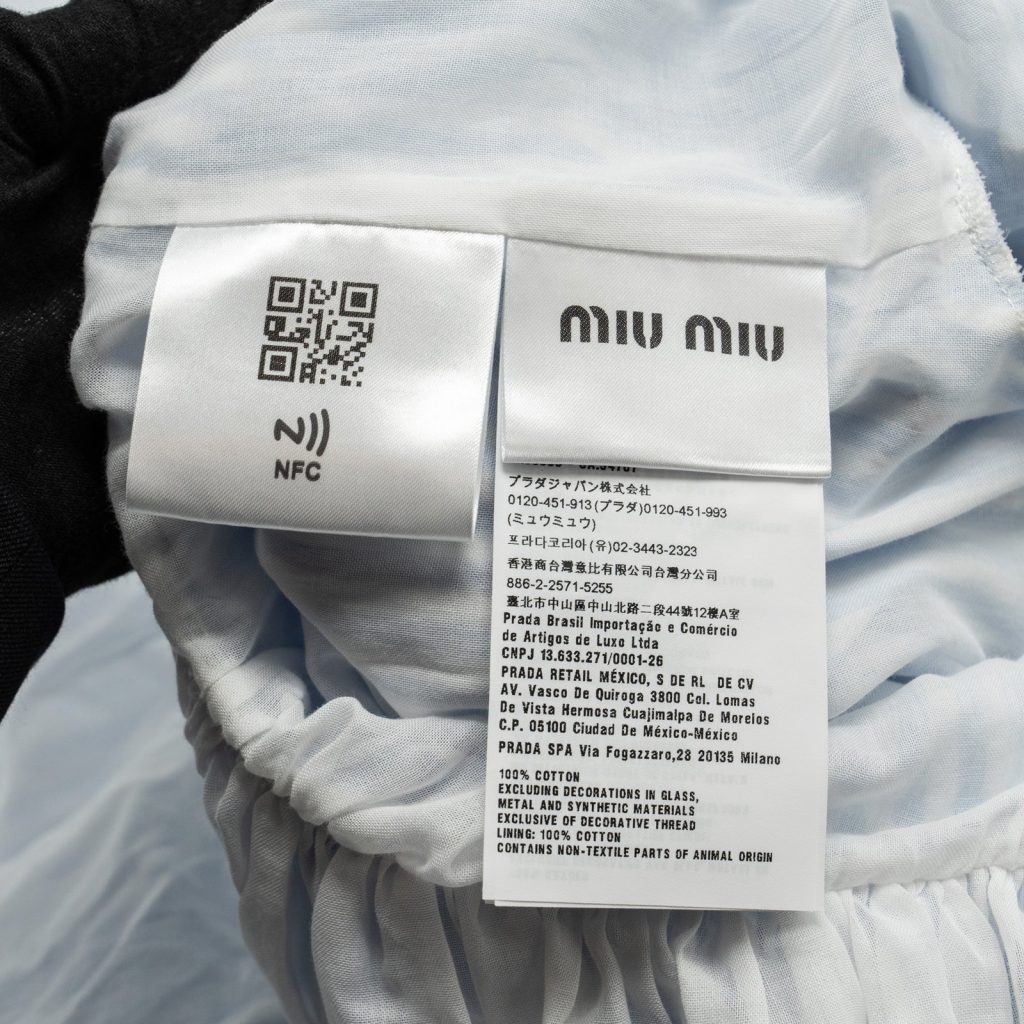
Miu Miu integrates NFC into:
- Product labels
- Hang tags
- Authentication cards
A simple phone tap can unlock:
- Confirmation of authenticity
- Product origin and material details
- Brand storytelling aligned with collections
Rather than positioning NFC as a “security feature,” Miu Miu treats it as part of the fashion narrative, blending technology with design.
This is why discussions around Miu Miu NFC often focus on experience, not just verification.
Does Miu Miu Still Rely on RFID If NFC Is Customer-Facing?
Yes—and this distinction matters.
- RFID (UHF) is optimized for:
- Bulk reading
- Logistics
- Warehouse and store operations
- NFC (HF) is optimized for:
- One-to-one interaction
- Smartphones
- Consumer engagement
Miu Miu uses RFID behind the scenes to maintain tight control over inventory and distribution, while NFC handles the last mile of trust with the customer.
This layered architecture is what people usually mean when referencing Miu Miu RFID in industry discussions.
How Do RFID and NFC Help Fight Counterfeiting in Luxury Fashion?
Counterfeiters can replicate logos and packaging—but they struggle to replicate secure digital identities.
RFID and NFC enable:
- Unique digital IDs per item
- Backend verification against official databases
- Tamper-evident authentication flows
When a customer taps an NFC-enabled product and receives confirmation directly from the brand’s system, counterfeit goods are immediately exposed.
For luxury brands, this is not only about loss prevention—it’s about protecting brand equity.
What Can Other Luxury and Premium Brands Learn From Prada and Miu Miu?
The key takeaway is not “use RFID” or “add NFC,” but how they are used together.
Successful luxury implementations share three traits:
- Item-level identification, not batch-level tracking
- Brand-owned authentication, not outsourced trust
- Technology integrated into storytelling, not treated as a tech add-on
Prada and Miu Miu demonstrate that RFID and NFC work best when they are invisible, seamless, and purposeful.
Is RFID/NFC Becoming a Standard in Luxury Goods?
Increasingly, yes.
As regulations tighten, resale markets grow, and consumers demand transparency, digitally identifiable products are becoming an expectation rather than a novelty.
Luxury brands that delay adoption risk:
- Higher counterfeit exposure
- Lower resale trust
- Reduced customer confidence
The Prada and Miu Miu cases suggest that RFID and NFC are no longer experimental—they are infrastructure.
Final Thoughts: RFID and NFC as the New Language of Trust in Luxury
Miu Miu and Prada are not using technology to appear innovative—they are using it to solve real trust, traceability, and experience problems.
When implemented correctly:
- RFID ensures operational precision
- NFC delivers instant consumer confidence
- The brand remains the single source of truth
That combination is quickly becoming the benchmark for modern luxury.


