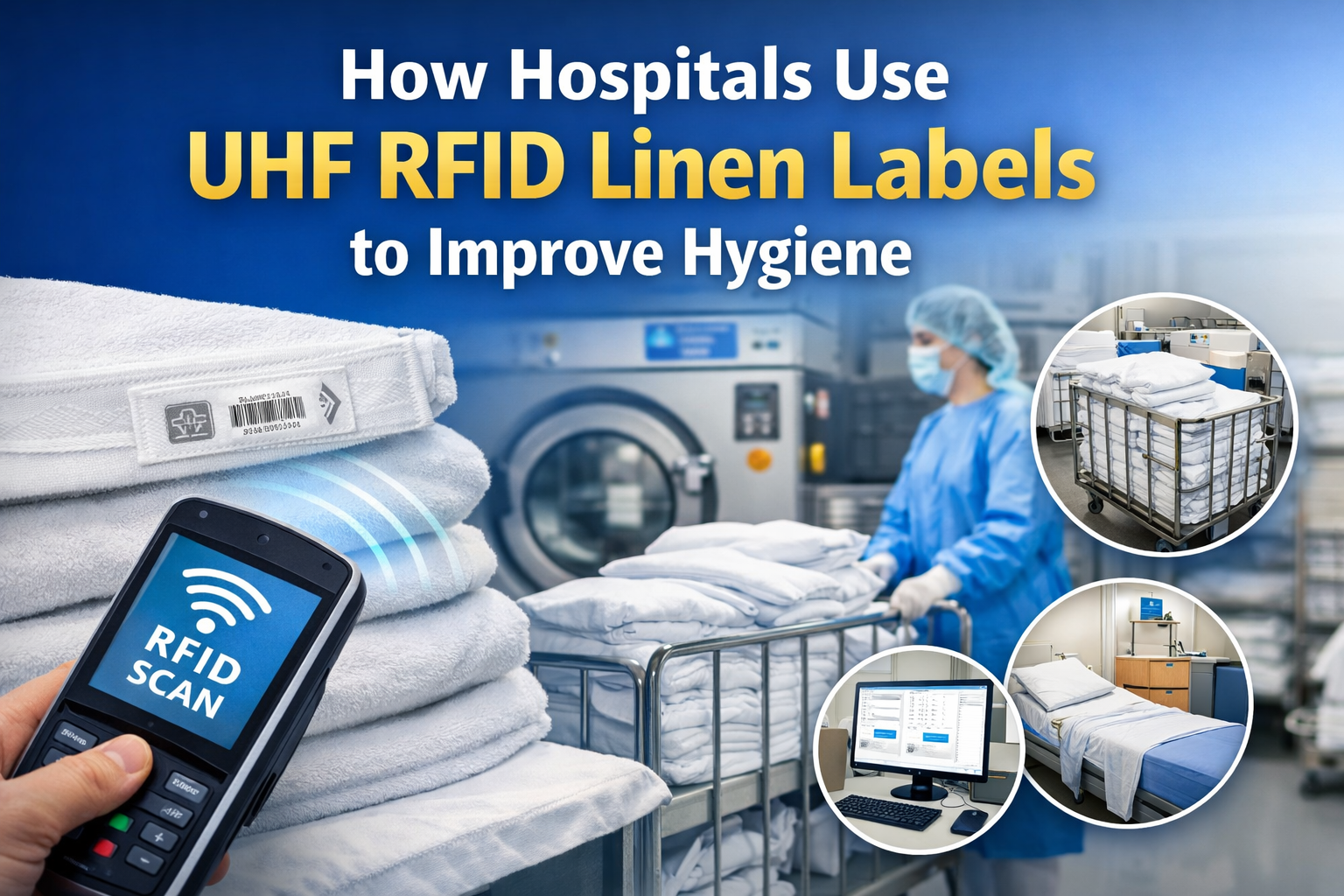
Hospitals manage thousands of linens daily – from bedsheets and pillowcases to surgical gowns and patient clothing. Ensuring these items are clean, tracked, and properly circulated is critical for patient safety. Traditional manual systems often fall short, leading to misplaced items, increased labor costs, and, most importantly, higher risks of contamination.
Enter UHF RFID linen labels, a technological solution that enables hospitals to efficiently track, manage, and maintain hygiene standards across all their linens. With unique identifiers for each item, durability under industrial laundry processes, and the ability to scan multiple items at once, UHF RFID tags are transforming hospital linen management.
Challenges in Hospital Linen Management
-
High Risk of Cross-Contamination
Hospitals are environments where hygiene cannot be compromised. Mismanaged linens can carry pathogens, increasing infection risk. Manual tracking often fails to ensure that every item has completed proper sterilization or laundry cycles. -
Manual Inventory Errors
Counting, sorting, and monitoring linens by hand is time-consuming and prone to mistakes. Even experienced staff may misplace items or lose track of usage cycles, leading to overstocking or shortages. -
Loss and Misplacement
Linen items, especially specialized fabrics like surgical gowns or premium hospital sheets, can easily go missing. Hospitals may face financial loss and operational inefficiency due to misplaced linens.
Why UHF RFID Linen Labels Are the Solution
UHF (Ultra High Frequency) RFID linen tags provide a reliable solution to these challenges by combining durability, traceability, and efficiency.
- Long Read Range – UHF tags can be read from several meters away, allowing staff to scan entire carts of linens at once. This drastically reduces manual labor.
- Durable and Washable – Designed to withstand industrial washing, high temperatures, and chemical detergents, these tags maintain their functionality over hundreds of laundry cycles.
- Unique Identification – Each tag has a unique code, enabling precise tracking of every linen item in the hospital.
Practical Use Cases in Hospitals
- Bedsheets and Pillowcases
Tracking bed linens ensures that only cleaned items reach patient rooms. UHF RFID tags allow hospitals to monitor how many cycles each sheet has undergone, automatically flagging items that need replacement or deep cleaning. - Surgical Gowns and Scrubs
Surgical textiles require strict hygiene standards. RFID tags enable hospitals to track sterilization, ensuring that contaminated items are never reused. This reduces the risk of post-operative infections. - Towels and Patient Clothing
Towels and personal clothing are prone to misplacement. RFID tracking ensures every item is accounted for, reducing loss and improving patient satisfaction. - Laundry Workflow Optimization
Hospitals can integrate RFID tags into laundry workflows to automatically record items entering and leaving the laundry, minimizing errors and providing real-time inventory visibility.
Implementation Benefits and ROI
1. Improved Hygiene Compliance
With RFID tracking, hospitals can enforce strict hygiene standards, ensuring that only clean linens are used. Automated logs can serve as proof for compliance audits.
2. Operational Efficiency
RFID scanning reduces manual counting and sorting. Staff can focus on higher-value tasks, while the system provides real-time inventory updates.
3. Cost Savings
By reducing lost linens and optimizing laundry cycles, hospitals can cut unnecessary expenses. Some studies show that RFID tracking can reduce linen losses by up to 20%, while labor costs associated with inventory management can drop by 30%.
4. Data-Driven Insights
RFID systems generate reports on usage patterns, item lifespans, and peak demand periods. Hospitals can use this data to plan purchases, reduce waste, and improve workflow efficiency.
Technical Details of UHF RFID Linen Labels
- Material: Soft, flexible fabric or polyester label suitable for direct application on linens.
- Durability: Resistant to industrial washing temperatures up to 90°C, bleach, and chemical detergents.
- Frequency: UHF (860–960 MHz), compatible with ISO 18000-6C EPCglobal standard.
- Read Range: Typically 2–5 meters with commercial RFID readers, enabling bulk scanning.
- Customization: Labels can be printed with hospital logos, QR codes, or unique identifiers for easy cross-reference.
Case Study Example
A 500-bed hospital implemented UHF RFID linen tracking across its laundry operations. Within six months:
- Linen losses dropped by 18%.
- Manual inventory time decreased by 40%.
- Hygiene compliance reports were generated automatically, reducing audit preparation time by 50%.
Staff reported smoother laundry workflows and improved confidence in patient safety standards.
Conclusion
Hospitals face unique challenges in linen management, where hygiene and efficiency are paramount. UHF RFID fabric laundry tags provide a robust, durable, and scalable solution that addresses these challenges. From reducing contamination risks to cutting costs and labor, the technology empowers hospitals to manage linens smarter.
For hospitals ready to implement this solution, high-quality UHF Fabric Laundry Tags offer a reliable, long-lasting option designed to withstand the rigors of industrial laundry while ensuring accurate, efficient tracking.