Luxury watches operate in a market where trust, authenticity, and long-term service records are just as important as craftsmanship. As counterfeit watches become increasingly sophisticated, traditional paper certificates and visual inspections are no longer sufficient. This is where NFC (Near Field Communication) technology enters the picture.
Rolex, one of the world’s most valuable luxury watch brands, has quietly integrated NFC into its ecosystem—not inside the watch itself, but through warranty and service cards. This article answers the most common questions people ask about how NFC is used by Rolex, what problems it solves, and what it means for owners and buyers.
What problem is Rolex solving with NFC technology?
The core problems Rolex faces are:
- Counterfeit warranty and service cards
- Manual, error-prone service record management
- Difficulty verifying authenticity in secondary markets
- Fragmented ownership and maintenance history
NFC helps Rolex digitize trust by linking a physical watch to a secure digital identity, without exposing sensitive data publicly.
Where exactly does Rolex use NFC tags?
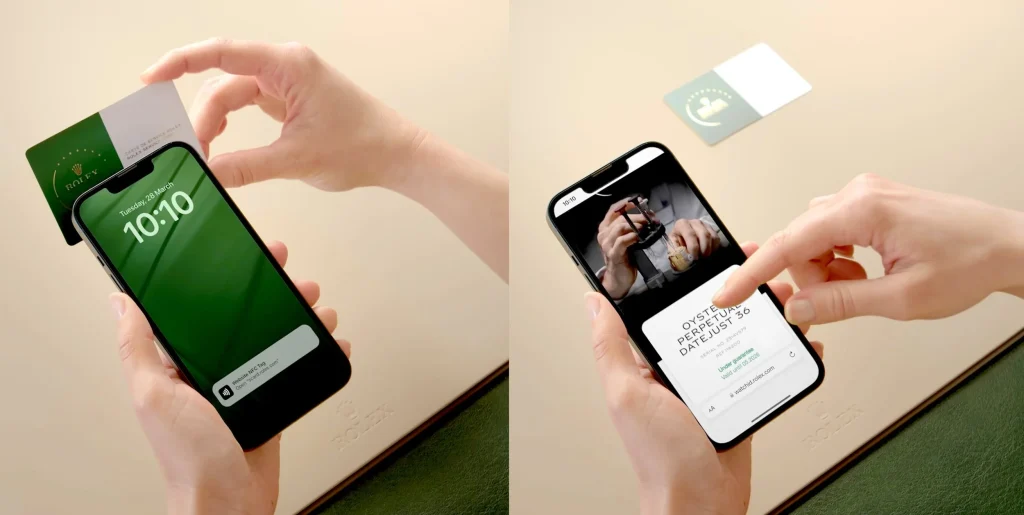
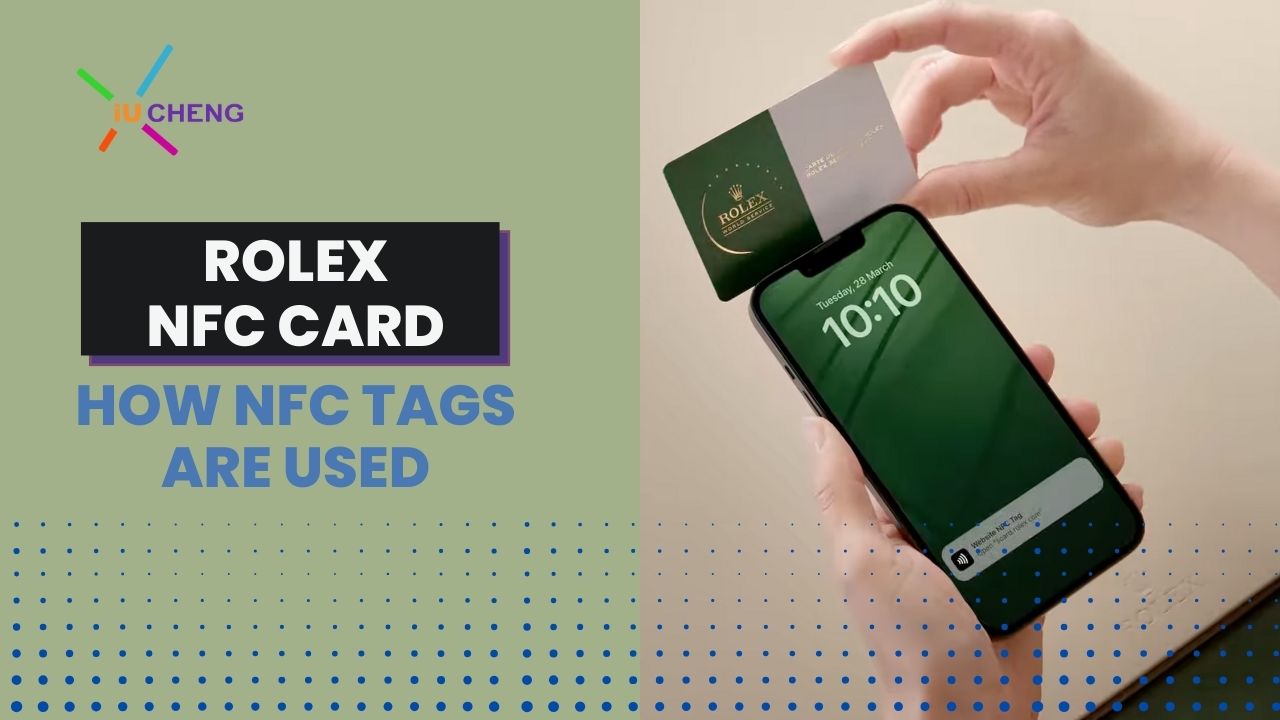
Rolex embeds NFC chips inside its official warranty cards and service cards, introduced globally around 2020.
These cards:
- Look like traditional plastic cards
- Contain a passive NFC chip
- Can be read by NFC-enabled smartphones or authorized readers
Importantly, the NFC tag is not embedded in the watch case in current production models.
What happens when a Rolex NFC card is scanned?
When scanned, the NFC tag does not simply open a static webpage.
Instead, it acts as a unique digital identifier, allowing Rolex or authorized systems to:
- Confirm the card is genuine
- Associate it with a specific watch reference
- Validate warranty or service status
- Reduce the risk of duplicated or fake cards
This architecture makes copying or cloning far more difficult than paper certificates or QR codes.
How does NFC improve Rolex authentication?
NFC provides three major authentication advantages:
- Uniqueness
Each NFC chip contains a unique identifier that cannot be visually replicated. - System linkage
The identifier corresponds to records in Rolex’s backend systems, not data stored openly on the card. - Tamper resistance
Counterfeiters can print fake cards, but they struggle to reproduce NFC behavior consistent with genuine Rolex cards.
For buyers in the secondary market, the presence of an NFC-enabled card significantly raises confidence.
How does NFC support Rolex service and after-sales operations?
Rolex watches are often serviced multiple times over decades. NFC simplifies this process by:
- Linking service history to a single digital identifier
- Reducing manual data entry at service centers
- Ensuring consistency across global authorized repair networks
Service cards with NFC allow Rolex to maintain clean, traceable maintenance records, which is essential for high-value mechanical assets.
Does NFC mean Rolex is tracking owners?
No. NFC in Rolex cards is not a consumer tracking tool.
- NFC is passive and only works at very short range
- No GPS or real-time transmission is involved
- Scans require intentional action
The system is designed for authentication and service integrity, not surveillance.
Is Rolex planning to embed NFC or RFID inside watches?
Rolex has filed patents describing future identity chips, potentially using RFID or hybrid systems combined with blockchain-style records.
However:
- These technologies are not widely deployed in production watches today
- Current implementations remain external (cards, documents)
This cautious approach aligns with Rolex’s conservative product philosophy.
How does Rolex’s NFC strategy compare to other luxury brands?
Rolex’s approach is notable for being:
- Backend-centric, not consumer-facing marketing
- Focused on long-term service lifecycle
- Designed to protect brand integrity over decades
Other brands may use NFC more visibly for customer engagement, but Rolex prioritizes institutional trust and durability.
What does this mean for the luxury industry?
Rolex demonstrates that NFC is not just a “smart label” technology. In luxury goods, it functions as:
- A digital certificate of authenticity
- A service lifecycle anchor
- A bridge between physical assets and secure data systems
As regulations, resale platforms, and consumer expectations evolve, NFC-based authentication is likely to become standard across high-value goods.