


If you’ve ever driven through toll roads in the United States without stopping, you’ve already experienced one of the most successful large-scale deployments of RFID technology.
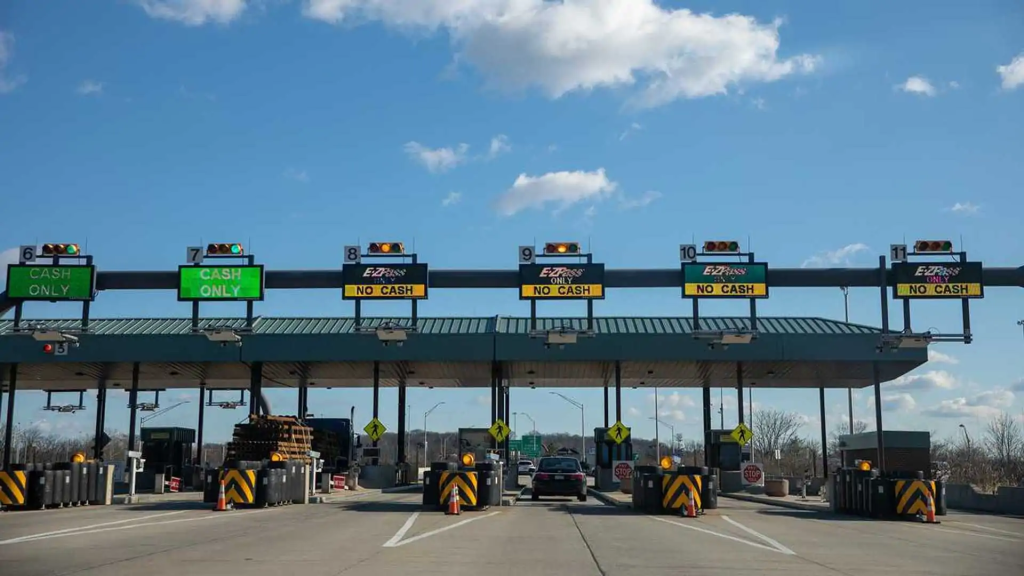
Systems like E‑ZPass Interagency Group process millions of vehicles daily, enabling seamless, high-speed toll collection without manual intervention.
But behind this convenience lies a sophisticated infrastructure combining RFID, computer vision, and financial systems.
In this guide, we’ll break down:
- How RFID toll systems actually work
- Why U.S. toll roads rely on RFID
- The technical architecture behind E-ZPass
- Limitations and future trends in tolling technology
What Is RFID Toll Collection?
RFID-based tolling is a form of Electronic Toll Collection (ETC) that uses radio frequency signals to identify vehicles and charge tolls automatically.
Instead of stopping at toll booths, vehicles equipped with RFID tags pass through toll points at normal speeds while the system:
- Identifies the vehicle
- Matches it to an account
- Deducts the toll fee
System Architecture: How RFID Tolling Works
A modern U.S. toll system consists of three core layers:
1. Vehicle Transponder (RFID Tag)
The RFID device—commonly called a transponder—is mounted on the windshield.
Technical characteristics:
- Typically active or semi-active UHF RFID
- Long read range (up to 10–15 meters)
- Unique identifier (Tag ID)
- Battery-assisted (for reliability at speed)
Unlike passive retail RFID, tolling systems prioritize high-speed readability and signal stability.
2. Roadside Infrastructure (Readers & Antennas)
Installed on toll gantries or overhead structures, these include:
- High-power RFID readers
- Directional antennas
- Vehicle detection sensors
Their role:
- Trigger tag communication
- Capture tag ID in milliseconds
- Handle multi-lane, high-speed traffic
3. Backend Toll Processing System
This is where RFID becomes monetization:
- Account database
- Payment gateway
- Toll calculation engine
- Inter-agency clearing system
When a tag is read:
Tag ID → Account lookup → Toll calculation → Automatic deduction
Step-by-Step Workflow (Real Scenario)
Let’s walk through a real toll event:
Step 1: Vehicle Approaches Gantry
No need to slow down—systems are designed for free-flow traffic.
Step 2: RFID Tag Is Read
The reader emits a signal; the tag responds with its ID.
Step 3: Account Matching
The backend system identifies the account linked to the tag.
Step 4: Toll Is Charged
Funds are deducted from a prepaid balance or linked payment method.
Step 5: Fallback (If RFID Fails)
This is critical in U.S. systems:
- Cameras capture the license plate
- Plate recognition system identifies the vehicle
- Bill is mailed to the owner
This is known as Toll-by-Plate, ensuring near 100% revenue capture.
Why RFID Dominates U.S. Toll Roads
1. High-Speed Performance
RFID supports tolling at highway speeds—no stopping, no congestion.
2. High Throughput
A single gantry can process thousands of vehicles per hour.
3. Proven Reliability
Decades of deployment across multiple states.
4. Scalable Infrastructure
Easy to expand across highways, bridges, and tunnels.
Real-World Systems in the U.S.
E‑ZPass
- Covers 19+ states
- Most widely used RFID toll system
FasTrak
- Used across California
- Similar RFID-based architecture
SunPass
- Statewide system in Florida
- Interoperable with E-ZPass in many cases
Limitations of RFID Tolling
Even though RFID is mature, it’s not perfect:
1. Interoperability Issues
Different states may use different systems and standards.
2. Tag Dependency
Users must install and maintain a transponder.
3. Signal Challenges
- Metalized windshields
- Improper tag placement
- Multi-vehicle interference
The Shift Toward All-Electronic Tolling
The U.S. is rapidly moving toward:
All-Electronic Toll Collection (AET)
- No toll booths
- No stopping
- Fully automated gantries
RFID still plays a key role—but it’s now part of a hybrid system:
- RFID (primary identification)
- ALPR (fallback via cameras)
Future Trends: Beyond RFID
1. Vehicle-to-Infrastructure (V2X) Payments
Cars may soon communicate directly with toll systems.
2. License Plate-Only Tolling
Reducing reliance on RFID hardware.
3. AI-Powered Traffic Analytics
Combining tolling with real-time traffic optimization.
What This Means for RFID Buyers and Integrators
If you’re sourcing RFID solutions for transportation or infrastructure, toll systems highlight key requirements:
- Long-range UHF performance
- High-speed read accuracy
- Anti-collision capability
- Environmental durability
These are not optional—they define system success.
Conclusion
RFID has fundamentally transformed toll collection in the United States by enabling:
- Seamless vehicle identification
- High-speed tolling
- Scalable infrastructure
However, its real strength lies in integration—with payment systems, cameras, and cloud platforms.
In modern tolling, RFID is not the whole system—it’s the identity layer that makes everything else possible.

About XIUCHENG RFID
XIUCHENG RFID specializes in manufacturing a wide range of RFID products, including RFID Silicone Wristbands, Tyvek Wristbands, Fabric Wristbands, Elastic Wristbands, Vinyl Wristbands, RFID Laundry Tags, Animal Tags, and RFID Cards. All products are produced under strict quality control and advanced production technology.
With 12 years of experience in wristband design, tag design, quality management, and customer relationship management, we have built a solid foundation for delivering reliable and high-performance RFID solutions.


