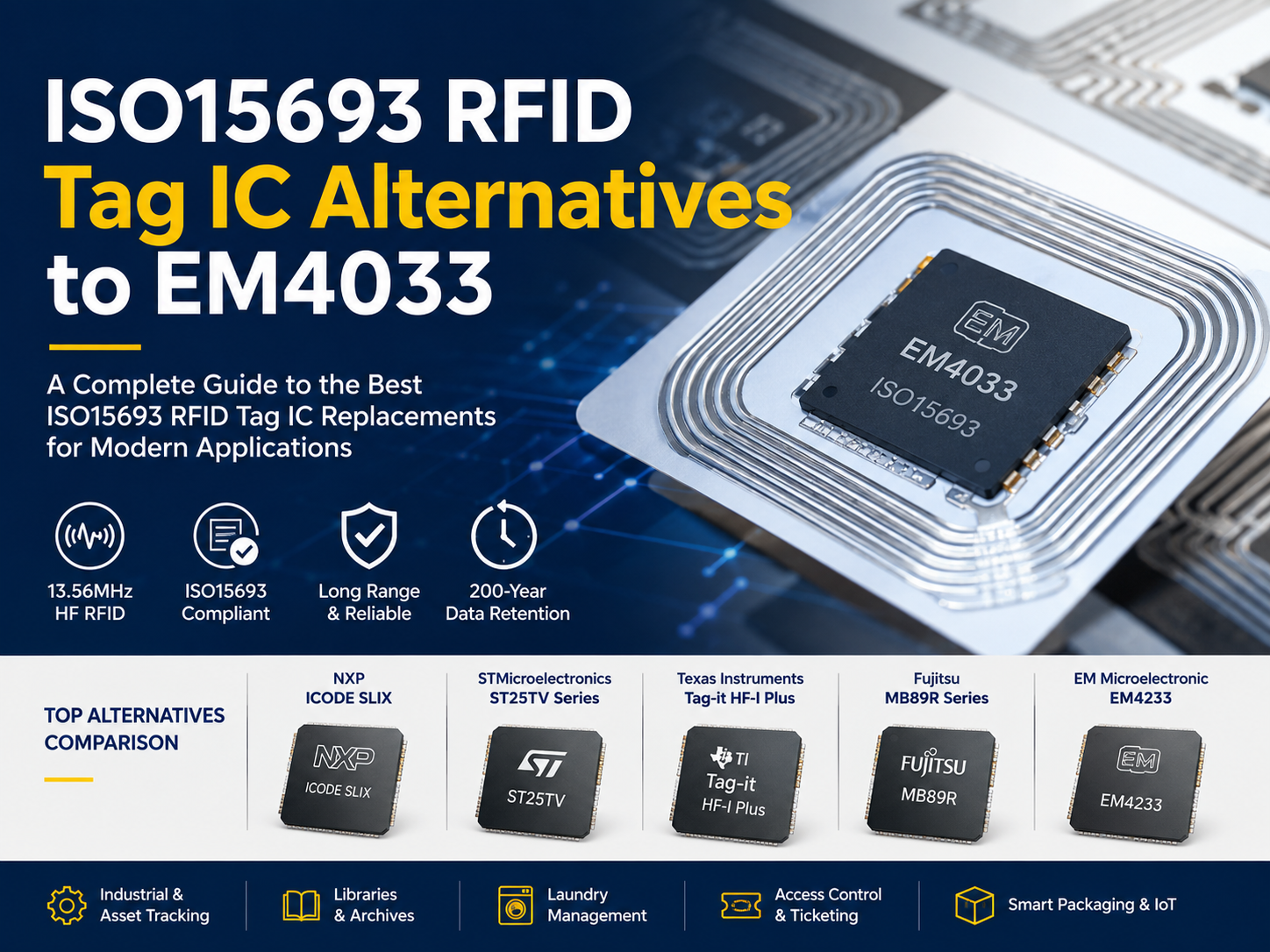
The EM4033 RFID IC is a well-known ISO15693-compatible high-frequency RFID tag chip developed by EM Microelectronic. Designed for long-range HF RFID applications, the EM4033 has been widely used in libraries, laundry management, archives, ticketing, industrial asset tracking, and long-life identification systems.
However, modern RFID projects increasingly require:
- Higher memory capacity
- Better NFC smartphone compatibility
- Improved anti-collision performance
- Enhanced security features
- Stronger global supply chain availability
- Better integration with IoT systems
As a result, many RFID manufacturers and OEM developers are now searching for modern alternatives to the EM4033.
This article explains the best ISO15693 RFID tag IC replacements for EM4033, compares their technical capabilities, and helps engineers select the right chip for industrial and commercial RFID projects.
What Is the EM4033 RFID Chip?
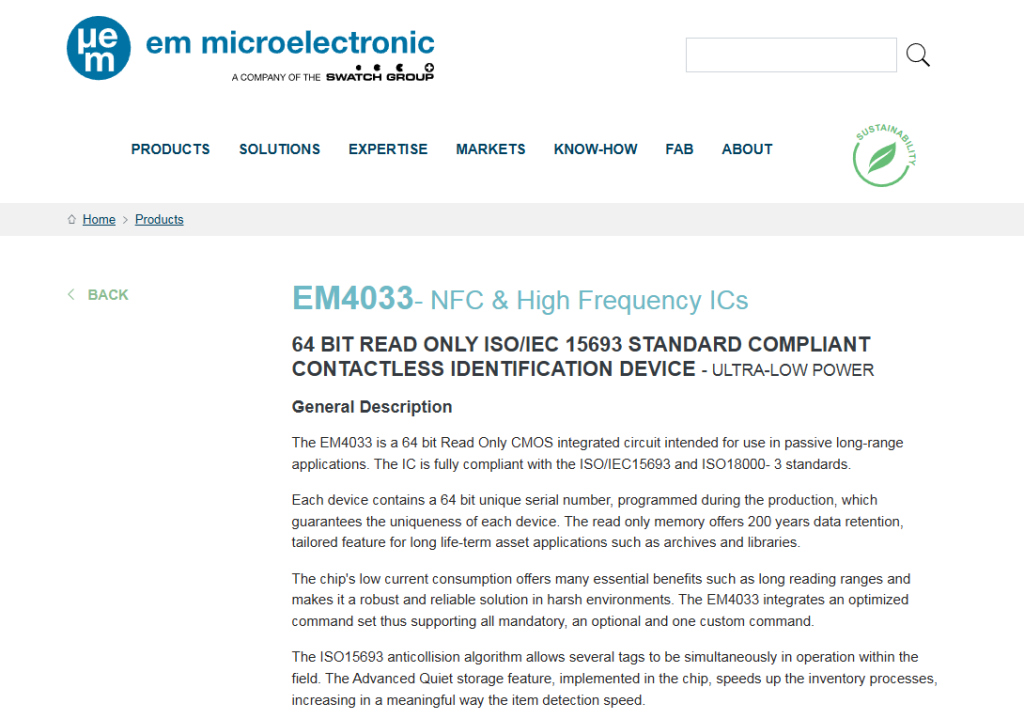
The EM4033 RFID IC is a passive 13.56 MHz RFID tag integrated circuit compliant with:
- ISO/IEC 15693
- ISO18000-3
Unlike LF 125kHz chips, the EM4033 belongs to the HF RFID category and is designed for vicinity card applications with longer read ranges.
Key characteristics include:
- 64-bit unique identifier (UID)
- Read-only architecture
- Ultra-low power operation
- Long read distance
- ISO15693 anti-collision support
- Quiet Storage inventory optimization
- 200-year data retention
- On-chip tuning capacitor
The chip is optimized for long-life asset identification systems where reliability and stability are more important than large memory capacity.
Why Companies Are Replacing EM4033
Although the EM4033 remains reliable for legacy deployments, newer RFID systems often demand additional capabilities.
1. Limited Memory Architecture
The EM4033 mainly provides:
- Fixed 64-bit UID
- Read-only functionality
Modern RFID systems increasingly require:
- User memory
- Dynamic data storage
- Sensor integration
- Encrypted authentication
2. Growing Smartphone Compatibility Requirements
Many businesses now want RFID tags that can interact with:
- Android smartphones
- iPhones
- NFC readers
- Mobile applications
Modern NFC-compatible ISO15693 chips provide significantly better mobile interoperability.
3. Larger RFID Ecosystems
Newer ISO15693 platforms support:
- Cloud-connected inventory
- Smart packaging
- IoT asset management
- Real-time authentication
- Industrial automation
Older read-only chips are less flexible for these environments.
4. Supply Chain Optimization
Many OEMs prefer:
- Larger semiconductor ecosystems
- Multiple packaging options
- Stable long-term supply
- Global technical support
This has accelerated migration toward larger RFID chip vendors.
Best Alternatives to EM4033
1. NXP ICODE SLIX Series
The ICODE SLIX RFID Chip family from NXP Semiconductors is currently one of the most popular replacements for EM4033.
Key Features
- ISO15693 compliant
- Long read range
- Anti-collision support
- User memory
- Optional privacy and security functions
- High inventory speed
Advantages Over EM4033
- Larger memory capacity
- Better ecosystem support
- Stronger global adoption
- Improved smartphone compatibility
- Better industrial scalability
Typical Applications
- Libraries
- Smart shelves
- Warehouse management
- Apparel RFID
- Industrial assets
The ICODE SLIX platform has become the industry standard for many modern ISO15693 deployments.
2. ST25TV Series
The ST25TV RFID Chip series from STMicroelectronics combines ISO15693 RFID functionality with advanced NFC interaction.
Key Advantages
- NFC smartphone compatibility
- Password protection
- Dynamic tag features
- Energy harvesting support
- Fast transfer mode
Best Use Cases
- Smart packaging
- Product authentication
- Industrial IoT
- Interactive NFC systems
- Consumer engagement
Compared with EM4033, the ST25TV family is far more suitable for connected digital ecosystems.
3. TI Tag-it HF-I Plus
The TI Tag-it HF-I Plus from Texas Instruments is a mature industrial-grade ISO15693 solution.
Features
- Long read distance
- Excellent industrial reliability
- EEPROM user memory
- Strong anti-collision performance
Common Applications
- Laundry tracking
- Industrial logistics
- Returnable transport items
- Asset tracking
- Warehouse systems
This chip family remains highly respected in harsh industrial environments.
4. Fujitsu MB89R Series
The Fujitsu MB89R RFID Chip series is widely used in Japanese industrial RFID systems.
Benefits
- Stable RF performance
- Low power operation
- Strong industrial reliability
- Flexible memory structures
Suitable For
- Manufacturing
- Tool tracking
- Industrial automation
- Asset management
These chips are commonly found in enterprise RFID deployments across Asia.
5. EM4233
The EM4233 RFID Chip can be viewed as a more advanced evolution within the EM Microelectronic HF RFID ecosystem.
Improvements Over EM4033
- Enhanced command support
- More modern architecture
- Better integration flexibility
- Improved system scalability
Recommended For
- Existing EM ecosystem migration
- Long-life industrial systems
- ISO15693 infrastructure upgrades

About XIUCHENG RFID
XIUCHENG RFID specializes in manufacturing a wide range of RFID products, including RFID Silicone Wristbands, Tyvek Wristbands, Fabric Wristbands, Elastic Wristbands, Vinyl Wristbands, RFID Laundry Tags, Animal Tags, and RFID Cards. All products are produced under strict quality control and advanced production technology.
With 12 years of experience in wristband design, tag design, quality management, and customer relationship management, we have built a solid foundation for delivering reliable and high-performance RFID solutions.
Comparison Table
| Chip | Standard | Memory | Smartphone Compatibility | Typical Use |
|---|---|---|---|---|
| EM4033 | ISO15693 | UID only | Limited | Legacy asset ID |
| ICODE SLIX | ISO15693 | User memory | Good | Libraries & logistics |
| ST25TV | ISO15693 + NFC | Advanced | Excellent | IoT & smart packaging |
| TI Tag-it HF-I Plus | ISO15693 | EEPROM | Moderate | Industrial RFID |
| Fujitsu MB89R | ISO15693 | Flexible | Moderate | Manufacturing |
| EM4233 | ISO15693 | Enhanced | Moderate | EM ecosystem upgrades |
Choosing the Right EM4033 Alternative
Choose ICODE SLIX If You Need:
- Maximum ecosystem compatibility
- Large-scale deployments
- Library or inventory systems
- Long read range
Choose ST25TV If You Need:
- NFC smartphone interaction
- IoT integration
- Consumer engagement
- Enhanced security
Choose TI Tag-it HF-I Plus If You Need:
- Industrial durability
- Stable harsh-environment performance
- Laundry RFID
- Logistics systems
Choose EM4233 If You Need:
- Easier migration from EM4033
- EM ecosystem compatibility
- Long-term industrial operation
Important Engineering Considerations
Antenna Design
ISO15693 performance heavily depends on:
- Antenna size
- Q factor
- Resonance tuning
- Metal interference management
Changing the IC may require antenna redesign.
Read Range Optimization
ISO15693 systems typically achieve longer read ranges than:
- ISO14443
- Standard NFC systems
However, actual range depends on:
- Reader power
- Tag antenna geometry
- Environmental interference
Mobile Phone Compatibility
Not all ISO15693 chips behave identically with smartphones.
Modern NFC phones increasingly support:
- ISO15693 inventory
- NFC-V protocol
- Extended memory access
But compatibility testing remains essential.
Security Requirements
Modern RFID deployments increasingly require:
- Password protection
- Privacy mode
- Mutual authentication
- Anti-cloning features
Some EM4033 replacements provide significantly stronger security capabilities.
Future Trend of ISO15693 RFID
The ISO15693 ecosystem is evolving beyond traditional inventory management.
Modern deployments now include:
- Smart retail
- Digital product passports
- Industrial IoT
- Smart healthcare
- Connected packaging
- Sustainable supply chains
As a result, newer RFID ICs increasingly combine:
- NFC interaction
- Cloud integration
- Sensor interfaces
- Security authentication
- Mobile engagement
This trend is gradually replacing older read-only RFID architectures like EM4033.
Conclusion
The EM4033 RFID IC remains a reliable ISO15693 RFID chip for long-life identification applications. However, modern RFID systems increasingly demand:
- Larger memory
- Better NFC interoperability
- Stronger security
- Enhanced IoT integration
- Improved supply chain stability
Among the best alternatives:
- ICODE SLIX RFID Chip offers the strongest ecosystem support
- ST25TV RFID Chip excels in NFC and IoT applications
- TI Tag-it HF-I Plus remains ideal for industrial RFID
- EM4233 RFID Chip provides a natural migration path for EM-based systems
For OEM manufacturers and RFID solution developers, selecting the correct EM4033 replacement depends on:
- Read range requirements
- Security needs
- Smartphone compatibility
- Memory architecture
- Industrial environment
- Long-term product strategy
A carefully selected ISO15693 RFID IC can significantly improve system scalability, inventory efficiency, and future interoperability.