


Tyvek wristbands have become essential tools for events, festivals, hospitals, amusement parks, and large-scale gatherings. Known for their affordability, durability, and tamper-evident properties, these wristbands are far more sophisticated than they appear.
In recent years, RFID-enabled Tyvek wristbands have transformed event management, enabling contactless access control, cashless payments, and real-time analytics.
This comprehensive guide explains how Tyvek wristbands are produced, printed, optionally embedded with RFID chips, and tested for quality. Whether you are an event organizer, RFID integrator, or procurement manager, this article will give you a complete understanding of Tyvek wristband manufacturing.
1. What is Tyvek and Why It’s Used for Wristbands
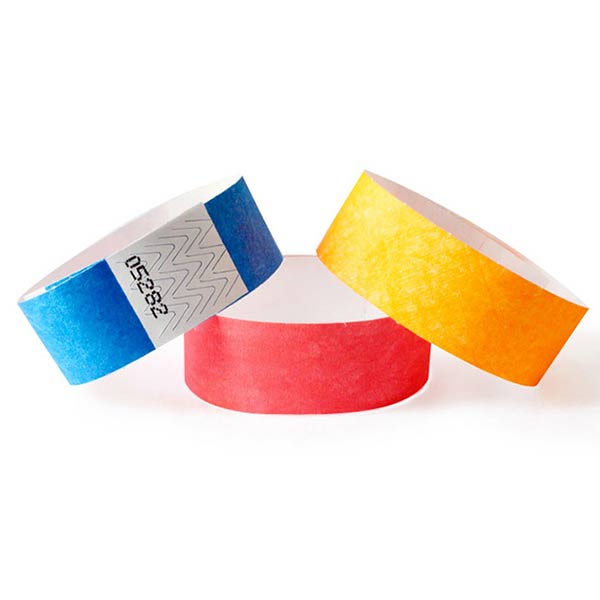
Tyvek is a high-density polyethylene (HDPE) material developed by DuPont. Its unique properties make it ideal for wristbands:
- Tear Resistance: Tyvek is durable under normal wear and cannot be easily torn.
- Water Resistance: Wristbands maintain integrity when exposed to sweat or water.
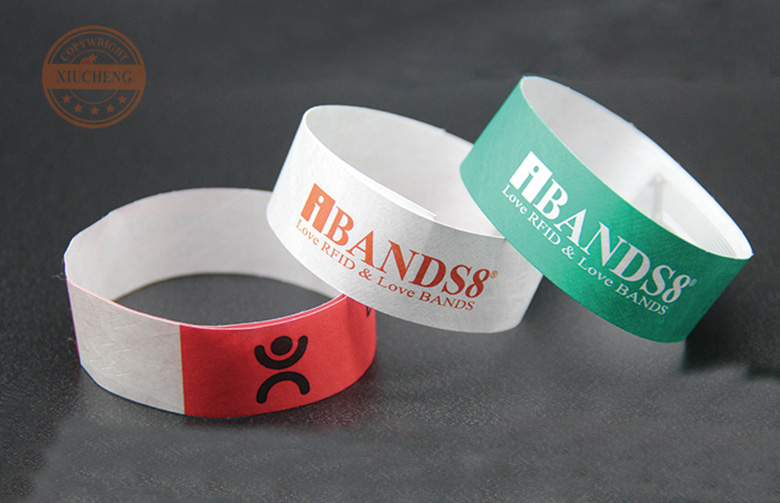
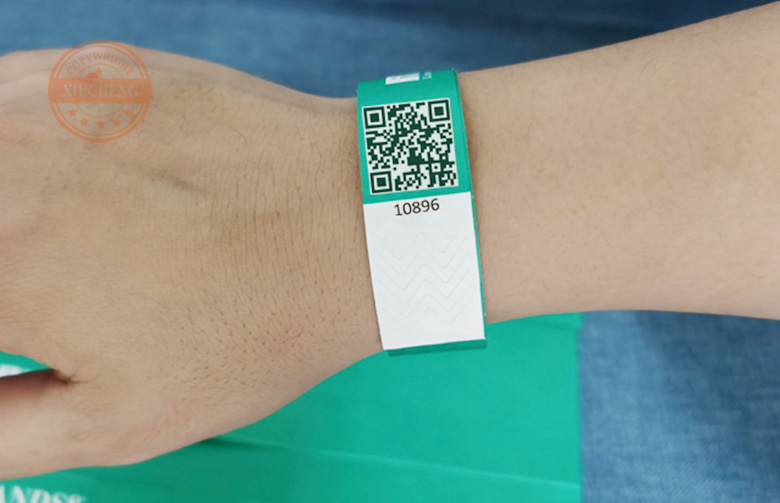
- Printability: Tyvek supports high-resolution graphics, sequential numbering, barcodes, and QR codes.
- Skin-Friendly: Lightweight and smooth, making it comfortable for all-day wear.
Technical Note: Tyvek is produced by spinning HDPE fibers and bonding them under heat and pressure without using adhesives, creating a continuous, paper-like sheet that is highly durable.
2. Tyvek Wristband Sizes and Slitting
Raw Tyvek sheets arrive in large rolls (12–36 inches wide). The first step in wristband production is slitting:
- Slitting Process: Rolls are cut into strips, usually 19 mm (3/4 inch) or 25 mm (1 inch) wide.
- Length Control: Strips are cut to wrist sizes—8–10 inches for adults, 5–7 inches for children.
- Edge Quality: Clean, smooth edges prevent skin irritation and improve aesthetic appeal.
Precision slitting machines ensure uniform width and smooth edges, crucial for printing and adhesive application.
3. Printing and Customization
Custom printing allows branding, security, and functionality:
3.1 Printing Methods
- Flexographic Printing
- High-speed printing for bulk runs.
- Uses ink rollers and flexible plates.
- Ideal for logos, event names, and solid colors.
- Digital Printing
- High-resolution, full-color designs.
- Suitable for small batches or variable graphics.
- Thermal Printing
- Ideal for sequential numbers, barcodes, or QR codes.
- Common in admission wristbands where each must be unique.
3.2 Tamper-Evident Features
- Special inks or patterns smear or fade when the wristband is removed.
- Sequential numbering or holographic printing prevents unauthorized reuse.
4. RFID Integration
For advanced event management, RFID Tyvek wristbands provide:
- Contactless Access Control
- Cashless Payment
- Real-Time Tracking
4.1 Choosing the Right RFID Chip
- Low Frequency (LF, 125 kHz): Short range, simple ID tracking.
- High Frequency (HF, 13.56 MHz, NFC compatible): Medium range, widely supported by smartphones.
- Ultra-High Frequency (UHF, 860–960 MHz): Long range, used for large events and inventory tracking.
4.2 Embedding Process
- Inlay Selection: Choose the RFID inlay suitable for wristband width and application.
- Insertion: The chip is inserted into a cutout or sandwiched between Tyvek layers.
- Lamination/Encapsulation: Protective layer or adhesive seals the chip from water and mechanical stress.
- Testing: Each wristband is scanned to ensure the RFID chip works correctly.
Tip: Proper placement of the RFID inlay ensures readability without compromising comfort or flexibility.
5. Adhesive and Closure Mechanisms
Tyvek wristbands use pressure-sensitive adhesives or plastic sliders:
- Single-Use Closure: Once fastened, it cannot be removed without tearing.
- Tamper-Evident Design: Removes the risk of unauthorized reuse.
- Optional Plastic Sliders: Adjustable sizing for comfort and additional security.
Adhesive formulation is crucial—it must stick securely without bleeding ink or leaving residue.
6. Quality Assurance
Quality control ensures reliability:
- Print Accuracy: Logos, numbers, and barcodes are inspected.
- Adhesive Performance: Closure strength and tamper-evident properties tested.
- Tear Resistance: Random samples undergo pull tests.
- RFID Functionality: Each wristband scanned for chip integrity.
- Batch Consistency: Checks for fraying, misprints, or defective adhesives.
High-quality wristbands reduce complaints, minimize entry fraud, and ensure smooth event operations.
7. Packaging and Logistics
- Wristbands are packaged in rolls or strips.
- Protective packaging prevents deformation during shipping.
- Labeling: Includes sequential numbers, batch codes, or RFID mapping for easy event logistics.
8. Innovations in Tyvek Wristbands
Sustainability: Biodegradable or recycled Tyvek materials reduce environmental impact.
Advanced Security: Holographic foils, UV inks, and custom microtext protect high-value events.
Smart Integration: NFC-enabled wristbands allow mobile interactions, loyalty program integration, and personalized experiences.
Future Outlook: With increasing demand for data-driven event management, RFID-enabled Tyvek wristbands are expected to dominate large-scale festival and conference markets.
9. Choosing the Right Tyvek Wristband for Your Event
Factors to consider:
- Event Size: Large-scale events benefit from RFID-enabled wristbands.
- Security Level: Tamper-evident closures and holographic printing increase security.
- Customization: Branding, colors, and print style matter for marketing impact.
- Budget: Standard Tyvek wristbands are cost-effective; RFID adds higher cost but provides analytics.
10. FAQs
Q1: Can Tyvek wristbands be reused?
A: No, they are designed for single-use. Tamper-evident adhesives prevent reuse.
Q2: How long do Tyvek wristbands last?
A: They can withstand several days of wear, including exposure to water and sweat, without tearing or fading.
Q3: Are RFID Tyvek wristbands safe?
A: Yes, the RFID chips are passive, low-power, and safe for human skin contact.
Q4: Can wristbands be scanned with smartphones?
A: HF/NFC wristbands can be scanned by compatible smartphones; UHF requires dedicated readers.
Conclusion
Tyvek wristbands combine simplicity with sophisticated engineering. From material selection, precise cutting, and high-quality printing to RFID integration and quality assurance, each step ensures durability, security, and usability.
Whether for a small corporate event, a large music festival, or hospital patient management, understanding how Tyvek wristbands are manufactured helps organizers make informed decisions about security, comfort, and data capabilities.
Investing in RFID-enabled Tyvek wristbands opens the door to real-time analytics, cashless transactions, and seamless access control, defining the next generation of event management technology.

About XIUCHENG RFID
XIUCHENG RFID specializes in manufacturing a wide range of RFID products, including RFID Silicone Wristbands, Tyvek Wristbands, Fabric Wristbands, Elastic Wristbands, Vinyl Wristbands, RFID Laundry Tags, Animal Tags, and RFID Cards. All products are produced under strict quality control and advanced production technology.
With 12 years of experience in wristband design, tag design, quality management, and customer relationship management, we have built a solid foundation for delivering reliable and high-performance RFID solutions.


