


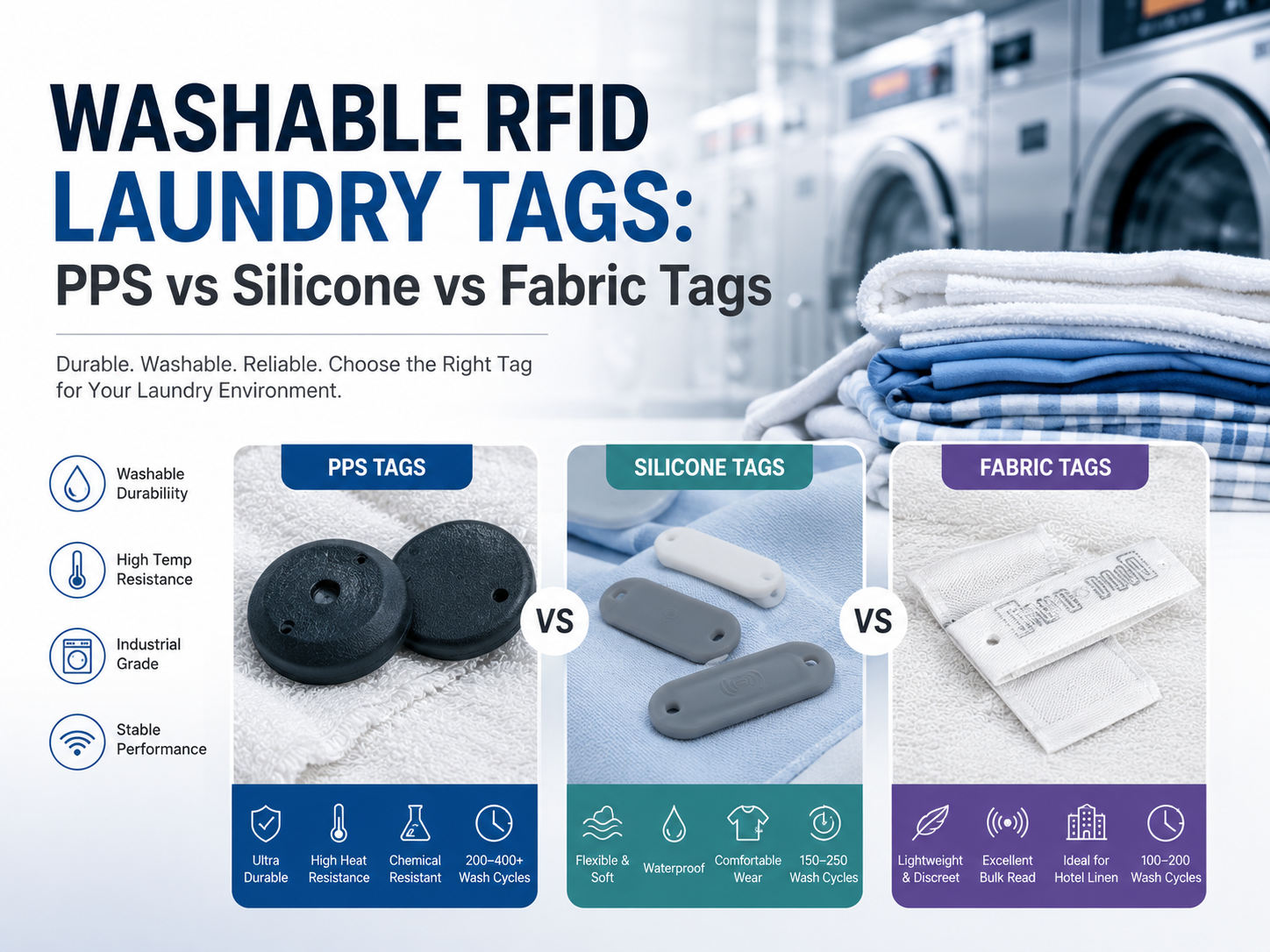
Industrial laundry operations are rapidly adopting RFID technology to improve linen tracking, inventory visibility, and asset lifecycle management. From hotels and hospitals to uniform rental companies and commercial laundries, washable RFID laundry tags help automate textile identification throughout washing, drying, ironing, storage, and distribution processes.
However, not all RFID laundry tags are designed the same way. Different environments require different materials, encapsulation structures, and attachment methods. Among the most commonly used solutions in the industry are PPS RFID laundry tags, silicone RFID laundry tags, and fabric RFID laundry tags.
This guide compares these three major categories from a technical and operational perspective, helping procurement managers, laundry operators, and RFID integrators select the most suitable tag for their projects.
Why Material Selection Matters in RFID Laundry Systems
Laundry environments are extremely harsh for electronic devices. RFID tags used in textile management must survive:
- Repeated industrial washing cycles
- High-temperature drying
- Water extraction pressure
- Chemical detergents and bleach
- Ironing and tunnel finishing
- Folding and transportation
- Continuous mechanical stress
The tag housing material directly affects:
- Durability
- Read range stability
- Flexibility
- Heat resistance
- User comfort
- Attachment options
- Lifetime cost
Selecting the wrong tag type can lead to premature failure, poor read performance, or damage to textiles.
What Are PPS RFID Laundry Tags?
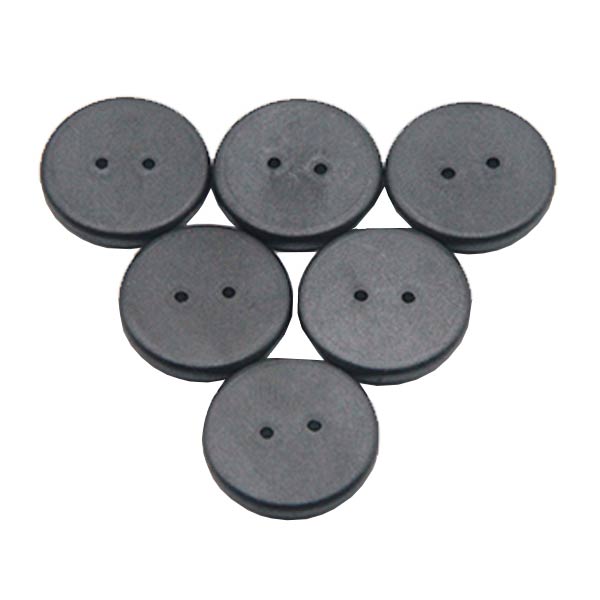
PPS (Polyphenylene Sulfide) RFID laundry tags are rigid button-style tags designed for extreme industrial washing conditions.
They are usually circular or rectangular and encapsulated in high-temperature PPS engineering plastic. Most PPS tags are sewn directly onto garments or linens.
Main Characteristics of PPS RFID Laundry Tags
High Temperature Resistance
PPS material can withstand:
- Washing temperatures up to 200°C
- High-pressure sterilization
- Industrial ironing processes
This makes PPS tags ideal for hospital and industrial laundry applications.
Excellent Chemical Resistance
PPS resists:
- Bleach
- Detergents
- Alkali chemicals
- Disinfectants
The tag housing remains stable after hundreds of wash cycles.
Strong Mechanical Durability
Because PPS tags are rigid and thick, they provide excellent protection for the RFID chip and antenna.
Typical lifecycle:
- 200–300 industrial wash cycles
- Some premium models exceed 400 cycles

Advantages of PPS RFID Laundry Tags
Extremely Durable
PPS tags are one of the most durable washable RFID solutions available.
Stable RFID Performance
The rigid encapsulation helps maintain antenna structure integrity during washing and drying.
Ideal for Harsh Laundry Environments
Perfect for:
- Hospital linens
- Industrial uniforms
- Workwear rental
- Heavy-duty textiles
Cost-Effective for Long-Term Use
Although initial costs are higher than fabric tags, the longer lifespan reduces replacement frequency.
Disadvantages of PPS RFID Laundry Tags
Less Flexible
The rigid structure may reduce wearer comfort on lightweight garments.
Visible on Garments
PPS tags are usually externally sewn and may affect appearance.
Limited Branding Customization
Compared with woven fabric tags, PPS tags offer fewer aesthetic options.
What Are Silicone RFID Laundry Tags?
Silicone RFID laundry tags use flexible silicone rubber encapsulation to protect the RFID inlay.
These tags are softer than PPS tags and are commonly used for uniforms, hospitality textiles, and garments requiring wearer comfort.
Main Characteristics of Silicone RFID Laundry Tags
Flexible and Soft
Silicone material bends easily without damaging the RFID antenna.
This improves:
- Wearability
- User comfort
- Garment flexibility
Waterproof Construction
Silicone naturally resists:
- Water
- Steam
- Moisture
- Detergents
Good Temperature Resistance
Most silicone RFID laundry tags support:
- Industrial washing
- Tumble drying
- Moderate ironing temperatures
Advantages of Silicone RFID Laundry Tags
Comfortable for Garments
Soft construction makes silicone tags suitable for:
- Staff uniforms
- Hotel garments
- Sportswear
- Wearable textiles
Flexible Mounting Options
Silicone tags can be:
- Sewn
- Pouched
- Heat sealed
- Embedded into textiles
Good Durability
Typical lifespan:
- 150–250 wash cycles
Better Appearance
Silicone tags can be made thinner and less visually intrusive.
Disadvantages of Silicone RFID Laundry Tags
Lower Heat Resistance Than PPS
Silicone performs well under normal industrial conditions but may degrade faster under extreme sterilization temperatures.
Higher Cost in Some Designs
Custom silicone molding may increase tooling costs for OEM projects.
Antenna Deformation Risk
Poor-quality silicone tags may experience antenna shifting after repeated bending.
What Are Fabric RFID Laundry Tags?
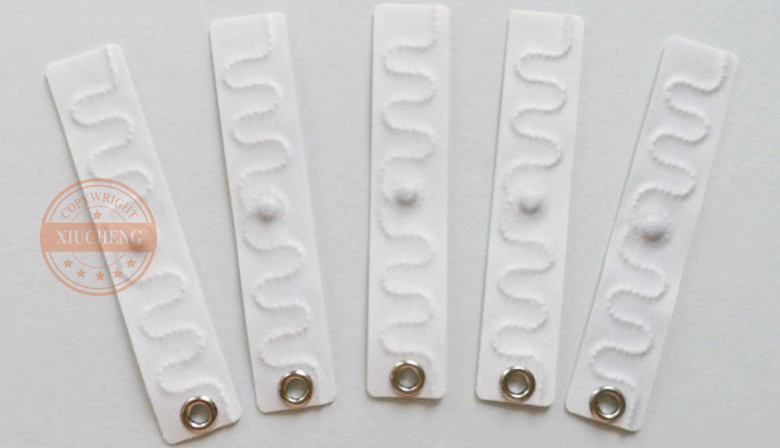
Fabric RFID laundry tags are textile-based RFID labels made from woven or non-woven materials.
They are the lightest and most flexible RFID laundry solution and are widely used in hotel linen management and commercial textile tracking.
Most fabric RFID tags contain:
- UHF RFID chip
- Flexible antenna
- Textile encapsulation layer
Main Characteristics of Fabric RFID Laundry Tags
Ultra Flexible Design
Fabric tags behave similarly to textile labels and can be:
- Sewn into hems
- Inserted into pockets
- Hidden inside linens
Lightweight Construction
Minimal impact on textile comfort and appearance.
Excellent for Bulk Linen Tracking
Widely used in:
- Hotels
- Resorts
- Healthcare linens
- Flatwork laundry systems
Advantages of Fabric RFID Laundry Tags
Best User Comfort
Fabric tags are almost unnoticeable on textiles.
Discreet Installation
Can be hidden inside:
- Bedsheets
- Towels
- Pillowcases
- Uniform seams
Fast RFID Reading Performance
Many fabric UHF tags offer excellent bulk-reading capability for tunnel and conveyor systems.
Lower Cost for High Volume Projects
Fabric RFID tags are usually the most economical option for large deployments.
Disadvantages of Fabric RFID Laundry Tags
Lower Mechanical Strength
Fabric tags are more vulnerable to:
- Tearing
- Folding damage
- Improper sewing
Shorter Lifespan
Typical durability:
- 100–200 wash cycles
Less Suitable for Extreme Industrial Environments
Heavy sterilization or chemical exposure may reduce service life.
PPS vs Silicone vs Fabric RFID Tags: Direct Comparison
| Feature | PPS RFID Tags | Silicone RFID Tags | Fabric RFID Tags |
|---|---|---|---|
| Flexibility | Low | Medium-High | Very High |
| Heat Resistance | Excellent | Good | Moderate |
| Chemical Resistance | Excellent | Good | Moderate |
| Comfort | Low | High | Very High |
| Wash Durability | Excellent | Good | Moderate-Good |
| Appearance | Visible | Moderate | Discreet |
| Installation | Sew-on | Sew/Seal | Sew-in |
| Typical Wash Cycles | 200–400+ | 150–250 | 100–200 |
| Cost | Medium-High | Medium | Low-Medium |
| Best Application | Industrial laundry | Uniforms | Hotel linens |
Which RFID Laundry Tag Is Best for Hotels?
Hotels typically prioritize:
- Linen appearance
- Comfort
- Fast inventory counting
- Bulk washing efficiency
For these reasons, fabric RFID laundry tags are the most widely adopted solution in hotel linen management systems.
Typical hotel applications include:
- Bedsheets
- Towels
- Pillowcases
- Bathrobes
- Table linens
However, silicone tags may also be used for staff uniforms and reusable garments.
Which RFID Laundry Tag Is Best for Hospitals?
Hospitals require:
- High-temperature sterilization
- Chemical resistance
- Long-term durability
- Reliable traceability
PPS RFID laundry tags are often preferred because they withstand:
- Autoclave sterilization
- Harsh detergents
- Intensive industrial washing
Fabric tags can still be used for lightweight healthcare linens where comfort and concealment are important.
Which RFID Laundry Tag Is Best for Uniform Rental Companies?
Uniform rental businesses typically need:
- Long lifecycle
- Comfortable wear
- Strong RFID readability
- Repeated industrial washing
Silicone RFID laundry tags are commonly selected because they balance:
- Flexibility
- Durability
- User comfort
PPS tags may also be used for heavy-duty workwear.
UHF vs HF RFID Laundry Tags
Most modern laundry systems use UHF RFID technology because it enables:
- Long reading distance
- Bulk inventory scanning
- Conveyor tunnel reading
- Faster linen counting
Typical standards:
- EPC Gen2
- ISO 18000-6C
HF laundry tags are less common but may be used for:
- NFC interaction
- Short-range authentication
- Specialized applications
Key Factors When Choosing Washable RFID Laundry Tags
Before selecting a laundry RFID solution, buyers should evaluate:
Washing Environment
Consider:
- Water temperature
- Chemical exposure
- Sterilization process
- Drying method
Textile Type
Different garments require different flexibility levels.
Expected Lifecycle
Calculate ROI based on:
- Tag cost
- Replacement frequency
- Laundry turnover volume
RFID System Compatibility
Ensure compatibility with:
- RFID readers
- Laundry software
- Encoding standards
- Existing infrastructure
Attachment Method
Choose between:
- Sewing
- Heat sealing
- Pouch installation
- Embedded textile integration
Future Trends in RFID Laundry Tags
The RFID laundry industry is evolving toward:
- Thinner flexible tags
- Higher wash-cycle durability
- Eco-friendly encapsulation materials
- Improved anti-collision performance
- Better textile integration
- AI-powered laundry tracking analytics
As industrial textile management becomes more data-driven, washable RFID tags will continue to play a central role in automation and operational visibility.
Final Thoughts
There is no universal “best” washable RFID laundry tag. The ideal solution depends on the operational environment, textile type, and lifecycle expectations.
In general:
- PPS RFID laundry tags are best for extreme industrial durability.
- Silicone RFID laundry tags offer the best balance of flexibility and robustness.
- Fabric RFID laundry tags are ideal for comfort, concealment, and large-scale hotel linen management.
For commercial laundry operators, hotels, hospitals, and uniform rental companies, selecting the correct RFID laundry tag material can significantly improve inventory accuracy, textile lifespan, labor efficiency, and operational automation.
As RFID adoption continues to grow in the textile industry, understanding the differences between PPS, silicone, and fabric RFID tags becomes increasingly important for long-term system performance and ROI.


