The T5577 RFID chip (also known as ATA5577) is one of the most widely deployed low-frequency (125 kHz) read/write RFID transponder ICs in the global RFID market.
Its rewritability, protocol flexibility, and broad reader compatibility make it a preferred solution for access control, RFID cloning, and custom LF RFID tag applications.
Unlike read-only RFID chips such as EM4100 or EM4200, T5577 allows full memory reprogramming, giving system integrators and manufacturers significantly more flexibility.
What Is the T5577 RFID Chip?
The T5577 is a passive LF RFID transponder IC operating at 125 kHz, originally developed by Atmel (now Microchip Technology).
It features EEPROM memory, allowing the chip to be:
- Rewritten multiple times
- Configured to emulate various LF RFID protocols
- Customized for different system requirements
This makes T5577 one of the most versatile LF RFID chips ever produced.

Key Technical Specifications of T5577
| Parameter | Specification |
|---|---|
| Operating Frequency | 125 kHz |
| Chip Type | Read / Write RFID transponder |
| Memory Type | EEPROM |
| Memory Size | 363 bits |
| Write Cycles | >100,000 |
| Data Retention | Up to 20 years |
| Power Source | Passive (no battery) |
| Modulation | ASK / FSK / PSK |
| Protocol Support | EM4100, EM4200, HID, Indala (emulation) |
| Anti-collision | Not supported |
| Typical Read Range | 5–10 cm (antenna dependent) |
How the T5577 RFID Chip Works
The T5577 operates using inductive coupling at 125 kHz:
- The RFID reader generates an LF electromagnetic field
- The T5577 harvests energy from the field
- Stored data is transmitted via modulation
- Data can be rewritten using compatible RFID writers
Because the chip is fully programmable, it can be configured to behave like many legacy LF RFID chips.
Why T5577 Is So Popular
The popularity of T5577 comes from three core advantages:
1. Fully Rewritable Memory
- UID and data blocks can be reprogrammed
- Ideal for testing, prototyping, and cloning
- Reduces inventory complexity for manufacturers
2. Multi-Protocol Emulation
T5577 can emulate:
- EM4100 / EM4200
- HID Prox
- Indala
- Other proprietary LF formats
This makes it a universal LF RFID chip for many systems.
3. Broad Reader Compatibility
T5577 works with most:
- 125 kHz access control readers
- Handheld RFID writers
- LF duplicators and encoders
T5577 vs EM4305: Technical Comparison
| Feature | T5577 | EM4305 |
|---|---|---|
| Memory | 363 bits EEPROM | 512 bits EEPROM |
| Rewritable | Yes | Yes |
| UID Flexibility | High | Moderate |
| Protocol Emulation | Very broad | Limited |
| Animal ID Use | Not recommended | Suitable |
| ICAR Compliance | No | Possible in systems |
Key insight:
T5577 is ideal for access control and cloning, while EM4305 is more suitable for animal identification systems.
Common Applications of T5577 RFID Chips
1. Access Control Systems
- RFID key fobs
- Proximity cards
- Door entry systems
2. RFID Cloning & Duplication
- Replacement access cards
- Backup credentials
- System migration projects
3. Time & Attendance
- Employee ID badges
- Factory and office attendance systems
4. RFID Wristbands & Key Tags
- Hotels
- Gyms
- Events
Limitations of the T5577 Chip
Despite its flexibility, T5577 has limitations:
- No encryption or authentication
- No anti-collision
- Short read range
- Not suitable for high-security systems
- Not compliant with ISO 11784/11785 animal ID standards
For secure or regulated environments, HF or UHF RFID chips are recommended instead.
T5577 Packaging and Tag Formats
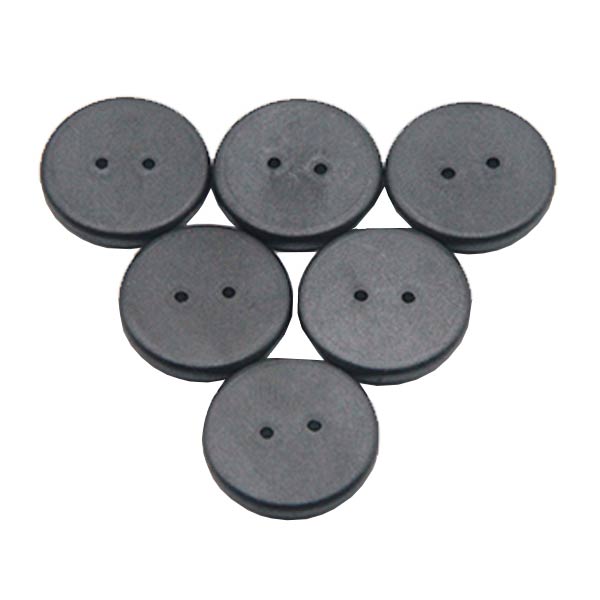
The T5577 chip is commonly embedded in:
- PVC RFID cards
- ABS key fobs
- Silicone or fabric wristbands
- LF RFID stickers
- Test cards for cloning devices
Performance depends heavily on antenna tuning and tag construction.
When Should You Choose T5577?
T5577 is the right choice if you need:
- A rewritable LF RFID solution
- Maximum protocol compatibility
- Flexible UID programming
- Low-cost mass deployment
- Easy encoding and duplication
It is not recommended for applications requiring strong security or regulatory compliance.
T5577 and Modern RFID Systems
Although newer HF and UHF technologies dominate high-security and long-range RFID applications, T5577 remains highly relevant due to:
- Legacy system compatibility
- Low deployment cost
- Global reader infrastructure
- Ease of customization
This ensures continued demand in access control and commercial RFID markets.
Conclusion
The T5577 RFID chip is one of the most versatile and widely used 125 kHz rewritable RFID ICs in the industry.
Its flexibility, compatibility, and ease of programming make it the default choice for access control, RFID cloning, and custom LF RFID solutions.
For system integrators and manufacturers, T5577 offers an optimal balance between cost, functionality, and deployment simplicity.