The EM4100 is one of the most widely deployed low-frequency (LF) RFID chips in the world. Despite being a legacy technology, EM4100 remains a foundational component in access control, identification, and legacy RFID systems across residential, commercial, and industrial environments.
This article provides a comprehensive technical overview of the EM4100 RFID chip, explaining how it works, its specifications, use cases, limitations, and how it compares with newer LF RFID chips.
What Is the EM4100 RFID Chip?
The EM4100 is a 125 kHz low-frequency, read-only RFID transponder IC, originally developed by EM Microelectronic. It stores a fixed unique identification number (UID) that is permanently programmed during manufacturing and cannot be modified.
The chip operates passively, meaning it has no internal battery and derives power entirely from the electromagnetic field generated by an RFID reader.
Key Technical Specifications of EM4100
| Parameter | Specification |
|---|---|
| Frequency | 125 kHz (LF) |
| Memory Type | Mask ROM (Read-Only) |
| Data Length | 64 bits (UID + parity) |
| Power Source | Passive (inductive coupling) |
| Communication | ASK modulation |
| Anti-collision | Not supported |
| Security | None (plain UID) |
| Typical Read Range | 5–10 cm |
| Standards | EM4100 / EM4102 protocol |
These specifications make EM4100 a simple, stable, and low-cost RFID solution.
EM4100 Data Structure Explained
The EM4100 UID is typically structured as:
- Header bits
- Facility or manufacturer code
- Unique serial number
- Parity bits for error detection
Because the data is factory-programmed and immutable, EM4100 tags are often referred to as “fixed code RFID tags.”
How Does the EM4100 RFID Chip Work?
The EM4100 chip operates using inductive coupling at 125 kHz:
- The RFID reader emits a low-frequency electromagnetic field
- The EM4100 chip harvests energy from the field
- The chip transmits its UID back using ASK modulation
Low-frequency operation provides:
- Strong penetration through non-metal materials
- Stable performance near water and human bodies
- High reliability in electrically noisy environments
- Common Applications of EM4100 RFID Chips
1. Access Control Systems
EM4100 is extensively used in:
- Office door access cards
- Residential apartment key fobs
- Parking access control
Many legacy access control readers are designed specifically for EM4100 UID formats.
2. Time Attendance Systems
Factories and offices use EM4100 cards for:
- Employee check-in/check-out
- Shift tracking
- Basic identity verification
3. Asset and Equipment Identification
Due to its low cost and durability, EM4100 is used for:
- Tool tracking
- Equipment labeling
- Non-secure asset identification
4. Educational and Training Use
EM4100 remains popular in:
- RFID training kits
- Electronics education
- Access control demonstrations
Advantages of EM4100 RFID Technology
- Extremely stable and mature technology
- Very low unit cost
- No programming required
- Long service life (10+ years)
- Broad reader compatibility
These advantages explain why EM4100 is still produced at large scale.
Limitations of the EM4100 Chip
Despite its popularity, EM4100 has clear limitations:
- Read-only memory (UID cannot be changed)
- No encryption or authentication
- No anti-collision (cannot read multiple tags simultaneously)
- Short read range
- Vulnerable to cloning
Because of these limitations, EM4100 is not suitable for high-security applications.
EM4100 vs EM4305: Key Differences
| Feature | EM4100 | EM4305 |
|---|---|---|
| Frequency | 125 kHz | 125 kHz |
| Memory | Read-only | Read/Write |
| UID Changeable | No | Yes |
| Cloning Resistance | Low | Medium |
| Cost | Very Low | Higher |
| Use Case | Fixed ID systems | Flexible / programmable systems |
Key insight:
EM4100 is best for simple, fixed-ID systems, while EM4305 is preferred for configurable or test environments.
Is EM4100 Still Relevant Today?
Yes—but only in specific scenarios.
EM4100 remains a practical choice when:
- Security requirements are minimal
- System compatibility is critical
- Cost sensitivity is high
- Infrastructure is already based on 125 kHz readers
However, new projects increasingly migrate to HF (13.56 MHz) or encrypted RFID solutions.
EM4100 Packaging and Form Factors
The EM4100 chip is commonly embedded in:
- PVC RFID cards
- ABS key fobs
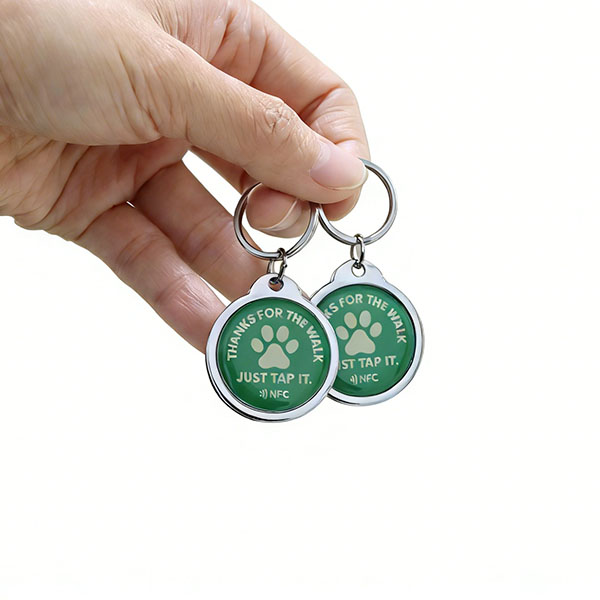
- Coin tags
- Glass capsules (animal ID, limited cases)
- Wristbands and labels
Performance depends heavily on antenna design and encapsulation quality.
EM4100 Integration and Buying Considerations
Before sourcing EM4100 RFID tags, consider:
- Reader compatibility testing
- UID format requirements
- Tag material and environment
- Long-term supply stability
For OEMs, EM4100 remains attractive for high-volume, cost-controlled projects.
Conclusion
The EM4100 RFID chip is a classic, reliable, and cost-effective LF RFID solution that continues to power millions of access control and identification systems worldwide.
While it lacks modern security features, its simplicity, stability, and universal compatibility ensure its continued relevance in legacy and low-risk applications.