


The EM4305 is one of the most widely used low-frequency (LF) RFID chips in access control, industrial identification, and legacy RFID systems. Known for its stability, compatibility, and reprogrammable memory, the EM4305 remains a popular choice for RFID card manufacturers, system integrators, and OEMs worldwide.
This article provides a complete technical and practical overview of the EM4305 RFID chip, including how it works, its specifications, real-world applications, and how it compares to alternative LF RFID chips.
What Is the EM4305 RFID Chip?
The EM4305 is a 125 kHz low-frequency RFID transponder chip originally designed by EM Microelectronic (now part of EM Group). It is a read/write, contactless IC that communicates via inductive coupling and does not require an internal power source.
Unlike read-only LF chips (such as EM4100), the EM4305 features EEPROM memory, allowing it to be reprogrammed multiple times. This makes it especially useful for cloning, testing, and flexible deployment scenarios.
Key Specifications of the EM4305
| Parameter | Specification |
|---|---|
| Frequency | 125 kHz (LF) |
| Memory Type | EEPROM |
| Total Memory | 512 bits |
| Data Retention | ≥ 10 years |
| Write Endurance | ≥ 100,000 cycles |
| Operating Voltage | Induced from reader field |
| Communication | ASK modulation |
| Anti-collision | Not supported |
| Standards | ISO 11784/11785 compatible (application-dependent) |
These specifications make the EM4305 suitable for long-term, low-maintenance RFID deployments.
EM4305 Memory Structure Explained
The EM4305 memory is organized into 16 blocks × 32 bits, allowing flexible data storage.
Key features include:
- Configurable data blocks
- Lock bits to prevent further modification
- Support for different data formats (EM4100 emulation, custom IDs)
This structure enables the EM4305 to emulate several legacy LF RFID chips, which is a major reason for its continued popularity.
How the EM4305 RFID Chip Works
The EM4305 operates using inductive coupling:
- The RFID reader emits a 125 kHz electromagnetic field
- The EM4305 chip harvests energy from this field
- Stored data is modulated and transmitted back to the reader
Because it operates at low frequency:
- Signal penetration is strong
- Performance near metal and liquids is stable
- Read accuracy is high, even in noisy environments
Common Applications of EM4305
1. Access Control Cards and Key Fobs
EM4305 is widely used in:
- Office access cards
- Apartment key fobs
- Parking access systems
Its reprogrammability allows system managers to reissue or update credentials without replacing hardware.
2. RFID Cloning and Testing
Because EM4305 can emulate EM4100 and similar chips, it is frequently used for:
- RFID system testing
- Access control migration projects
- Research and development
3. Industrial Identification
In industrial environments, EM4305 is used for:
- Tool identification
- Equipment tagging
- Maintenance tracking
Its resistance to electromagnetic interference makes it suitable for factories and workshops.
4. Education and Training
The EM4305 is commonly used in:
- RFID learning kits
- University labs
- Embedded systems training
EM4305 vs T5577: What’s the Difference?
| Feature | EM4305 | T5577 |
|---|---|---|
| Frequency | 125 kHz | 125 kHz |
| Memory | 512 bits | 330 bits |
| Reprogrammable | Yes | Yes |
| EM4100 Emulation | Yes | Yes |
| Availability | Moderate | Very High |
| Typical Cost | Higher | Lower |
Key takeaway:
- EM4305 offers more memory and stability
- T5577 is often chosen for cost-sensitive, high-volume projects
Advantages of Using the EM4305 RFID Chip
- Stable performance in harsh environments (Which RFID Chips Are Best for Harsh Environments?)
- Rewritable EEPROM memory
- Strong compatibility with legacy systems
- Reliable long-term data retention
- Widely supported by RFID readers
These advantages explain why EM4305 remains relevant despite newer RFID technologies.
Limitations of the EM4305
While the EM4305 is reliable, it has limitations:
- Short read range (typically <10 cm)
- No anti-collision (not suitable for bulk scanning)
- No encryption or security authentication
- Not suitable for UHF or long-range applications
For high-security or long-range use cases, HF or UHF RFID chips are more appropriate.
Is the EM4305 Still a Good Choice in 2026?
Yes—for the right applications.
The EM4305 continues to be a solid choice when:
- You need compatibility with 125 kHz systems
- The environment includes metal or electrical noise
- Security requirements are basic
- Cost is not the only deciding factor
However, it should not be used where encryption, long read range, or high-speed inventory is required.
EM4305 Buying and Integration Considerations
When sourcing EM4305 chips or tags, consider:
- Chip authenticity and supplier reliability
- Antenna design quality
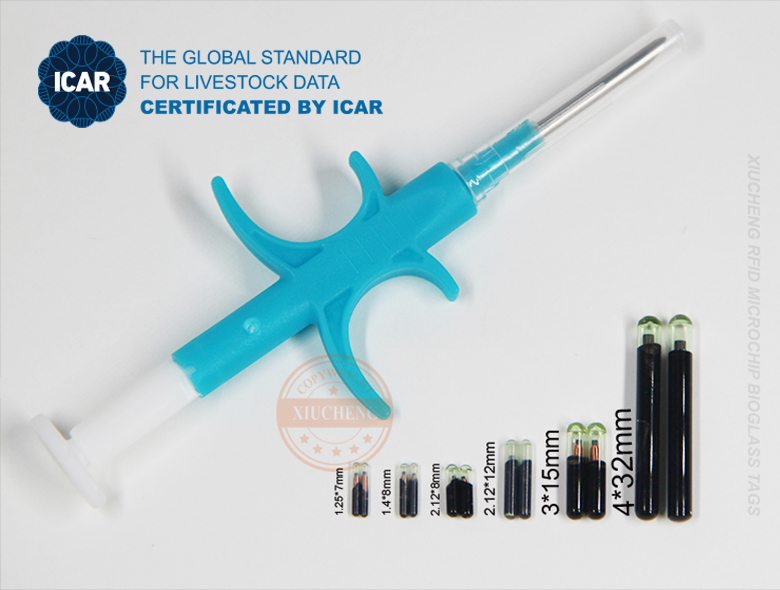
- Encapsulation (card, key fob, label, glass capsule)
- Reader compatibility testing
For OEM projects, EM4305 is often embedded into custom RFID cards, ABS key fobs, or industrial housings.
Conclusion
The EM4305 RFID chip is a proven, flexible, and durable LF RFID solution that continues to serve access control, industrial, and educational applications worldwide.
Its reprogrammable memory, strong environmental tolerance, and legacy compatibility make it a dependable option for 125 kHz RFID systems—even in modern deployments.


