


Medication non-adherence remains one of the most persistent challenges in modern healthcare. Across chronic and high-risk therapies, missed doses contribute to treatment failure, drug resistance, avoidable hospitalizations, and rising healthcare costs. While digital health tools such as wearables and smart pill bottles attempt to address this issue, they often rely on indirect behavioral signals rather than objective confirmation of ingestion.
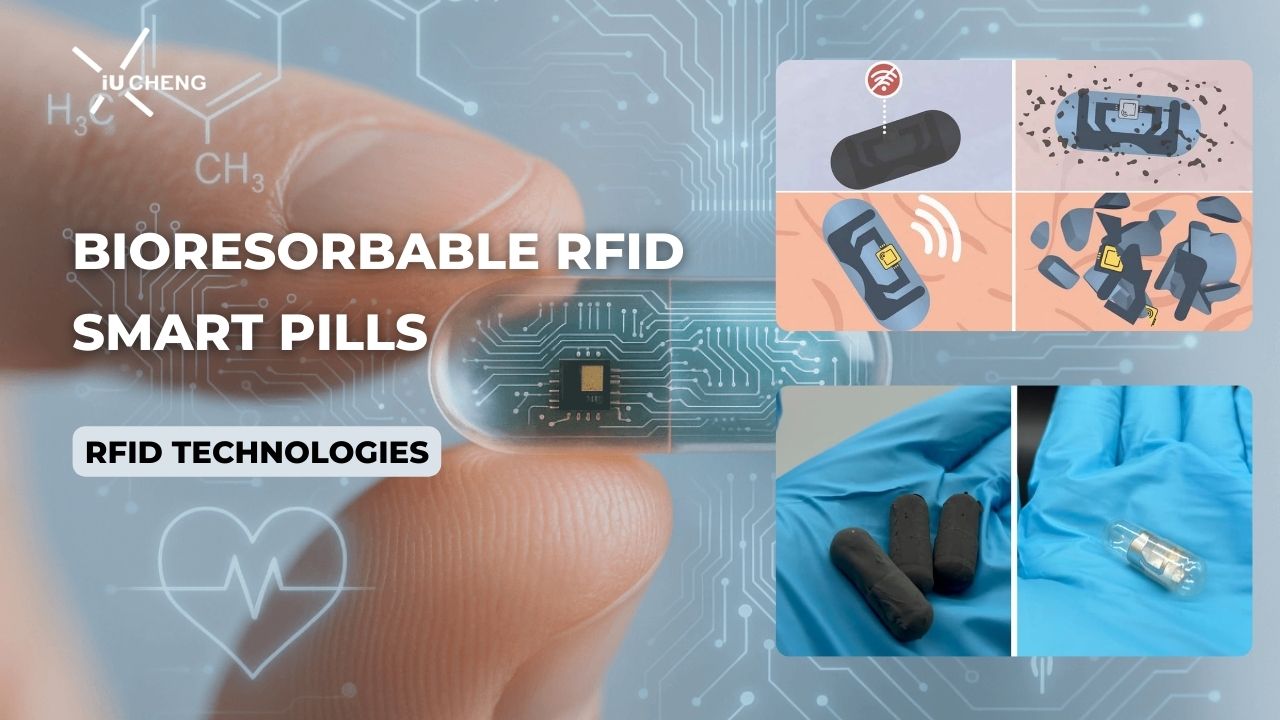
A research team at the Massachusetts Institute of Technology (MIT) has introduced a fundamentally different approach: a bioresorbable RFID smart pill, known as SAFARI (Smart Adherence via Faraday Cage and Resorbable Ingestible). This ingestible capsule contains a passive, battery-free RFID tag that activates only after being swallowed, wirelessly confirming ingestion from inside the body and then safely degrading.
This article explains how SAFARI works, why bioresorbable RFID matters for medicine, and what this technology means for pharmaceutical companies, clinical researchers, and RFID manufacturers.
What Is a Bioresorbable RFID Smart Pill?
A bioresorbable RFID smart pill is an ingestible drug capsule that integrates a temporary RFID system capable of transmitting data from inside the gastrointestinal (GI) tract. Unlike conventional electronic ingestibles, SAFARI is designed so that nearly all functional components dissolve after use, eliminating long-term safety and environmental concerns.
Key characteristics include:
- Passive RFID (no battery)
- Temporary RF shielding to prevent false reads
- Biodegradable metallic antenna materials
- Standard gelatin capsule delivery
- Wireless confirmation of ingestion
Once the capsule completes its function, the RFID system ceases to exist as a device.
How the SAFARI RFID Capsule Works
The SAFARI capsule combines pharmaceutical delivery with controlled RF activation using a layered design.
1. RF-Blocking Outer Coating
Before ingestion, the capsule is coated with a cellulose-based layer mixed with molybdenum particles. This coating functions as a Faraday cage, blocking radiofrequency signals and preventing the RFID tag from being read outside the body.
2. Ingestion and Controlled Activation
After swallowing, gastric fluids cause the RF-blocking coating to swell and dissolve within approximately 10–20 minutes. Once the coating degrades, the RFID antenna becomes exposed and capable of communicating.
3. Wireless Ingestion Confirmation
An external RFID reader positioned near the patient (for example, a panel antenna within clinical range) interrogates the tag. The RFID chip responds, confirming that the capsule has reached the stomach.
4. Dissolution and Safe Exit
- The gelatin capsule dissolves, releasing the medication.
- The zinc-based antenna gradually dissolves in gastric fluid.
- The tiny RFID chip (approximately 0.16 mm²) remains intact and passes naturally through the GI tract.
This design avoids the need for device retrieval or permanent implants.
Materials Used in Ingestible RFID Tags
Material selection is the cornerstone of SAFARI’s safety and performance.
Zinc Antenna
Zinc is used as the RF antenna material because it:
- Provides adequate electrical conductivity for UHF RFID
- Dissolves safely in gastric environments
- Is already present in the human diet at much higher levels
Molybdenum-Based RF Shielding
Molybdenum particles embedded in the coating provide temporary RF shielding. The total exposure is orders of magnitude below known toxicity thresholds.
Passive RFID Chip
The chip stores metadata such as:
- Unique ID
- Dose information
- Manufacturing batch data
It operates without a power source and is only active when interrogated by an external reader.
RF Performance Inside the Human Body
In vivo testing demonstrated that SAFARI can reliably transmit signals from inside the stomach.
Key performance results:
- Operating frequency: 900–925 MHz
- External panel antenna distance: ~10 cm
- RSSI values recorded: 65–78 dB
- Successful reads even when immersed in gastric fluid
These results confirm that passive RFID can function in highly attenuating biological environments when antenna design and materials are carefully engineered.
Safety, Biodegradation, and Regulatory Considerations
Safety is central to ingestible medical devices.
Biodegradation Timeline
- RF-blocking coating: dissolves in 10–20 minutes
- Capsule and zinc antenna: disintegrate within ~24 hours
- RFID chip: exits the body naturally
Toxicology and Exposure
All materials used fall within established dietary and biomedical exposure limits. However, researchers emphasize that chronic or repeated dosing requires further study, particularly regarding long-term material accumulation.
Regulatory Pathway
Before human clinical deployment, ingestible RFID systems must address:
-
Biocompatibility (ISO 10993)
-
Medical device classification
-
Clinical trial approvals
-
Data privacy and patient consent
Manufacturing Challenges for Scalable Medical RFID
Translating SAFARI from a research prototype to real-world deployment presents several manufacturing challenges:
- Ultra-thin, dissolvable antenna fabrication
- Consistent dissolution timing across batches
- Integration with pharmaceutical encapsulation lines
- RF performance validation in simulated biological environments
- Medical-grade quality control and traceability
Most standard RFID production lines are not designed for temporary, bioresorbable electronics, requiring specialized process development.
How RFID Manufacturers Can Support Medical R&D
For pharmaceutical and medical device innovators, collaboration with capable RFID manufacturers is essential.
An experienced RFID manufacturing partner can support:
- Custom antenna material research
- Miniaturized tag prototyping
- RF testing in liquid and tissue-mimicking environments
- Documentation for regulatory submissions
- Prototype-to-pilot-scale production
XIUCHENG RFID supports custom RFID development for specialized applications, including medical and pharmaceutical research, with capabilities spanning antenna design, material selection, and low-volume prototyping to scalable production workflows.
Clinical Applications Where Ingestible RFID Matters Most
SAFARI-like technology is particularly valuable in high-risk therapies, including:
- Tuberculosis treatment
- HIV medication adherence
- Organ transplant immunosuppression
- Cardiovascular therapies requiring strict dosing
In these contexts, objective ingestion confirmation can directly impact clinical outcomes.
Conclusion
Bioresorbable RFID smart pills represent a significant step forward in medication adherence technology. By combining passive RFID with biodegradable materials, SAFARI demonstrates that ingestion can be confirmed objectively, safely, and without permanent electronics.
As this technology moves closer to clinical translation, manufacturers capable of supporting custom, medically compliant RFID development will play a critical role in bridging the gap between research and real-world healthcare deployment.
Looking for a manufacturing partner for custom medical RFID development?
XIUCHENG RFID works with R&D teams, MedTech startups, and pharmaceutical companies to prototype and scale specialized RFID components for challenging applications.
👉 Contact us to discuss your medical RFID project.
FAQ
What is a bioresorbable RFID smart pill?
A bioresorbable RFID smart pill is an ingestible capsule that uses a temporary, passive RFID tag to confirm ingestion and then safely degrades inside the body.
Does ingestible RFID require a battery?
No. SAFARI uses passive RFID technology and does not contain a battery.
Is ingestible RFID safe for the human body?
Animal studies indicate safety, with materials dissolving or passing naturally. Further evaluation is required for repeated or long-term use.
What frequency does SAFARI RFID operate on?
SAFARI operates in the UHF band, approximately 900–925 MHz.


