


RFID smart cards may appear simple to the end user, but they are the result of a multi-stage industrial manufacturing flow that integrates electronics, materials science, precision assembly, and stringent quality control. A standard production sequence ensures every card meets ISO standards for size, performance, and reliability.
Below is a complete process typically followed in professional RFID smart card production facilities.
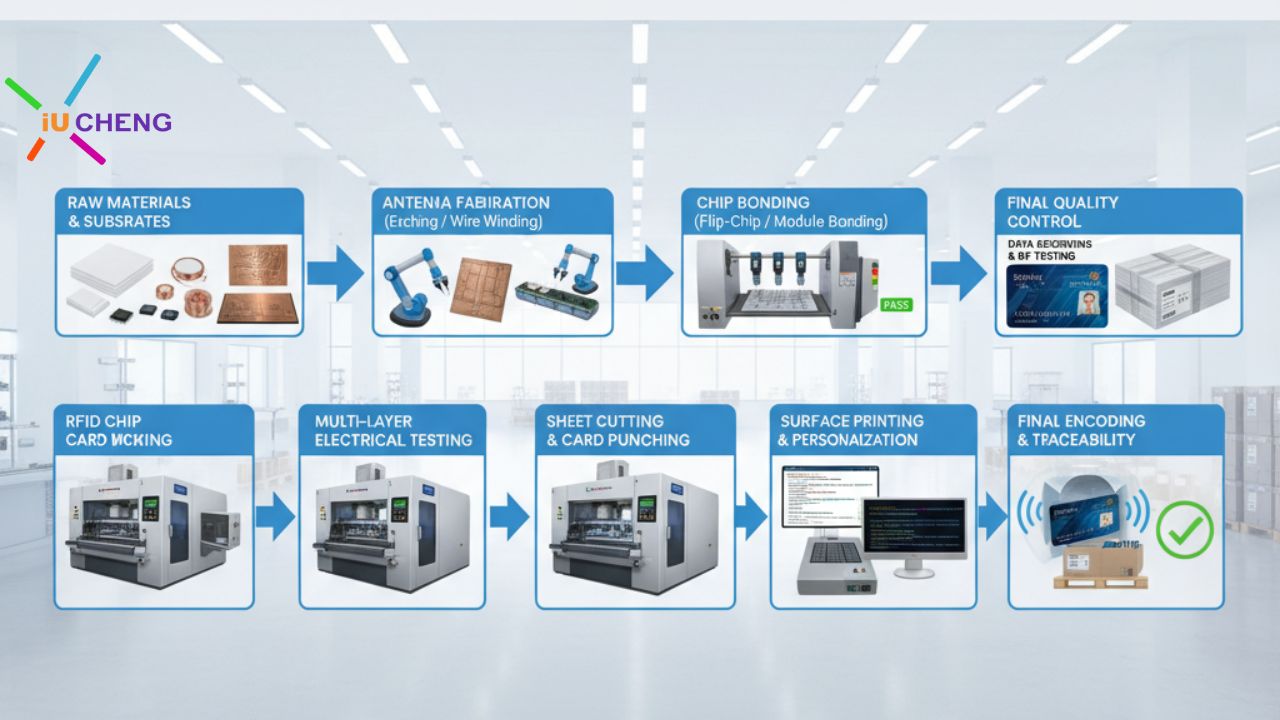
1. Material Preparation and Substrate Selection
Production begins with raw materials that form the physical body of the card.
Typical card body plastics include PVC, PET, or ABS, chosen for mechanical strength, durability, and compatibility with lamination processes.
The substrate serves as the base upon which the RFID electronics will be mounted later. Precision control of thickness and flatness at this stage is critical for consistent overall card quality.
2. Antenna Fabrication
The antenna is the core component that enables RFID communication. It must be manufactured with tight tolerances to perform reliably at designated frequencies (e.g., HF 13.56 MHz, UHF 860-960 MHz).
Two primary methods are used: etched/printed antennas and wire-wound antennas:
- Etched or printed antenna: conductive material (usually copper or aluminum) is chemically etched or printed with conductive ink onto the substrate to form the precise antenna pattern.
- Wire winding: fine copper or aluminum wire is wound into the required coil shape and embedded into the card structure. This method provides robustness for certain designs.
The antenna geometry is engineered to meet electrical requirements (resonance, inductance) for optimal read range and performance.
3. RFID Chip Preparation and Testing
The RFID chip (integrated circuit or IC) is the “brain” of the card. Before assembly, chips are tested in a controlled cleanroom environment for electrical characteristics to ensure they operate at correct frequency and meet data integrity standards.
In some workflows, chips may also undergo preliminary logic checks before bonding.
4. Chip Bonding (Inlay Assembly)
Once the antenna and substrate are ready, the RFID chip is integrated with the antenna to form the RFID inlay:
- Flip-chip bonding: the chip is placed face-down and bonded directly to antenna contact pads using conductive adhesives or solder bumping, providing a compact, robust connection.
- Wire bonding: in cases where chips are packaged slightly differently, fine gold or aluminum wires connect chip pads to antenna contacts.
This assembly step is performed with micron-level precision in cleanroom conditions to avoid contamination or bonding defects. After bonding, automated optical inspection checks contact integrity and alignment.
5. Inlay Testing
Before lamination, each RFID inlay undergoes electrical testing. This ensures that the chip and antenna combination resonates properly, responds to signals from RFID readers, and meets frequency specifications. Early failure detection at this stage prevents faulty inlays from progressing further.
6. Lamination — Card Formation
Lamination is the process of transforming the delicate inlay into a durable smart card structure. Manufacturers stack multiple layers in sequence:
- Inner core substrate
- RFID inlay (chip + antenna)
- Overlay films
- Printed top and bottom layers
This stack is subjected to controlled heat and pressure in a laminating press. Temperatures within the range of ~120–150 °C and regulated pressure bond materials into a single rigid card unit. Precise timing and thermal profiles prevent warping, delamination, or voids around internal components.
Proper lamination encapsulates the electronics within a protective plastic matrix, isolating them from environmental stress and mechanical wear.
7. Cutting and Shaping
Once laminated, large sheets that contain multiple card units are processed into individual cards:
- Die cutting: automated machines punch out cards to standard ISO/IEC 7810 dimensions (e.g., CR80 85.6 × 54 mm).
- Edge finishing: precision polishing or trimming ensures consistent thickness and smooth edges for user comfort and compatibility with readers or printers.
8. Surface Printing and Personalization
Surface printing applies any required graphics, logos, text, or security features. Common printing methods include:
- Offset printing
- Silk-screen printing
- Digital printing
For secure applications, additional personalization may feature laser engraving or over-laminate overlays.
Some factories perform data encoding and personalization at this stage, writing unique identifiers, access keys, or encrypted data onto the RFID chip using professional encoders.
9. Final Electrical and Quality Testing
After mechanical finishing, each card is subjected to a structured quality assurance process:
- Electrical tests: verify read/write functionality, resonance characteristics, and communication performance with readers.
- Read-range tests: ensure the card can be detected reliably at engineered distances.
- Durability tests: include bending, abrasion, heat/cold cycling, and water resistance to confirm resilience.
- Visual inspection: automated optical inspection or technician checks for cosmetic or lamination defects.
Only cards meeting strict factory standards are approved for packaging.
10. Packaging and Traceability Control
Approved cards are counted, batch-coded, and labeled for dispatch. Production records, lot IDs, and test reports are maintained for traceability. Many manufacturers also record encoding logs and QA results to support regulatory compliance and customer audits.
Conclusion
The production of an RFID smart card is a controlled, multi-stage industrial process. It integrates advanced electronics assembly, materials engineering, and precision manufacturing to produce a finished product that is robust, reliable, and compliant with industry standards.
Each step — from antenna fabrication and chip bonding to lamination, personalization, and exhaustive quality checks — contributes to the card’s eventual performance and longevity in real-world applications.
You Might Also Like: How Silicone Wristbands Are Manufactured


