In recent years, Tesla’s approach to vehicle access has reflected its broader design philosophy: minimalist, secure, and technology‑centric. One core component of this strategy is the Tesla RFID key card, a physical access device that works alongside phone keys and traditional fobs. This article breaks down how RFID is implemented in Tesla vehicles, why it matters, and how it enhances user experience and security.
What Is an RFID Key Card in Tesla Vehicles?
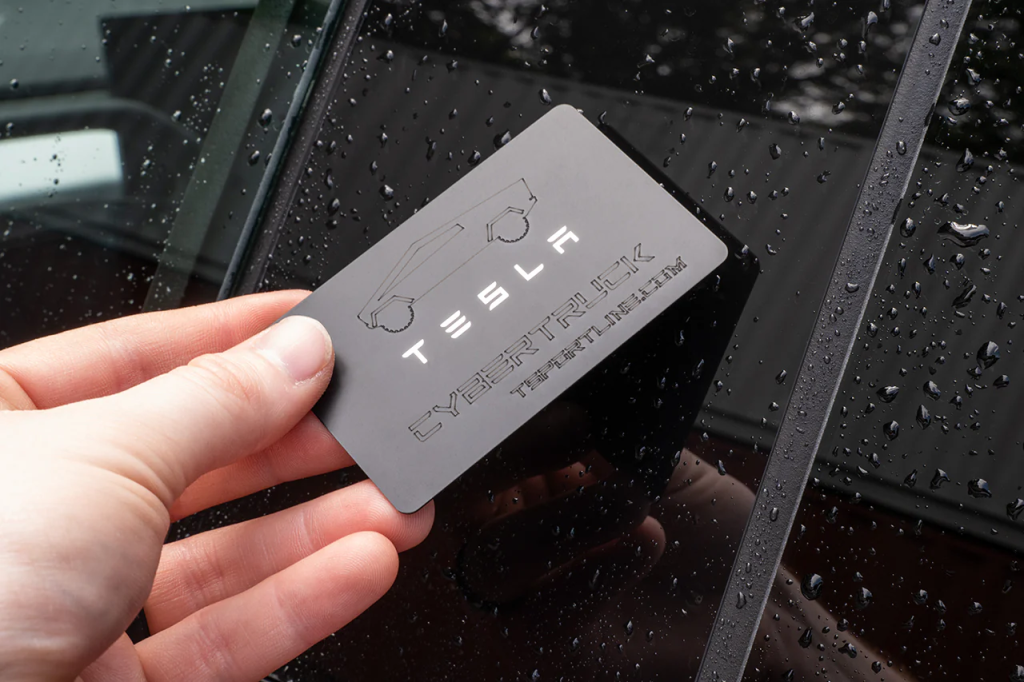
Tesla key cards are contactless access cards that use short‑range RFID (Radio Frequency Identification) communication to unlock, lock, and enable driving in supported vehicles such as Model 3, Model Y, and Cybertruck. These cards are typically provided in pairs and are designed to fit in a wallet or pocket.
Unlike smartphone key or a physical key fob, the key card requires close proximity and a tap against a vehicle’s reader; it doesn’t support automatic lock/unlock when merely carried nearby.
How Tesla RFID Key Cards Work
Technology and Frequency
Tesla key cards use RFID/NFC technology, often operating around 13.56 MHz, similar to hotel or office access cards. The car emits a low‑frequency field when a key card is close, powering the passive RFID chip and enabling two‑way communication to authenticate the vehicle access.
Because these cards have no battery and no physical buttons, they are low‑maintenance and durable.
Typical Use Cases for Tesla RFID Key Cards
1. Unlocking and Locking the Vehicle
To access a Tesla using an RFID key card:
- Hold the key card against a designated reader zone (e.g., the door pillar near the camera or near the center console).
- The car detects the RFID signal and unlocks or locks accordingly.
- Exterior lights flash, mirrors unfold, and a confirmation sound may play to signal successful authentication.
This process must be done manually — there’s no proximity auto‑unlock like with a phone key.
2. Starting the Vehicle
Once inside:
- If the card was used to authenticate entry, the vehicle grants an authentication window (e.g., ~15–120 seconds) within which you must press the brake to start driving.
- If this period expires, the card must be retapped at an interior RFID reader (often near the wireless charger area) to re‑authenticate.
This two‑step process ensures that only valid users with physical possession of the card can start the car.
Pairing and Security
Pairing a New RFID Key Card
Setting up or adding key cards is done through the vehicle’s touchscreen:
- Navigate to Controls → Locks → Add Key.
- Hold the RFID key card against the reader inside the cabin (e.g., near the wireless charging pad).
- Wait for confirmation.
Tesla supports multiple keys per vehicle — typically up to 19 keys (including phones, cards, and fobs).
Why Tesla Uses RFID Key Cards
1. Reliable Backup and Redundancy
The key card functions as a backup access method if the smartphone key’s battery dies, the phone is lost, or Bluetooth fails.
2. Minimalist and Durable Design
- No battery to replace.
- Simple, tactile interface.
- Fits in wallets and key organizers.
- Less prone to damage than traditional electronic keys.
3. Short‑Range, Secure Access
The physical requirement to tap the card close to the reader reduces the risk of remote relay attacks, which are a known vulnerability in some keyless systems.
Limitations to Be Aware Of
While RFID key cards are functional and secure, they have constraints:
- No automatic unlocking — you must physically use the card.
- Close proximity required — the RFID system works within a few centimeters, so accurate positioning matters.
- User experience trade‑offs — phone and fob keys provide more convenience in many scenarios.
These limitations are intentional: RFID key cards prioritize security and simplicity over automation.
Future Potential: RFID Beyond Cards
Tesla also supports using smartphones with NFC capability as keys in some models, effectively replacing physical cards. These phones use a similar RFID/NFC communication protocol to interact with vehicle readers, enabling even more seamless access.
Conclusion
Tesla’s use of RFID key cards is a well‑designed balance of security, simplicity, and backup reliability. By leveraging short‑range RFID technology — often via the NFC subset — Tesla ensures that users can always access and operate their vehicles, even when digital keys fail. For buyers and enthusiasts, these cards represent a pragmatic, minimalist solution in a highly connected automotive ecosystem.