


A Complete Guide for Event, Access Control, and NFC Applications
Dual-Color RFID Silicone Wristbands have become an increasingly popular wearable identification solution in modern contactless ecosystems. From large music festivals and theme parks to gyms, corporate campuses, and secure facilities, these wristbands combine durability, branding flexibility, and RFID technology in a single device.
However, the performance of an RFID wristband is determined primarily by the RFID chip embedded inside it. Selecting the wrong chip can lead to compatibility problems, limited functionality, or unnecessary costs. For procurement managers, system integrators, and event operators, understanding how to choose the correct chip is essential to building a reliable RFID system.
This guide provides a comprehensive explanation of how to select the right chip for a Dual-Color RFID Silicone Wristband, including key selection criteria and recommended chips for specific application scenarios.
The chips available for customization at XIUCHENG RFID include:
NXP MIFARE S50
Fudan 1K
DESFire 2K / 4K / 8K
Ultralight EV1
Ultralight C
NTAG213 / NTAG215 / NTAG216
ICODE SLi-X (SLIX)
By understanding the strengths of each chip, organizations can deploy RFID wristbands that are both technically compatible and cost-efficient.
What Is a Dual-Color RFID Silicone Wristband?
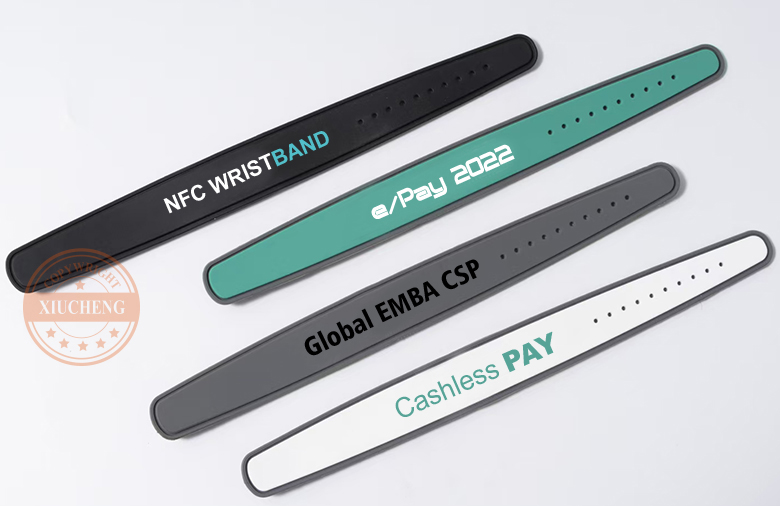
A Dual-Color RFID Silicone Wristband is a wearable RFID tag made from two different colored silicone layers molded together. The dual-color design provides several advantages:
• Improved visual identification for staff and visitors
• Strong branding opportunities for events and resorts
• Enhanced aesthetics compared to single-color wristbands
• Clear segmentation for VIP, staff, and general admission
Inside the wristband, a sealed RFID inlay contains the antenna and integrated circuit chip. When the wristband is placed near an RFID reader, the chip communicates with the system via radio frequency signals.
Most silicone wristbands operate in the 13.56 MHz high-frequency (HF) RFID band, which supports standards such as:
ISO/IEC 14443
ISO/IEC 15693
NFC (Near Field Communication)
These standards enable the wristband to interact with RFID readers, access control systems, POS terminals, and NFC smartphones.
Why Chip Selection Matters
Although the wristband material and design are important, the RFID chip ultimately determines the functionality of the entire solution.
Choosing the correct chip affects:
Security level
Data storage capacity
Compatibility with RFID readers
Reading distance
Encryption capability
Overall system cost
For example, a music festival using wristbands for simple ticket validation may only require a low-cost Ultralight chip. In contrast, a cashless payment system requires a secure encrypted chip such as DESFire.
Selecting the right chip ensures the wristband works seamlessly with the existing hardware infrastructure and backend management software.
Key Factors to Consider When Selecting an RFID Wristband Chip
Before choosing a chip for a Dual-Color RFID Silicone Wristband, several technical and operational factors should be considered.
1. System Compatibility
The most important factor is compatibility with the RFID readers already installed in the system.
Many access control systems are designed specifically for certain chips or protocols, such as:
MIFARE Classic
ISO14443 NFC
ISO15693 long-range HF
Using an incompatible chip may require replacing readers or reconfiguring the software system.
Therefore, system integrators should always confirm which chip types the infrastructure supports.
2. Security Requirements
Different RFID chips provide different levels of security.
Basic authentication systems may only use a UID (unique identifier) for verification. However, applications involving payments or sensitive access control require encrypted authentication.
Common security technologies include:
3DES encryption
AES encryption
Mutual authentication
Secure memory segmentation
Higher security chips prevent cloning and unauthorized data access.
3. Memory Capacity
RFID chips contain internal memory used to store application data. Some applications require minimal storage, while others require more advanced data structures.
Examples include:
Ticket identifiers
User account numbers
Access permissions
Transaction records
Memory capacity varies significantly between chips.
For example:
Ultralight chips offer limited storage suitable for ticket IDs, while DESFire chips provide large memory areas that support multiple applications on a single tag.
4. Reading Distance
Most HF RFID wristbands operate within 2–10 cm depending on the reader power and antenna size.
However, chips using the ISO15693 protocol, such as ICODE SLi-X, can achieve longer reading distances.
This is useful in applications where wristbands must be scanned quickly or without precise positioning.
5. Cost and Deployment Scale
Large events may require tens of thousands of wristbands, making cost an important factor.
Low-cost chips are ideal for disposable applications, while premium chips should be reserved for systems requiring advanced security or long-term use.
Recommended Chips for Dual-Color RFID Silicone Wristbands
Below is an overview of the chips commonly used in Dual-Color RFID Silicone Wristbands and the scenarios where each performs best.
MIFARE S50 (Classic 1K)
MIFARE S50 is one of the most widely deployed RFID chips in the world. Operating at 13.56 MHz under the ISO14443A standard, it provides 1KB of memory divided into sectors.
Typical Applications
Gym membership wristbands
Office access control
Employee attendance systems
Campus ID systems
Advantages
Wide compatibility with existing access control systems
Low cost and mature technology
Fast authentication speed
Considerations
Although still widely used, MIFARE Classic chips offer limited security compared to modern encrypted chips.
They are most suitable for basic identification applications.
Fudan 1K
Fudan 1K chips are commonly used as a cost-efficient alternative to MIFARE Classic chips.
These chips provide similar memory structure and communication protocol compatibility.
Typical Applications
Budget access control systems
Low-cost event wristbands
Membership identification
Advantages
Lower cost for large projects
Compatible with many existing MIFARE Classic infrastructures
Reliable performance for simple RFID applications
Because of the cost advantage, Fudan 1K chips are often used in large-volume deployments where security requirements are moderate.
DESFire Series (2K / 4K / 8K)
DESFire chips represent the highest level of security among HF RFID chips used in wristbands.
They support advanced cryptographic technologies such as:
AES encryption
Mutual authentication
Secure key management
Typical Applications
Cashless payment systems
Smart transportation ticketing
High-security building access
Large music festivals with payment integration
Advantages
Very high security level
Large memory capacity
Multi-application capability
Excellent reliability in complex systems
DESFire chips allow multiple applications to run simultaneously on a single wristband, enabling integrated solutions such as:
Access control
Payment
Loyalty programs
Event ticketing
For smart venues and cashless environments, DESFire is often the preferred chip option.
Ultralight EV1
Ultralight EV1 chips are specifically designed for high-volume ticketing applications.
They are simple, low-cost, and optimized for fast scanning.
Typical Applications
Music festivals
Sports events
Temporary access control
Exhibitions and conferences
Advantages
Very low cost
Fast read/write speed
Reliable for disposable wristbands
Because these chips are inexpensive, they are commonly used in single-event wristbands where the tag will not be reused.
Ultralight C
Ultralight C is an enhanced version of Ultralight chips that includes 3DES encryption capability.
Typical Applications
Secure event ticketing
Visitor management systems
Medium-security access control
Advantages
Better security than standard Ultralight chips
Still relatively cost-effective
Suitable for temporary but secure deployments
Ultralight C offers a balanced solution between security and cost, making it a popular option for mid-level event security systems.
NTAG213 / NTAG215 / NTAG216
The NTAG series is optimized for NFC smartphone interaction.
These chips are widely used in consumer engagement and marketing applications.
Typical Applications
NFC marketing campaigns
Interactive events
Social media check-ins
Smart posters and product authentication
Advantages
Excellent compatibility with smartphones
Fast NFC interaction
Simple integration with mobile applications
Memory Options
NTAG213 – basic data storage
NTAG215 – medium memory capacity
NTAG216 – large memory capacity
These chips are particularly suitable when wristbands must interact with mobile apps or digital content platforms.
ICODE SLi-X (SLIX)
ICODE SLi-X operates under the ISO15693 standard, which provides longer reading distances compared with traditional NFC chips.
Typical Applications
Library systems
Asset tracking
Industrial inventory management
Logistics monitoring
Advantages
Longer reading distance
Reliable performance in scanning environments
Suitable for batch reading applications
Although less common in wristbands for events, ICODE chips are ideal when wristbands must be scanned quickly or from a slightly greater distance.
Quick Chip Selection Table
| Application Scenario | Recommended Chip |
|---|---|
| Basic access control | MIFARE S50 |
| Low-cost compatible systems | Fudan 1K |
| High-security access or payments | DESFire series |
| Disposable event tickets | Ultralight EV1 |
| Encrypted ticket validation | Ultralight C |
| NFC smartphone interaction | NTAG213 / 215 / 216 |
| Long-range HF applications | ICODE SLi-X |
Final Recommendations for RFID Wristband Projects
When selecting a chip for a Dual-Color RFID Silicone Wristband, the best approach is to start with the system requirements rather than the chip itself.
For most projects:
Music festivals and exhibitions typically use Ultralight EV1.
Gyms and membership systems often use MIFARE S50.
Cashless payment environments prefer DESFire chips.
Interactive NFC experiences rely on NTAG series chips.
Choosing the correct chip ensures the wristband integrates smoothly with RFID readers, backend management software, and mobile devices.
As RFID technology continues to expand across industries, selecting the right chip will help organizations deploy secure, efficient, and scalable RFID wristband solutions.


