


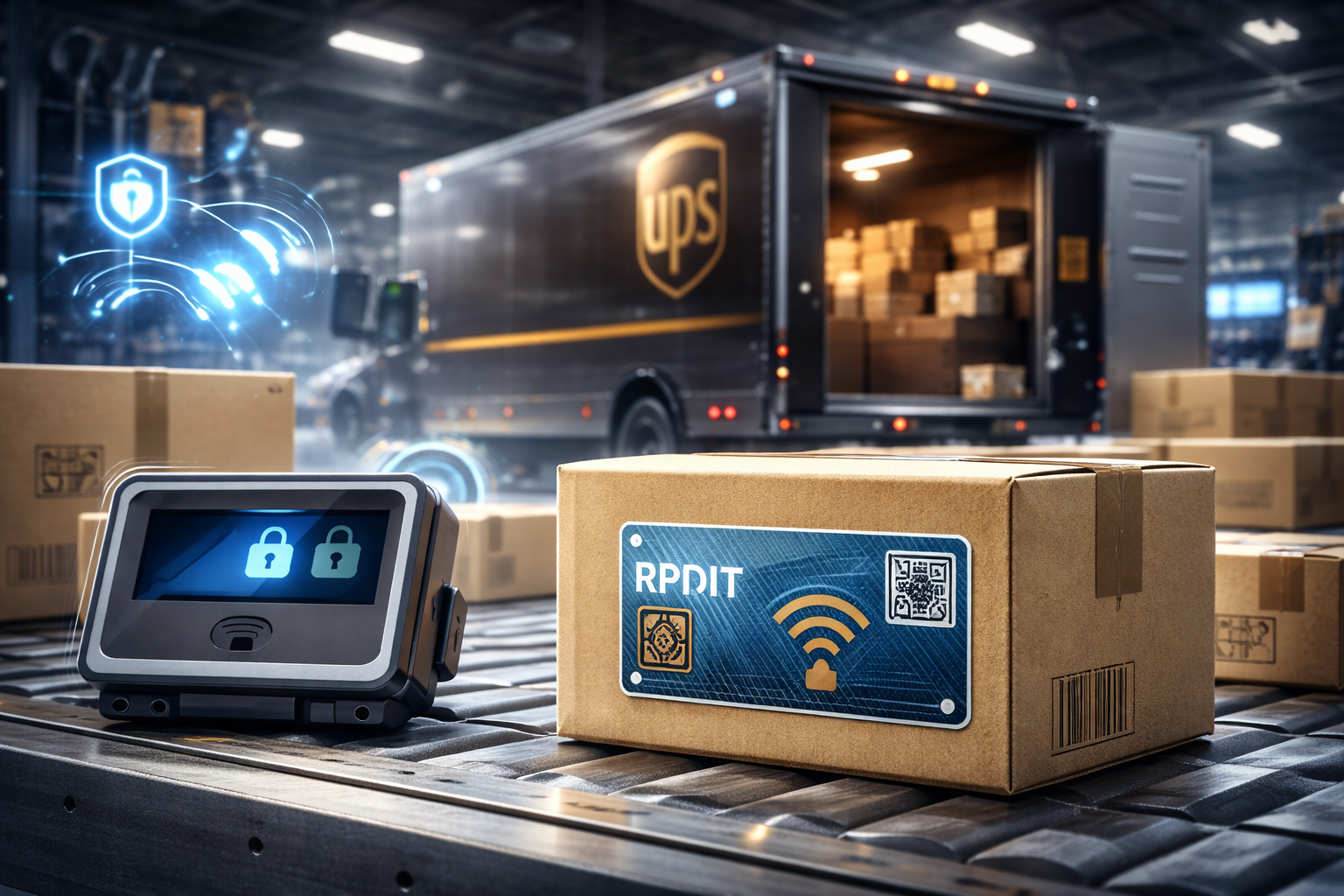
In today’s fast-paced logistics landscape, where same-day delivery and global e-commerce dominate, the status “RFID confirmed pickup” has become a familiar yet often misunderstood term for both shippers and recipients. Beyond a simple tracking update, this status reflects the growing role of RFID (Radio Frequency Identification) technology in modern supply chains, offering real-time visibility, accuracy, and operational efficiency.
This article explores what “RFID confirmed pickup” really means, why it matters, and how businesses can leverage RFID to streamline their logistics processes.
Understanding RFID in Logistics
RFID is a technology that uses small tags containing a microchip and antenna to wirelessly communicate with readers. Unlike barcodes, RFID tags do not require a direct line of sight and can be read in bulk, enabling faster, more accurate scanning.
In logistics, RFID has rapidly become an essential tool because it:
- Allows simultaneous scanning of multiple items or pallets, dramatically reducing manual labor.
- Provides real-time inventory visibility, improving forecasting and planning.
- Enables automated verification of shipments, reducing errors and returns.
RFID is now standard in industries ranging from warehousing and retail to healthcare and manufacturing, wherever precise tracking is critical.
What Does “RFID Confirmed Pickup” Mean?
When a package tracking system displays “RFID confirmed pickup”, it indicates that:
- The RFID tag attached to the shipment has been detected by a reader at the pickup location.
- The carrier’s system has electronically logged the package as picked up and entered into the logistics flow.
Unlike a traditional barcode scan, which requires line-of-sight and human intervention, RFID automatically confirms the presence of items as they pass through a gate, dock, or conveyor system.
In practice, this status means:
- Your package has been physically processed at the pickup point.
- It has entered the carrier’s supply chain and is ready for sorting or transport.
- Tracking visibility is updated earlier than manual scans in many systems.
However, it’s important to note that RFID confirmation is just one step in a multi-stage tracking process. Subsequent scans or updates are still necessary to monitor transit and delivery.
The Workflow Behind RFID Pickup Confirmation
To understand why RFID provides such reliable confirmation, it helps to look at the typical workflow:
- Tagging: Each package is equipped with an RFID tag containing a unique identifier.
- Detection at Pickup: As the package enters a reader-equipped area, the reader captures the tag’s signal.
- System Verification: The logistics system cross-references the tag ID with shipment data to confirm the pickup.
- Status Update: Once verified, the tracking system marks the package as “RFID confirmed pickup”.
- Integration with WMS/TMS: The information flows into the warehouse management system (WMS) or transportation management system (TMS) for further processing and visibility.
This automated process ensures accuracy, speed, and error reduction, all while minimizing human intervention.
Why Carriers Rely on RFID
Major carriers deploy RFID for multiple operational benefits:
1. Automated Order Verification
RFID ensures that the right items are picked, packed, and dispatched according to customer orders, reducing mistakes and returns.
2. Faster Loading and Dispatch
Multiple RFID tags can be read simultaneously as shipments move through docks or conveyor belts, speeding up processing times.
3. Real-Time Inventory Visibility
RFID provides item-level tracking data, allowing logistics managers to monitor shipments in transit, anticipate delays, and optimize routing.
4. Improved Security and Accountability
Each RFID scan provides a digital proof of pickup, helping companies track responsibility and reduce disputes between carriers, warehouses, and customers.
Common Questions About “RFID Confirmed Pickup”
Q: Does this mean my package is already on the delivery truck?
A: Not necessarily. It indicates that the package has been detected and logged by the carrier’s system, but the next stage — loading onto a truck — may still be pending.
Q: Why doesn’t every package show RFID pickup?
A: RFID requires compatible tags and readers. If either is missing or out of range, the confirmation won’t appear. Some carriers are still rolling out full RFID coverage.
Q: Can RFID replace barcode scans?
A: RFID enhances but does not always replace traditional scans. Many systems use hybrid approaches to maximize coverage and accuracy.
Beyond Pickup: The Strategic Value of RFID
While confirming pickup is a practical advantage, the broader implications of RFID are transformative:
- Inbound Dock Verification: Ensures shipments match purchase orders upon arrival.
- Inventory Accuracy: Cycle counting becomes faster and more reliable, improving overall stock accuracy.
- Outbound Verification: Reduces errors in loading shipments, ensuring the right packages reach the correct destinations.
- Supply Chain Analytics: Provides real-time data for route optimization, exception management, and performance tracking.
RFID is no longer just a scanning tool — it is a data backbone that enables intelligent, automated logistics operations.
Industry Trends and the Future
RFID adoption is accelerating with the rise of IoT and AI-powered logistics:
- Predictive Logistics: Real-time data allows for route optimization and demand forecasting.
- Automated Exception Handling: Alerts and reroutes occur automatically if delays or mismatches are detected.
- Digital Twins: Entire warehouses and shipments can be virtually modeled and monitored.
“RFID confirmed pickup” is just the first visible milestone of a fully connected, intelligent supply chain.
Implementing RFID in Your Operations
Companies considering RFID should focus on:
- Tag and Reader Compatibility: Ensure all assets are equipped and readers cover key checkpoints.
- System Integration: Connect RFID data with your WMS/TMS for actionable insights.
- Process Design: Identify critical points for verification, scanning, and analytics.
- Training and Change Management: Staff must understand RFID workflows and their role in operations.
By implementing RFID thoughtfully, businesses can reduce errors, improve speed, and gain a strategic advantage in logistics.
Conclusion
“RFID confirmed pickup” is more than a tracking label — it represents the power of automated, real-time supply chain visibility. For businesses, adopting RFID goes beyond operational efficiency; it enhances accountability, customer trust, and competitive positioning.
Whether you are a logistics manager, supply chain professional, or enterprise decision-maker, leveraging RFID technology allows you to turn simple pickup confirmation into a cornerstone of modern supply chain intelligence.
For companies exploring RFID deployment, customized RFID tags and systems are available to fit unique operational needs — from small-scale proof-of-concept trials to large-scale enterprise solutions. Embracing RFID means moving from manual tracking to intelligent, automated, and highly reliable logistics operations.


