


The global fashion retail industry operates on speed, precision, and inventory visibility. Fast fashion brands must quickly respond to changing consumer trends while maintaining accurate stock levels across hundreds or even thousands of retail locations.
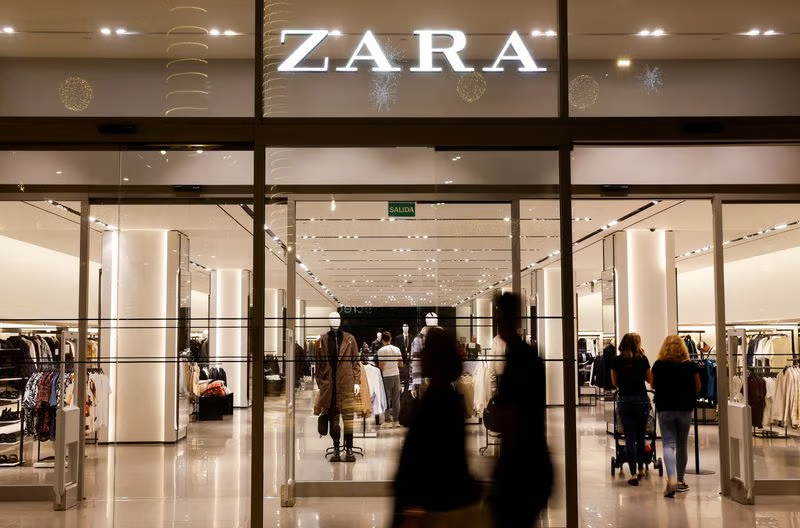
One of the most widely cited examples of RFID adoption in retail is the deployment by Zara. As the flagship brand of Inditex, Zara has implemented RFID technology across its global retail network to track every garment from distribution center to store shelf.
Through the use of RFID clothing tags, Zara has dramatically improved inventory accuracy, reduced stock discrepancies, and enabled real-time visibility across its entire retail ecosystem.
The Rise of RFID in Fashion Retail
Fashion retail has always faced complex inventory challenges. Apparel stores manage thousands of SKUs, multiple sizes, seasonal product launches, and extremely short product life cycles.
Traditional barcode-based inventory systems often struggle with these demands due to several limitations:
• Line-of-sight scanning requirements
• Labor-intensive inventory counting
• Delayed inventory updates
• High risk of stock inaccuracies
RFID technology solves these challenges by enabling automated product identification without direct scanning.
In RFID fashion retail, each garment is equipped with a tiny RFID chip embedded in its label or hangtag. RFID readers can then scan hundreds of items simultaneously, dramatically increasing operational efficiency.
Unlike barcode systems, RFID readers can capture data wirelessly and in bulk, making the technology particularly suitable for large retail environments.
How Zara Implemented RFID Technology
Zara began experimenting with RFID technology around 2010 and gradually expanded the system to thousands of stores worldwide.
Today, RFID is integrated into nearly every aspect of Zara’s retail operations.
The Zara RFID system architecture includes several key components:
RFID Clothing Tags
Every garment is equipped with a unique RFID tag embedded in its price tag or security tag.
RFID Handheld Readers
Store employees use handheld scanners to perform rapid inventory checks across store floors and stockrooms.
RFID Checkout Integration
At the point of sale, RFID readers automatically detect items during checkout.
RFID Security Gates
Store exits include RFID-enabled gates that help prevent theft and unauthorized item removal.
Inventory Management Software
RFID data is integrated into Zara’s centralized inventory platform, enabling real-time tracking.
This system allows Zara to monitor inventory across stores, warehouses, and distribution centers with remarkable precision.

RFID Clothing Tags: The Core Technology
The backbone of any RFID fashion retail system is the RFID clothing tag.
These tags are typically based on UHF EPC Gen2 passive RFID technology, which is widely used in retail supply chains.
Each RFID clothing tag contains three essential components:
Microchip
Stores a unique Electronic Product Code (EPC) identifying each garment.
Antenna
Allows the tag to communicate with RFID readers via radio frequency signals.
Label or Hangtag Substrate
The physical material attached to the clothing item.
Key advantages of RFID clothing tags include:
• Non-line-of-sight scanning
• Ability to scan hundreds of items simultaneously
• Long read range (typically 3–10 meters)
• Extremely low cost in high-volume production
• Lightweight and flexible design
Because every garment carries a unique RFID identifier, retailers gain item-level visibility rather than just SKU-level tracking.
For retailers evaluating RFID suppliers:
Choosing the right tag design is not trivial. Fabric type, packaging density, and store environment all affect read performance.
At XIUCHENG RFID, we provide application-specific tag customization—including antenna tuning, material compatibility testing, and bulk production optimization.
Operational Benefits of Zara RFID Deployment
The adoption of RFID has delivered significant operational improvements for Zara’s retail operations.
1. Inventory Accuracy Above 95%
Before RFID adoption, most apparel retailers experienced inventory accuracy rates between 60% and 70%.
After implementing RFID, Zara increased inventory accuracy to over 95%.
This improvement enables:
• Better stock replenishment decisions
• Fewer out-of-stock situations
• Improved customer satisfaction
2. Rapid Inventory Counting
Traditional barcode-based inventory audits can take several hours in large retail stores.
With RFID handheld readers, Zara staff can complete full inventory scans in minutes.
Employees simply walk through store aisles while the reader automatically captures hundreds of RFID clothing tags simultaneously.
This allows stores to perform inventory checks multiple times per week without disrupting operations.
3. Omnichannel Retail Enablement
Modern consumers expect flexible purchasing options such as:
Buy Online Pick Up In Store (BOPIS)
Ship From Store
Real-time store inventory visibility
The Zara RFID system enables these capabilities by providing accurate store-level inventory data.
Customers can check product availability online before visiting a store, while store employees can locate specific items instantly using RFID scanners.
4. Faster Replenishment Cycles
Because inventory updates occur in near real time, Zara stores can quickly identify when items need replenishment.
Distribution centers can then ship products more efficiently based on accurate demand data.
This rapid replenishment process is particularly valuable in fast fashion retail where product turnover is extremely high.
5. Loss Prevention and Shrinkage Reduction
RFID also plays a role in reducing retail shrinkage.
RFID security gates can detect tagged garments leaving the store without proper checkout.
Additionally, item-level tracking makes it easier to identify inventory discrepancies and potential losses.
RFID Adoption Across the Fashion Industry
The success of Zara’s RFID implementation has influenced many other global retailers to adopt the technology.
Major fashion brands implementing RFID include:
These companies use RFID to enhance supply chain visibility, automate inventory processes, and enable advanced retail analytics.
Industry analysts now consider RFID one of the foundational technologies for smart retail and digital supply chains.
Future Trends in RFID Fashion Retail
The next generation of RFID-powered retail will go beyond inventory tracking.
Emerging applications include:
Smart Fitting Rooms
RFID readers identify garments brought into fitting rooms and suggest matching items.
Automated Checkout
Customers can place items on a counter where RFID readers instantly detect all products.
Retail Analytics
RFID data can reveal how frequently items are handled, moved, or tried on.
AI-Powered Demand Forecasting
RFID-generated data can feed predictive analytics models that forecast demand more accurately.
As these technologies mature, RFID will continue to play a central role in digital retail transformation.
Key Considerations for Fashion Retailers Implementing RFID
Although RFID offers significant benefits, successful deployment requires strategic planning.
Retailers should evaluate the following factors:
Tag Selection
Different garment materials require different RFID tag designs for optimal readability.
Reader Infrastructure
Proper placement of fixed readers, handheld scanners, and security gates is essential.
Software Integration
RFID systems must integrate with ERP, POS, and warehouse management systems.
Staff Training
Store employees need training to integrate RFID scanning into daily workflows.
Cost-Benefit Analysis
Retailers must evaluate tag costs, infrastructure investment, and expected operational savings.
Start with a Pilot, Not a Full Rollout
Most successful RFID projects—like Zara—began with controlled pilots.
If you’re exploring RFID for fashion retail, the most practical next step is:
✔ Test different RFID clothing tag designs
✔ Validate read performance in your environment
✔ Estimate ROI based on real data
XIUCHENG RFID supports pilot programs for apparel brands, including:
- Free consultation on tag selection
- Sample kits for testing (multiple tag types)
- Read performance optimization guidance
- Scalable manufacturing for mass rollout
Talk to an RFID Specialist
If you are planning an RFID deployment or evaluating suppliers:
Contact XIUCHENG RFID for a technical consultation
We’ll help you identify the right tag, frequency, and deployment strategy based on your retail model.
Conclusion
The Zara RFID case study represents one of the most successful large-scale implementations of RFID technology in fashion retail.
By embedding RFID clothing tags into every garment, Zara has created a fully connected retail ecosystem with real-time inventory visibility and highly efficient store operations.


