


A Complete Guide to RFID Waste Management Systems
Modern cities and waste management companies are increasingly adopting RFID-enabled bins to improve efficiency, reduce costs, and enable smarter recycling programs. An RFID tag on a bin allows each waste container to be uniquely identified and digitally tracked during collection.
This technology is widely used in municipal waste management, commercial recycling, and smart city infrastructure.
In this article, we will explain:
- What an RFID bin tag is
- How RFID waste tracking works
- The components of an RFID waste management system
- The benefits for municipalities and waste companies
What Is an RFID Tag on a Bin?
An RFID tag on a bin is a small electronic device attached to a garbage or recycling container that stores a unique identification number (UID).
When a garbage truck equipped with an RFID reader approaches the bin, the system automatically reads the tag and records data such as:
- Bin ID
- Collection time
- Location
- Waste type
- Service status
This enables automated identification and digital tracking of waste containers.
RFID bin tags are commonly installed on:
- Household garbage bins
- Recycling containers
- Commercial dumpsters
- Industrial waste bins
- Food waste collection bins
Each container becomes a digitally traceable asset in the waste management system.
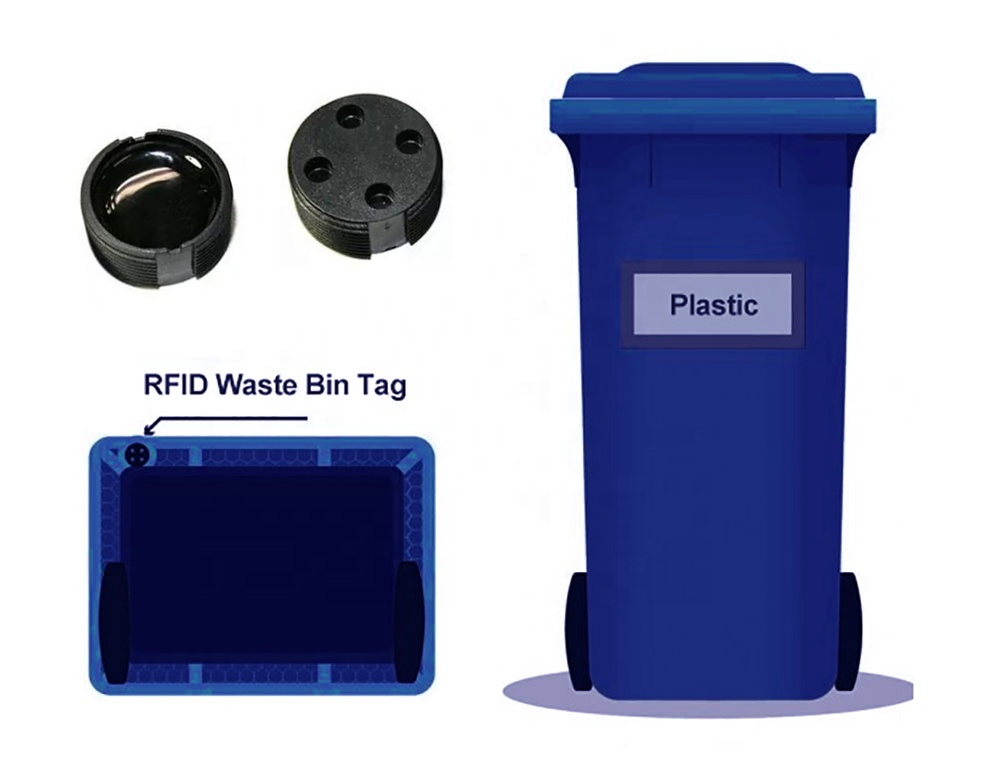
How RFID Waste Bin Tracking Works
An RFID waste management system typically includes four key components.
1. RFID Tag on the Bin
Each bin contains a passive RFID tag embedded in plastic or sealed in a durable housing.
Common characteristics include:
- Waterproof and weather-resistant
- UV-resistant for outdoor use
- Long lifespan (10+ years)
- Unique serial number
Most waste systems use LF (125 kHz / 134.2 kHz) or UHF RFID tags depending on reading distance requirements.
2. RFID Reader on the Collection Truck
Garbage trucks are equipped with RFID readers and antennas.
When a bin is lifted or placed near the truck:
- The reader emits a radio signal.
- The RFID tag responds with its UID.
- The system records the bin’s identity.
The entire process takes less than a second and requires no manual scanning.
3. Weighing and Data Logging System
Many advanced waste systems integrate weighing sensors on the truck’s lifting mechanism.
This allows operators to record:
- Weight of the collected waste
- Service confirmation
- Billing data (Pay-As-You-Throw systems)
All information is automatically stored in the system.
4. Cloud Waste Management Software
The collected data is transmitted to a central management platform, where waste operators can:
- Track collection routes
- Monitor service history
- Identify missed pickups
- Analyze recycling performance
- Generate billing reports
This transforms traditional waste collection into a data-driven smart city service.

About XIUCHENG RFID
XIUCHENG RFID specializes in manufacturing a wide range of RFID products, including RFID Silicone Wristbands, Tyvek Wristbands, Fabric Wristbands, Elastic Wristbands, Vinyl Wristbands, RFID Laundry Tags, Animal Tags, and RFID Cards. All products are produced under strict quality control and advanced production technology.
With 12 years of experience in wristband design, tag design, quality management, and customer relationship management, we have built a solid foundation for delivering reliable and high-performance RFID solutions.
Types of RFID Tags Used on Waste Bins
Different RFID technologies may be used depending on the application.
LF RFID Bin Tags (125 kHz / 134.2 kHz)
Low-frequency RFID is the most common choice for municipal bins.
Advantages include:
- Reliable reading near metal and liquids
- Short-range secure scanning
- Durable encapsulation options
These tags are commonly used for household garbage bins and recycling containers.
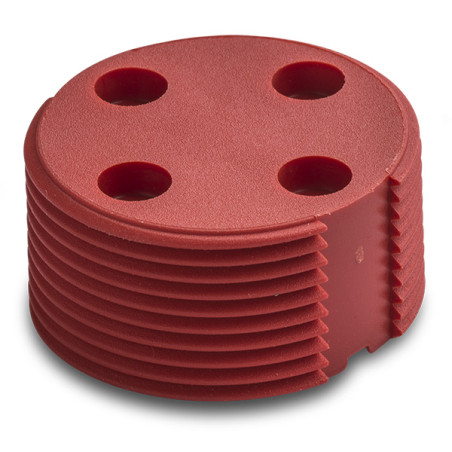
UHF RFID Bin Tags
Ultra-high-frequency RFID tags provide longer reading distances.
Benefits include:
- Read range up to several meters
- Fast bulk reading
- Suitable for logistics and industrial waste
However, UHF can be more sensitive to environmental interference.
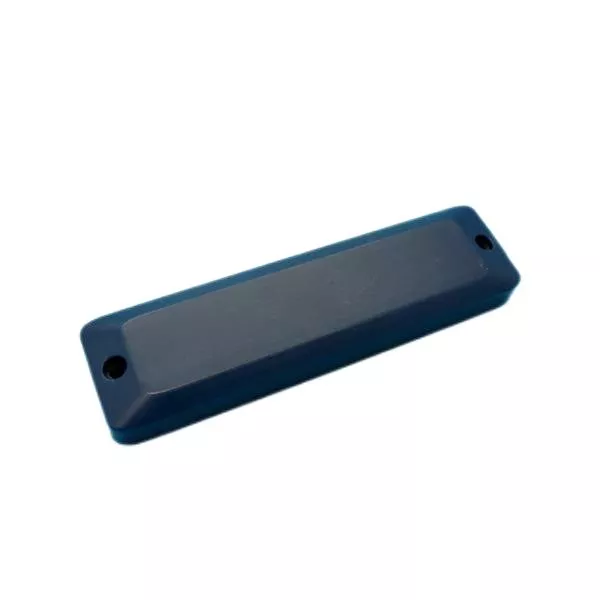
Encapsulated or Embedded Bin Tags
RFID tags may be installed in several ways:
- Embedded inside the plastic bin during manufacturing
- Riveted or bolted onto the bin body
- Encapsulated in rugged housings
These designs ensure long-term durability in outdoor environments.
Benefits of RFID Tags on Waste Bins
1. Accurate Bin Identification
Each bin has a unique digital identity, eliminating confusion during collection.
2. Automated Waste Collection Records
RFID enables automatic logging of every pickup event, reducing manual paperwork.
3. Pay-As-You-Throw Billing
Municipalities can implement usage-based waste billing, charging households based on waste volume or weight.
4. Route Optimization
Collection companies can analyze data to:
- Reduce fuel consumption
- Improve route planning
- Increase collection efficiency
5. Improved Recycling Programs
RFID data helps cities track recycling participation and design better sustainability policies.
Common Applications of RFID Bin Tags
RFID-enabled waste bins are used worldwide in many sectors:
Municipal Waste Management
Cities track residential waste collection and improve operational efficiency.
Recycling Programs
RFID identifies recycling bins and measures participation rates.
Commercial Waste Services
Businesses can be billed accurately for waste removal.
Industrial Waste Tracking
Factories monitor hazardous waste containers and regulatory compliance.
Are RFID Bin Tags Durable?
Yes. RFID bin tags are designed specifically for harsh outdoor environments.
Typical specifications include:
- Waterproof encapsulation
- UV-resistant housing
- Impact-resistant materials
- Operating temperatures from -25°C to +70°C
Because most RFID tags are passive (battery-free), they can operate for 10–20 years without maintenance.
The Future of Smart Waste Management
RFID technology is becoming a critical component of smart city infrastructure.
When combined with:
- IoT sensors
- GPS tracking
- Data analytics
- AI-powered route planning
waste management systems can become fully optimized and highly efficient.
Many cities worldwide are now deploying RFID-enabled waste bins as part of their digital transformation initiatives.
Custom RFID Bin Tags from XIUCHENG RFID
XIUCHENG RFID is a professional RFID manufacturer specializing in durable RFID tags for industrial and municipal applications.
We provide:
- LF and UHF RFID bin tags
- Weatherproof and impact-resistant housings
- Custom UID encoding
- OEM and large-scale manufacturing
Our RFID waste management tags are designed for long-term outdoor deployment and reliable performance.


