Livestock identification has become a critical part of modern animal farming. Whether managing cattle, sheep, goats, pigs, or other livestock, farmers and agricultural organizations increasingly rely on RFID technology to improve traceability, disease control, breeding management, and regulatory compliance.
While RFID ear tags often receive the most attention, the RFID reader is the device that collects and transfers animal data into management systems. Choosing the wrong reader can lead to poor read rates, slow operations, and increased labor costs.
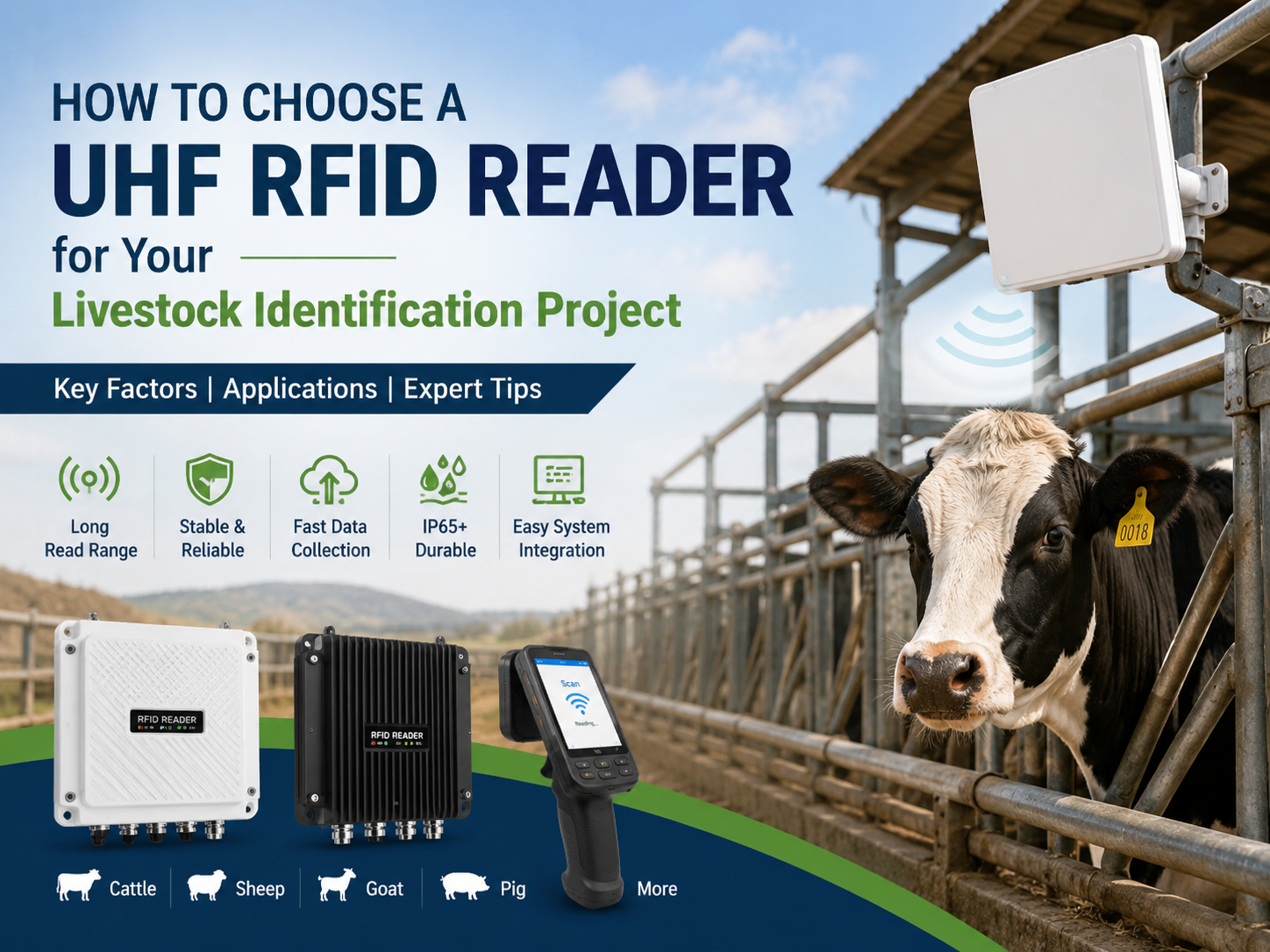
This guide explains the key factors to consider when selecting a UHF RFID reader for livestock identification projects.
Why Use UHF RFID in Livestock Management?
Traditional visual identification methods require manual inspection and data entry, which can be time-consuming and error-prone.
UHF RFID technology enables:
- Faster animal identification
- Hands-free operation
- Longer read distances
- Automated data collection
- Improved traceability
- Reduced labor requirements
UHF RFID systems are commonly used in:
- Cattle farms
- Dairy operations
- Sheep ranches
- Feedlots
- Animal breeding facilities
- Livestock auctions
- Animal transportation management
Understand Your Reading Environment
The first step in choosing a reader is understanding where it will be used.
Different livestock operations require different reader types.
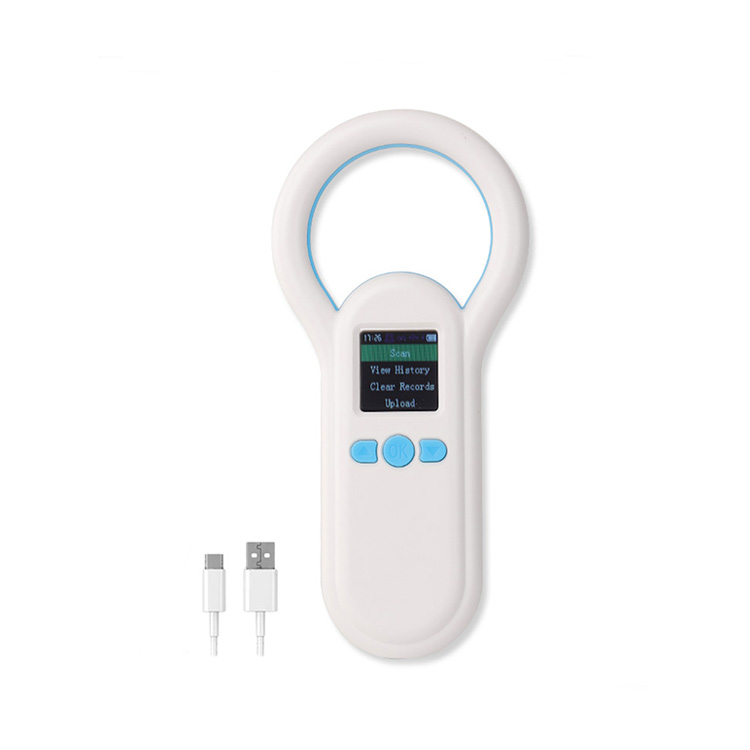
Handheld Readers
Handheld readers are suitable for:
- Small farms
- Veterinary inspections
- Breeding management
- Mobile animal identification
Advantages include:
- Portable operation
- Flexible deployment
- Easy inventory checks
- Lower infrastructure costs
Fixed RFID Readers
Fixed readers are installed permanently at key checkpoints.
Common installation locations include:
- Feeding stations
- Sorting gates
- Weighing stations
- Milking parlors
- Loading ramps
- Entry and exit gates
Advantages include:
- Continuous monitoring
- Automated data collection
- Reduced labor
- Real-time animal tracking
For large-scale livestock operations, fixed readers are generally the preferred solution.
Consider Read Distance Requirements
Read distance is one of the most important selection factors.
Different projects require different ranges.
Short-Range Applications
Typical range:
- 1–3 meters
Suitable for:
- Individual animal verification
- Veterinary examinations
- Breeding programs
Medium-Range Applications
Typical range:
- 3–8 meters
Suitable for:
- Sorting systems
- Feeding systems
- Animal movement monitoring
Long-Range Applications
Typical range:
- 8–15 meters or more
Suitable for:
- Vehicle-mounted readers
- Large entry gates
- Transportation checkpoints
Longer range is not always better.
Excessive read range may capture unintended tags and reduce identification accuracy.
Evaluate Antenna Configuration
The antenna often has a greater impact on performance than the reader itself.
Single-Antenna Systems
Suitable for:
- Small passageways
- Basic identification points
- Lower-cost installations
Multi-Antenna Systems
Suitable for:
- Wide gates
- Multiple lanes
- Large livestock handling areas
Many industrial UHF readers support:
- 4 antenna ports
- 8 antenna ports
- Expandable antenna networks
For cattle raceways and sorting systems, multi-antenna configurations typically provide the highest read accuracy.
Verify RFID Standards Compatibility
Not all animal RFID tags use the same technology.
Before purchasing a reader, verify:
- RFID frequency
- Tag protocol
- Regional regulations
Most livestock UHF projects use:
- EPC Gen2
- ISO 18000-6C
The reader must fully support the tags deployed on the animals.
Consider Reader Durability
Livestock environments are challenging.
Readers may be exposed to:
- Dust
- Mud
- Rain
- High humidity
- Sunlight
- Animal impacts
Look for readers with:
- IP65 or higher protection
- Industrial-grade housing
- Wide operating temperature range
- Shock resistance
Outdoor installations often require IP67-rated equipment.
Data Connectivity Options
Modern livestock systems require seamless data integration.
Popular communication options include:
Ethernet
Best for:
- Fixed installations
- Real-time monitoring
Wi-Fi
Best for:
- Flexible deployment
- Farm-wide connectivity
Bluetooth
Best for:
- Mobile applications
- Handheld readers
RS232 / RS485
Best for:
- Industrial automation systems
- Legacy equipment integration
USB
Best for:
- Configuration
- Local data transfer
Choose a reader that supports your farm management software and existing infrastructure.
Integration with Livestock Management Software
An RFID reader is only one part of the system.
It should integrate with:
- Herd management software
- Breeding databases
- Traceability platforms
- Veterinary systems
- ERP software
- Government livestock databases
Before purchasing, confirm:
- SDK availability
- API support
- Communication protocols
- Third-party integration capabilities
Battery Life for Handheld Readers
For mobile livestock operations, battery performance is critical.
Recommended specifications:
- Minimum 8 hours continuous operation
- Replaceable battery option
- Fast charging support
Large ranches may require devices capable of operating throughout an entire workday.
Future Scalability
Many farms start with a small RFID deployment and expand later.
Select a reader that can support:
- Additional antennas
- More animals
- Multiple reading points
- Cloud-based management systems
Scalable systems reduce future upgrade costs.
Common Mistakes When Choosing RFID Readers
Avoid these common purchasing mistakes:
Choosing Based Only on Price
Low-cost readers often deliver poor performance in outdoor agricultural environments.
Ignoring Antenna Design
A high-performance reader paired with poor antenna placement can result in missed reads.
Selecting Excessive Read Range
Overly powerful readers may detect animals outside the intended area.
Overlooking Software Compatibility
Integration issues can become more expensive than the hardware itself.
Recommended Reader Types for Livestock Projects
| Project Type | Recommended Reader |
|---|---|
| Small Farm | Handheld UHF RFID Reader |
| Veterinary Clinic | Portable RFID Reader |
| Cattle Raceway | Fixed 4-Port RFID Reader |
| Feedlot | Industrial Fixed RFID Reader |
| Livestock Auction | Multi-Antenna RFID System |
| Transportation Gate | Long-Range RFID Reader |
Why Work with an Experienced RFID Manufacturer?
Successful livestock identification projects require more than hardware.
An experienced RFID manufacturer can provide:
- Reader selection advice
- Antenna configuration support
- RFID tag compatibility testing
- Software integration assistance
- OEM customization
- Technical support
At XIUCHENG RFID, we provide RFID readers, livestock RFID tags, antennas, and complete RFID identification solutions for farms, ranches, animal traceability programs, and agricultural system integrators worldwide.
Conclusion
Selecting the right UHF RFID reader is essential for achieving accurate and reliable livestock identification. Factors such as read distance, antenna configuration, environmental durability, communication options, and software integration all play a significant role in system performance.
By carefully evaluating your operational requirements and choosing industrial-grade RFID equipment, livestock operators can improve animal traceability, reduce labor costs, and build a scalable identification system that supports long-term farm management goals.