For engineers, system integrators, and procurement teams evaluating mobile credentials, the question is straightforward: can an Android phone replace a physical RFID card?
The precise answer is conditional. Android can emulate certain RFID cards—specifically high-frequency (HF) NFC cards operating at 13.56 MHz—but cannot natively replicate low-frequency (LF) cards such as 125 kHz proximity badges. The distinction is not trivial; it defines whether your project is feasible without hardware changes.
Understanding this boundary is essential before attempting any form of card emulation or system migration.

RFID Is Not One Technology
RFID is an umbrella term covering multiple frequency bands and protocols. Most access control and identification systems fall into three categories:
Low Frequency (LF): 125 kHz
Typical use: legacy access control (EM4100, HID Prox)
High Frequency (HF): 13.56 MHz
Typical use: NFC, smart cards (MIFARE, DESFire, NTAG)
Ultra-High Frequency (UHF): 860–960 MHz
Typical use: logistics, asset tracking
Android smartphones only support HF via NFC. This immediately excludes a large portion of older access systems from direct emulation.
How Android Emulates Cards: Host Card Emulation (HCE)
Android introduced Host Card Emulation (HCE) to allow a phone to behave like a contactless smart card. Instead of relying on a hardware secure element, HCE routes communication through software.
At a protocol level, the phone communicates with a reader using ISO/IEC 14443 standards. The reader sends APDU (Application Protocol Data Unit) commands, and the Android device responds in real time.
This architecture enables:
- Emulation of NFC Type A cards
- Integration with payment systems and access control
- Dynamic credential handling via cloud services
However, HCE does not magically clone cards. It only provides a framework for emulation.
What Android Can Emulate
NFC-Based Access Cards
Android works reliably when the target system is designed around modern NFC standards. This includes:
- MIFARE Ultralight
- NTAG series
- MIFARE DESFire (with proper backend integration)
In these environments, the phone does not copy the card—it presents a secure credential managed by software and validated by the system backend.
Mobile Access Systems
Many commercial access control platforms now support mobile credentials. Instead of issuing plastic cards, administrators provision credentials directly to smartphones.
In these deployments:
- Credentials are encrypted and dynamically managed
- Authentication occurs between the reader and backend system
- Lost devices can be revoked instantly
This is where Android HCE delivers production-grade reliability.
What Android Cannot Emulate
125 kHz RFID Cards
This is the most common limitation.
Android devices do not include LF RFID hardware. As a result, they cannot read, write, or emulate:
- EM4100 n- HID Prox
- Other 125 kHz proximity cards
No software workaround exists. Any claim suggesting otherwise is inaccurate.
MIFARE Classic (Practical Limitations)
Although widely deployed, MIFARE Classic presents challenges:
- Uses proprietary Crypto-1 encryption
- Requires strict timing at the hardware level
While some Android devices can read these cards, reliable emulation is not feasible in production environments using HCE.
Why Card Cloning Usually Fails
A frequent assumption is that scanning a card allows it to be duplicated onto a phone. In practice, modern RFID systems are designed to prevent this.
Secure cards rely on:
- Challenge-response authentication
- Encrypted memory sectors
- Unique cryptographic keys
Even if you extract visible data such as a UID, the system will reject unauthorized emulation attempts because the cryptographic handshake cannot be reproduced.
This is intentional and aligns with current security standards.

About XIUCHENG RFID
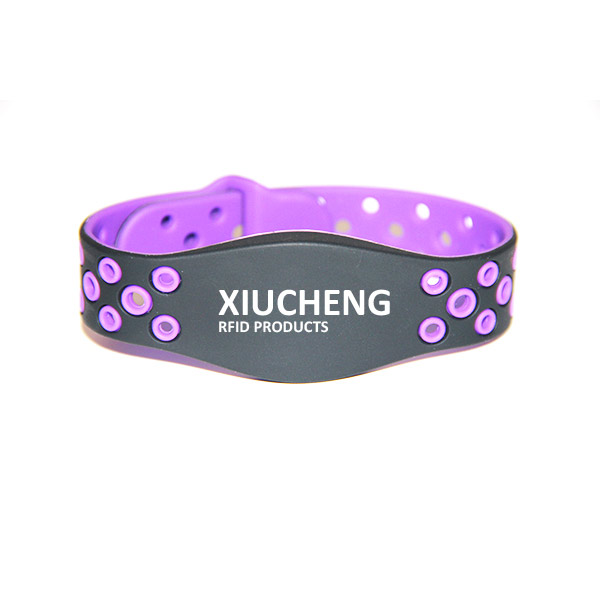
XIUCHENG RFID specializes in manufacturing a wide range of RFID products, including RFID Silicone Wristbands, Tyvek Wristbands, Fabric Wristbands, Elastic Wristbands, Vinyl Wristbands, RFID Laundry Tags, Animal Tags, and RFID Cards. All products are produced under strict quality control and advanced production technology.
With 12 years of experience in wristband design, tag design, quality management, and customer relationship management, we have built a solid foundation for delivering reliable and high-performance RFID solutions.
Practical Workflow for Android Card Emulation
For teams planning deployment, the process is structured rather than experimental.
Step 1: Identify the card technology
Confirm frequency and protocol using professional tools. If the system is not 13.56 MHz NFC, stop here.
Step 2: Validate reader compatibility
Ensure the reader supports ISO14443 and mobile credentials. Legacy readers often do not.
Step 3: Implement HCE application
Develop or deploy an app that handles APDU communication and credential storage.
Step 4: Integrate backend authentication
This is mandatory. Without backend validation, the reader will not accept the emulated credential.
Step 5: Test latency and reliability
Access control systems are sensitive to response timing. Field testing is essential.
Security and System Design Considerations
From a system architecture perspective, Android-based credentials offer advantages over physical cards:
- Remote provisioning and revocation
- Reduced risk of duplication
- Integration with identity management systems
However, they also introduce dependencies:
- Mobile OS behavior
- Battery availability
- Application lifecycle management
A robust deployment requires alignment between hardware, software, and backend infrastructure.
Industry Direction
The industry is moving away from static RFID cards toward mobile-first identity systems. NFC remains the bridge technology enabling this transition.
Chip manufacturers such as NXP Semiconductors continue to push secure NFC standards, while access control vendors are redesigning platforms around mobile credentials rather than physical tokens.
For organizations planning upgrades, investing in NFC-compatible infrastructure is more sustainable than attempting to extend legacy LF systems.
Conclusion
Android can emulate an RFID card—but only within the boundaries of NFC technology.
It works when:
- The system uses 13.56 MHz NFC
- The reader supports ISO14443
- Backend authentication is properly implemented
It does not work when:
- The system relies on 125 kHz RFID
- The card uses unsupported proprietary protocols
For most real-world deployments, the question is no longer whether Android can emulate a card, but whether your access control system is designed to support mobile credentials.
That distinction determines the success or failure of the project.