


Cat owners today are often confused by two very different pet identification technologies: RFID microchips and GPS trackers.
Both are used to protect cats—but they work in fundamentally different ways, serve different purposes, and rely on entirely different technologies.
This article explains the real technical differences between RFID cat microchips and GPS trackers, so you can choose the right solution based on facts—not marketing claims.
What Is an RFID Cat Microchip?
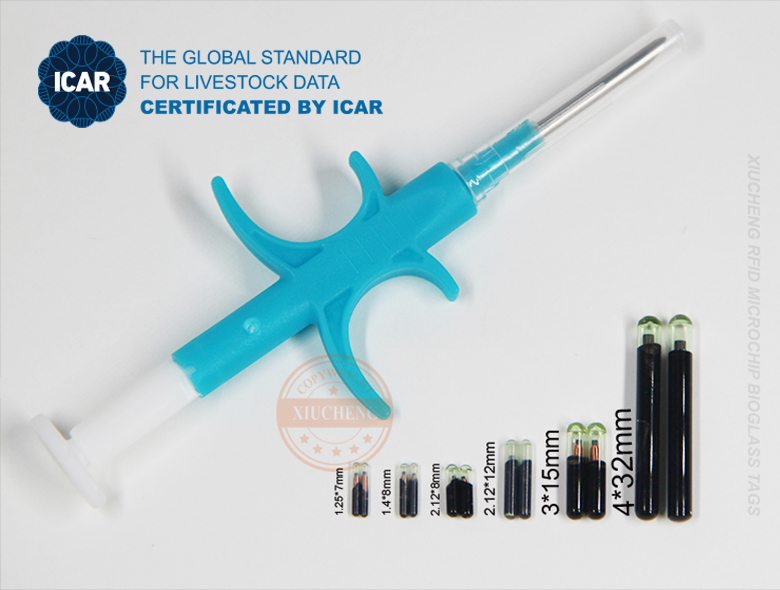
An RFID cat microchip is a passive low-frequency (LF) RFID transponder, implanted under the cat’s skin, typically between the shoulder blades.
From a technology perspective, it is an ISO-standard animal identification device, not a tracking system.
Key Technical Characteristics
- Technology: Passive RFID
- Frequency: 134.2 kHz (LF)
- Standards: ISO 11784 / ISO 11785
- Protocol: FDX-B (global standard)
- Power source: None (battery-free)
- Read range: ~5–15 cm with a scanner
The microchip remains completely inactive until scanned by a compatible animal RFID reader.
What Is a GPS Tracker for Cats?
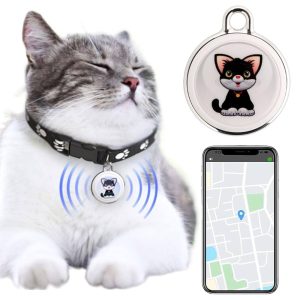
A GPS tracker is an active electronic tracking device, usually worn on a collar, that continuously determines the cat’s location using satellite positioning.
It relies on multiple wireless technologies, not RFID.
Typical Technologies Inside a GPS Tracker
- GPS / GNSS for location
- Cellular (LTE-M, NB-IoT, 4G) or Bluetooth
- Rechargeable battery
- Mobile app + cloud platform
GPS trackers actively transmit location data in real time or near real time.
How RFID Cat Microchips Work (In Practice)
- A veterinarian implants the RFID microchip.
- A handheld RFID reader emits a low-frequency electromagnetic field.
- The chip harvests energy via inductive coupling.
- The chip transmits a unique ID number only.
- The ID is checked against a pet recovery database.
Important:
RFID microchips do not store owner information or location data.
How GPS Trackers Work (In Practice)
- The tracker receives signals from satellites.
- It calculates the cat’s position.
- Location data is sent via a wireless network.
- The owner views the cat’s position in a mobile app.
GPS trackers work only while powered on and connected.
RFID Cat Microchip vs GPS Tracker: Direct Comparison
| Feature | RFID Cat Microchip | GPS Tracker |
|---|---|---|
| Primary function | Permanent identification | Real-time tracking |
| Technology | Passive LF RFID | GPS + cellular |
| Battery required | ❌ No | ✅ Yes |
| Implantable | ✅ Yes | ❌ No |
| Real-time location | ❌ No | ✅ Yes |
| Lifetime | 20+ years | Months–years |
| Risk of loss | Extremely low | High (collar-based) |
| Ongoing cost | None | Subscription fees |
| Regulatory standard | ISO 11784/11785 | Consumer electronics |
Common Misconceptions Explained
“RFID microchips can track my cat”
❌ False
RFID microchips cannot transmit signals autonomously and cannot provide location data.
“GPS trackers replace microchips”
❌ False
GPS devices can fail, lose battery, or be removed. Many shelters only scan for RFID microchips.
Why Shelters and Vets Rely on RFID Microchips
From a system-level perspective:
- RFID microchips are universally readable
- They do not depend on power, apps, or networks
- They provide a permanent identity
This is why RFID microchipping is legally mandated for cats in many countries.
Which One Should You Choose?
Choose an RFID Cat Microchip if:
- You want permanent, tamper-resistant identification
- You rely on shelters or veterinarians for recovery
- You want a one-time solution with no maintenance
Choose a GPS Tracker if:
- Your cat goes outdoors frequently
- You want live location visibility
- You are willing to manage charging and subscriptions
Best Practice: Use Both
From an animal-welfare and technology standpoint, the best solution is combination use:
- RFID microchip for permanent ID
- GPS tracker for daily monitoring
Final Verdict: Identification vs Tracking
The difference is simple but critical:
- RFID microchip = who the cat is
- GPS tracker = where the cat is
They are not competitors—they solve different problems using entirely different technologies.
Understanding this distinction helps cat owners make informed, responsible decisions based on real engineering principles—not assumptions.


