Warning: Undefined array key "url" in /www/wwwroot/rfid-pro.com/wp-content/plugins/seo-by-rank-math/includes/modules/schema/snippets/class-author.php on line 41

Author name: Jude

How to Produce Smart Card 1
RFID Technologies

How Is A Smart Card Produced?

RFID smart cards may appear simple to the end user, but they are the result of a multi-stage industrial manufacturing flow that integrates electronics, materials science, precision assembly, and stringent quality control. A standard production sequence ensures every card meets ISO standards for size, performance, and reliability. Below is a complete process typically followed in

Bioresorbable RFID Smart Pills
RFID Technologies, Company News

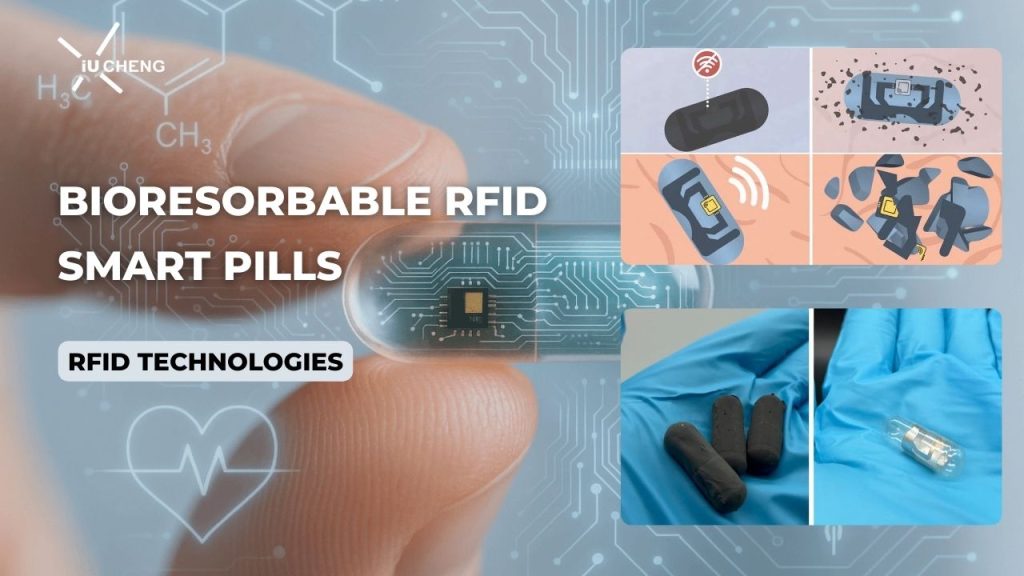
Bioresorbable RFID Smart Pills: How SAFARI Enables Ingestion Confirmation in Medicine

Medication non-adherence remains one of the most persistent challenges in modern healthcare. Across chronic and high-risk therapies, missed doses contribute to treatment failure, drug resistance, avoidable hospitalizations, and rising healthcare costs. While digital health tools such as wearables and smart pill bottles attempt to address this issue, they often rely on indirect behavioral signals rather

UCODE 8 vs UCODE 9
RFID Chips

UCODE 8 vs UCODE 9 RFID Chips: Full Technical Comparison and Applications

The UCODE series by NXP is a widely used line of UHF RFID chips for retail, logistics, industrial, and supply chain management. Among them, UCODE 8 and UCODE 9 are the most popular for large-scale deployments due to their reliability, memory capacity, and fast reading speeds. Understanding the differences between these two chip generations is

ICODE SLIX2
RFID Chips

ICODE SLIX2 RFID Chip Explained for Smart Labeling

What Is ICODE SLIX2? ICODE SLIX2 is a high-performance HF RFID chip developed by NXP Semiconductors, operating at 13.56 MHz and fully compliant with ISO/IEC 15693 standards. It is designed for long-range HF RFID applications that require fast anti-collision performance, high data reliability, and secure item-level identification. Compared to earlier ICODE SLIX series chips, ICODE

T5577
RFID Chips

T5577 RFID Chip Explained: Features, Uses, and Limitations

The T5577 RFID chip (also known as ATA5577) is one of the most widely deployed low-frequency (125 kHz) read/write RFID transponder ICs in the global RFID market.Its rewritability, protocol flexibility, and broad reader compatibility make it a preferred solution for access control, RFID cloning, and custom LF RFID tag applications. Unlike read-only RFID chips such

EM4100
RFID Chips

EM4100 RFID Chip: Complete Guide to the 125kHz Read-Only RFID Standard

The EM4100 is one of the most widely deployed low-frequency (LF) RFID chips in the world. Despite being a legacy technology, EM4100 remains a foundational component in access control, identification, and legacy RFID systems across residential, commercial, and industrial environments. This article provides a comprehensive technical overview of the EM4100 RFID chip, explaining how it

EM4305
RFID Chips

EM4305 RFID Chip: Features, Specifications, and Applications Explained

The EM4305 is one of the most widely used low-frequency (LF) RFID chips in access control, industrial identification, and legacy RFID systems. Known for its stability, compatibility, and reprogrammable memory, the EM4305 remains a popular choice for RFID card manufacturers, system integrators, and OEMs worldwide. This article provides a complete technical and practical overview of

RFID Chips Are Best for Harsh Environments
RFID Chips

Which RFID Chips Are Best for Harsh Environments?

RFID technology is widely used in industries where operating conditions are far from ideal. From oil & gas fields and metal processing plants to livestock farms and chemical warehouses, RFID chips are often required to function reliably under extreme temperatures, moisture, vibration, chemicals, and electromagnetic interference. However, not all RFID chips are designed for harsh

Choose RFID Chip
RFID Applications

How to Choose the Right RFID Chip for Asset Tracking

Selecting an RFID chip for asset tracking is not a matter of choosing the “most advanced” or “longest-range” option. The correct choice depends on how assets move, how they are read, what data must be stored, and how the system will operate over time. This article explains how to choose an RFID chip for asset

Scroll to Top